
Crescent Sustainability Initiatives
A. SUCCEED (SUSTAINABILITY CENTRIC CRESCENT EDUCATION FOR ENTREPRENEURSHIP DEVELOPMENT)
BEST PRACTICE
Title of the Practice: SUCCEED – Sustainability Centric Crescent Education for Entrepreneurship Development
To develop the best practice for the implementation of SDGs, MoU was signed with M/s Gibraltar Technologies, Dubai, on 5th November 2020. Several meetings were conducted School/Department-wise involving stakeholders such as faculty members, students and employees of Gibraltar Technologies (GT).
The meeting outcomes resulted in SUCCEED (Sustainability Centric Crescent Education for Entrepreneurship Development), the best practice for implementing SDGs.
Our faculty members and students are carrying out a few projects to address the SDGs in collaboration with GT are listed below.
OBJECTIVES OF THE PRACTICE
- To bring a holistic transformational change within societies, economies and the environment through sustainable centric education.
- To develop and implement a curriculum intended to be flexible and non-prescriptive that follows a competency development model through a combination of knowledge, skills, values and attitudes.
- To enable the delivery of the SDGs by ensuring that each learner has the relevant skills, knowledge, values and attitudes for social, economic and environmental development, and to work in partnership to create peaceful societies.
- To ensure that all learners acquire the knowledge and skills needed to promote sustainable development by 2030 through education for sustainable development and sustainable lifestyles, human rights, gender equality, promotion of a culture of peace and non-violence, global citizenship and appreciation of cultural diversity and culture’s contribution to sustainable development.
THE CONTEXT
Education is one of the Sustainable Development Goals (SDGs) in itself and as a catalyst for broader change.
Education is critical in shaping individual and collective knowledge, skills, values and attitudes to enable people to move along pathways towards sustainable development, and a catalyst for development itself. It is a key determinant of social and economic transformation, and an essential precursor to peace, tolerance and sustainability. Moreover, it equips learners of all ages with the knowledge, skills, values and attitudes needed to be responsible global citizens, such as respect for human rights, gender equality and environmental sustainability.
The purpose of the SDGs centric education is to develop successful learners, confident individuals, and responsible citizens who are resilient and uphold the core values and principles of the nation.
THE PRACTICE
The curriculum encompasses learning content and outcomes, and shifts learning from being only content-driven to being outcome-driven, action-oriented and participatory. The aim is that all learners can become engaged in promoting the transformation required for sustainable development.
The curriculum deals with the knowledge, skills, attitudes and values in relation to each of the SDGs and outlines:
- The knowledge or content areas to be focused on, making provision for the inclusion of indigenous and traditional knowledge topics.
- The skills to be developed
- The values and attitudes that are desirable for the successful accomplishment of the learning outcome
At present, Core competencies required for sustainable development such as team building, communication, decision making, problem-solving, sense of community, self-esteem, personal responsibility, empathy, moral development, ethics, values, resilience and improved inclination for educational achievement are attained through few of the curricular courses and extension and outreach activities. Integrating the topic of the SDGs into a curriculum allows learners to understand their multiple identities, to work out what their roles should be for living together on a common planet and building a better future in an interdependent world at local, national and global levels.
EVIDENCE OF SUCCESS
The Crescent Innovation and Incubation Council (CIIC) encouraged the stakeholders (primarily the start-ups) to address the SDGs. As a result, our university’s faculty, students, and alumni created start-ups with the support of CIIC; 63 external start-ups, ten alumni start-ups, 14 faculty start-ups, and 26 student start-ups. Our university participated in the Times Higher Education (THE) Impact Ranking in 2020 and 2021 in the following SDGs: SDG 4: Quality Education, SDG 5: Gender Equity, SDG 6: Clean Water and Sanitation, SDG 7: Affordable and Clean Energy, SDG 9: Industry Innovation and Infrastructure and SDG 17: Partnership for the Goals. The rank bands are:
Our university participated in the following Green initiative award in 2019 and 2020.Beema Bamboo is one of the fastest-growing plants on earth under tropical conditions. As a result, it will act as the best carbon sink for carbon-di-oxide emission, one of the major greenhouse gases that can be effectively and quickly brought down by the trees that grow fast by absorbing carbon-di-oxide. About 2000 Beema Bamboos were planted in the university campus during the last two years to reduce carbon footprint and help fight global warming. Our faculty members published quite a few papers in high-quality research journals addressing the SDGs. Complete compulsory courses relevant to the environment, ethics, human values and sustainability were introduced in the curriculum. In addition, about 10% of elective courses addressing the SDGs are offered to the students.
PROBLEMS ENCOUNTERED AND RESOURCES REQUIRED
The development of the curriculum involved the identification and description of the competencies that learners should acquire, with an emphasis on the results of learning. In the context of the sustainability centric curriculum, the following was sought: a set of integrated competencies derived from the core competencies that learners need to develop for active and responsible participation in all relevant fields of life and to implement the SDGs, including empathy, ethics, compassionate values, and the ability to express social and environmental concerns and change behaviours. Integrated competencies and learning outcomes, specified in three categories – knowledge, skills, and values and attitudes, are adopted from “A Curriculum Framework for the Sustainable Development Goals – First Edition, Commonwealth, 2017” and “Education for Sustainable Development – Learning Objectives, UNESCO, 2017”.
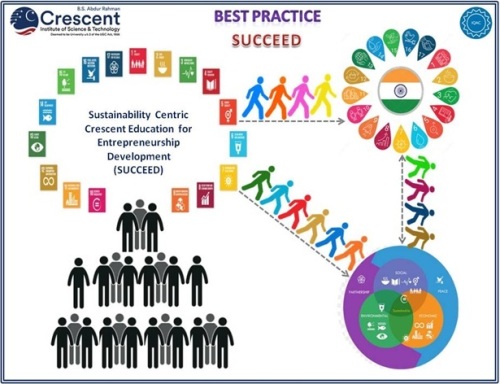
Figure XVII (2.4) – 1 : SUCCEED (Sustainability Centric Crescent Education for Entrepreneurship Development) – Best Practice followed in the Institute
B. BSACIST’S 2024 POLICY ENGAGEMENT WITH REGIONAL NGOS AND GOVERNMENT FRAMED WITHIN THE SDG ACCORD 2025 PROGRESS CONTEXT AND THE SDG-THEMED GOVERNANCE, LEARNING, AND PARTNERSHIPS AGENDA
B.S. Abdur Rahman Crescent Institute of Science and Technology (BSACIST), this positions the institute not only as a learner but as a contributor to national and regional SDG policy dialogues. The 2024 entry on relationships with regional NGOs and government for SDG policy underscores an ongoing posture of engagement with policy ecosystems, aligning institutional activity with policy development, monitoring, and adaptive management. This alignment suggests BSACIST can translate its SDG work into formal policy input, scenario modelling, and accountability mechanisms that inform broader regional development trajectories. The 2025 SDG Accord report highlights that most signatories are moving toward embedding sustainability at an organizational level, with many reporting up-to-date sustainability policies endorsed by senior leadership. For BSACIST, the implication is to articulate a clear, leadership-backed sustainability policy or action plan that directly references SDGs most relevant to the institute’s mission and operations. Given the 2024 emphasis on engaging with government and regional NGOs, BSACIST could position its policy inputs as anchored in the connected governance and partnerships depicted in the report, ensuring that policy submissions, stakeholder consultations, and adaptive management are institutionally codified rather than ad hoc activities.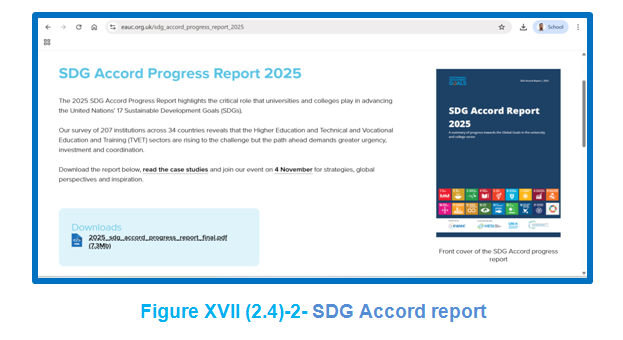

The SDG Accord Progress Report 2025 frames universities and colleges as pivotal agents for implementing the United Nations Sustainable Development Goals through whole-institution approaches. The thematic focus on Learning and Teaching reveals that while progress is ongoing, Learning and Teaching remains the least mature operational area for many signatories. BSACIST should view this as a guide to invest in curriculum integration of SDGs, faculty development, and assessment practices that explicitly test sustainability knowledge. The report notes significant barriers such as limited time for staff development and inadequate integration of sustainability into curricula. BSACIST can address these barriers by allocating dedicated funding and time for professional development, integrating SDG-related outcomes into degree programs, and creating standardized assessments that measure students’ sustainability competencies.
The progress report emphasizes the value of evidence-based case studies and peer learning. BSACIST can contribute through documenting and sharing successful Learning and Teaching innovations—for example, climate pedagogy initiatives, service-learning projects, and interdisciplinary modules that map to SDG4 (Quality Education), SDG 6 (Clean Water and Sanitation), SDG 7 (Affordable and Clean Energy) and SDG17 (Partnerships for the Goals). By contributing BSACIST-specific case studies to the SDG Accord platform, the institute would participate in a global knowledge network, enabling replication and contextual adaptation across similar universities and colleges in the region.
The results section of the report highlights top SDGs influenced by signatories and the priority SDGs for the upcoming year. In the last year, SDG4, SDG13, and SDG 6 (Clean Water and Sanitation), SDG 7 (Affordable and Clean Energy) were prominent, with SDG17 as a top priority for partnerships. For BSACIST, this pattern suggests focusing efforts on education quality, climate action initiatives, and strengthening collaborative frameworks with industry, government bodies, and civil society. Establishing formal partnerships and joint programmes with regional NGOs and the government can advance SDG implementation while creating opportunities for funding, capacity-building, and scalable impacts.
The report documents the internal and external support needs identified by signatories, with budget, dedicated staff capacity, and funding from external sources highlighted as top needs. BSACIST should prepare a resource plan that secures funding streams for SDG-aligned activities, including staff training, climate-related research, and curriculum transformation. Engaging government and sector partners can help unlock external support, align institutional priorities with national development plans, and provide procurement or grant-based pathways to sustain SDG initiatives over multiple years.
Finally, the BSACIST context benefits from the report’s emphasis on evaluating new partnerships and governance improvements. The Accord notes that sustainability work benefits from cross-departmental collaboration and a shared, mission-driven culture. BSACIST can leverage its 2024 policy-involvement experience to foster cross-disciplinary governance structures, establish an SDG steering committee, and implement a transparent reporting framework that communicates progress to internal and external stakeholders. By aligning these governance practices with the SDG Accord methodology, the institute can demonstrate measurable progress toward embedding the SDGs into education, research, operations, and community engagement.
C. BSACIST 2024 SDG Policy Engagement and Governance Through Regional Non-Governmental Organizations ( https://theigen.org/ ) Partnerships
BSACIST demonstrates a policy-oriented stance by engaging with regional NGOs and government on SDG matters in 2024. The institute’s participation as a resource person and panellist in energy and sustainability dialogues (as seen in the IGEN Energyathon and related events) signals a proactive role in shaping issues, challenges, and potential policy responses rather than a purely academic exercise.
The involvement spans multiple stakeholders, including government bodies, regional NGOs, industry partners, and academic peers. By contributing expertise through panels and knowledge-sharing sessions, BSACIST helps identify problems, shape policy agendas, and foster adaptive management. This collaborative mode reflects a governance approach where diverse voices inform SDG policy design and monitoring, enabling more context-relevant and implementable strategies.
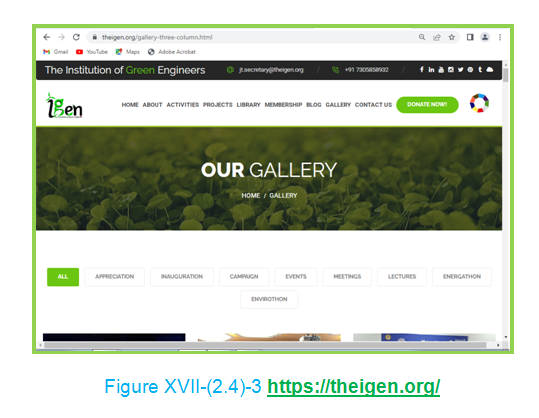
BSACIST’s visibility in energy and sustainability forums indicates engagement in scenario planning activities, where different SDG-related interventions are explored to understand potential outcomes. This modelling supports evidence-based policy development, helping policymakers anticipate trade-offs and prioritize interventions that yield sustainable development gains.
Monitoring and reporting on interventions is central to adaptive management. Through conferences, expert panels, and documented contributions, BSACIST contributes to transparency around SDG initiatives, enabling stakeholders to track progress, learn from results, and adjust actions accordingly. The institute’s public-facing materials and event outputs function as accountability artifacts that demonstrate ongoing stakeholder engagement.
Enabling adaptive management means BSACIST supports iterative policy processes that respond to new data and changing conditions. The institute’s engagement in energy events and knowledge exchanges provides a feedback loop for policy refinement, ensuring SDG strategies stay relevant to regional energy challenges and evolving technology landscapes. This adaptive stance strengthens resilience and alignment with national development priorities.
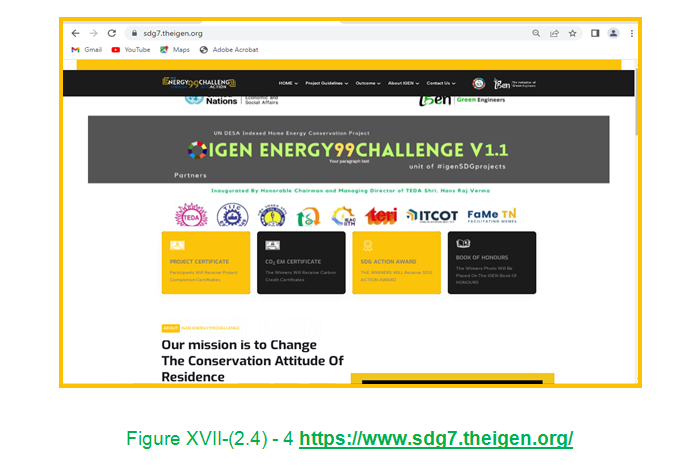
BSACIST faculty member Dr. R. Zahira as a resource person and panellist in energy-oriented advocacy forums. This visible participation translates into concrete evidence of policy-relevant activity: sharing expertise, informing decisions, and contributing to the public discourse on SDG-related policies. Such practice helps legitimize the institute’s role in national and regional SDG governance and enhances its credibility with partners and policymakers.
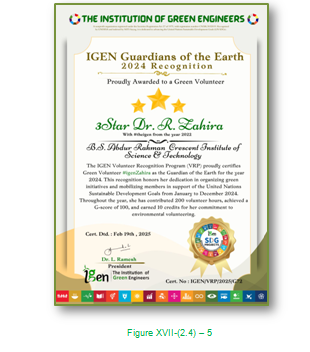
STAR ORGANISER
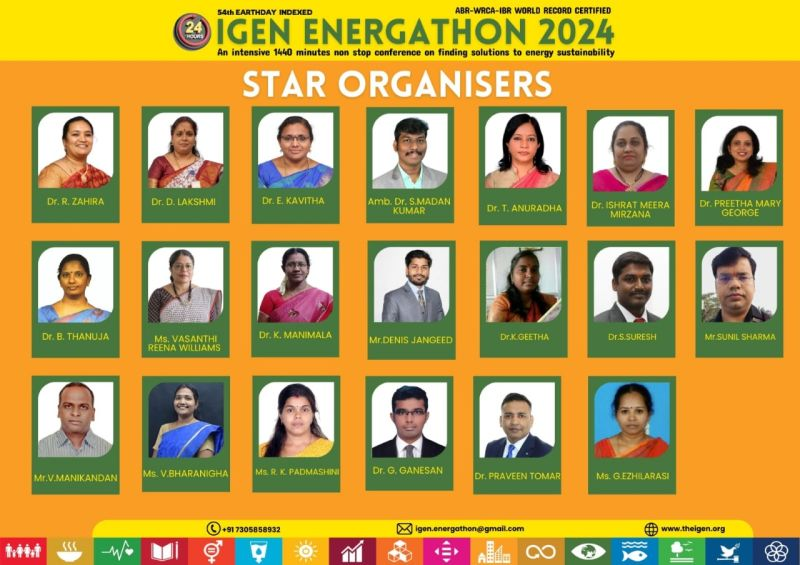
Figure XVII(2.4)-6
PARTNERS ENERGY AND ACTION PRIVATE MEET – 2024
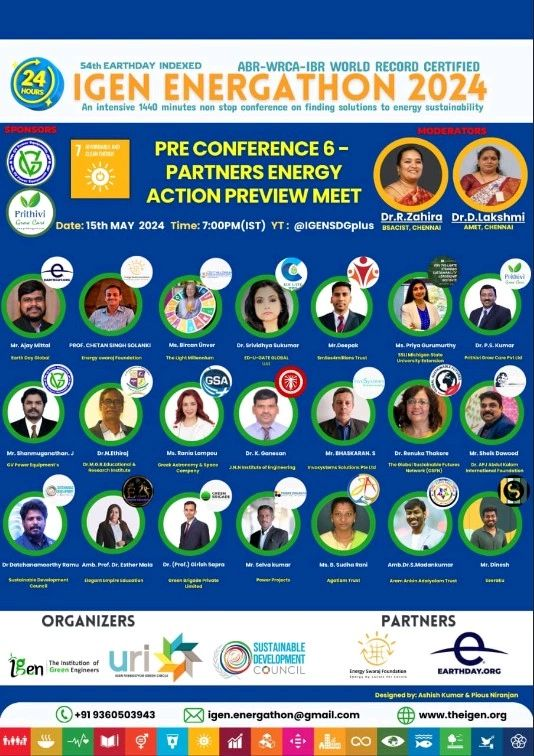
Figure XVII (2.4)-7
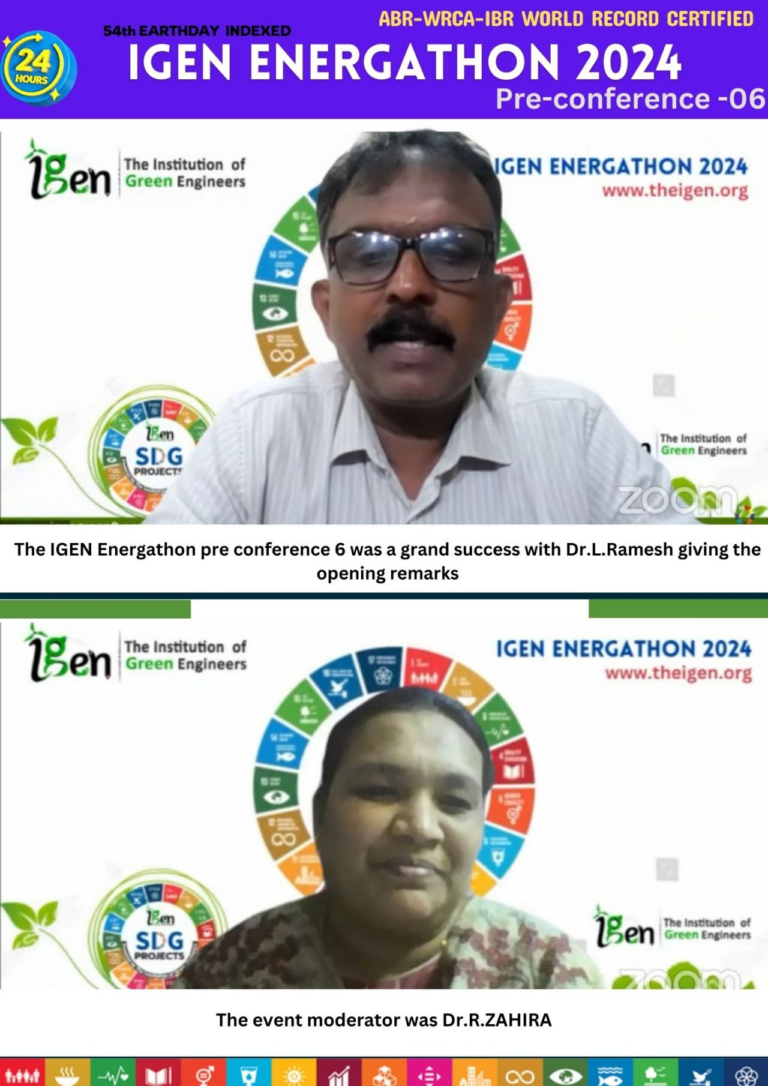
The Program conference video link: https://www.youtube.com/live/0OJTDfqnmO4
For reporting purposes, BSACIST should articulate concrete indicators linked number of policy inputs submitted, number of policy discussions hosted or moderated, number of modelling exercises completed, frequency of SDG-related monitoring reports produced, and instances of adaptive management decisions implemented. These indicators can be tied to the SDG Accord framework to demonstrate progress in governance, partnerships, and knowledge exchange, while also informing internal planning and external communications.
D. Partnerships and Collaborations of B.S. Abdur Rahman Crescent Institute of Science and Technology Aligned with Sustainable Development Goals
E. SDG Best Practice – Start-ups
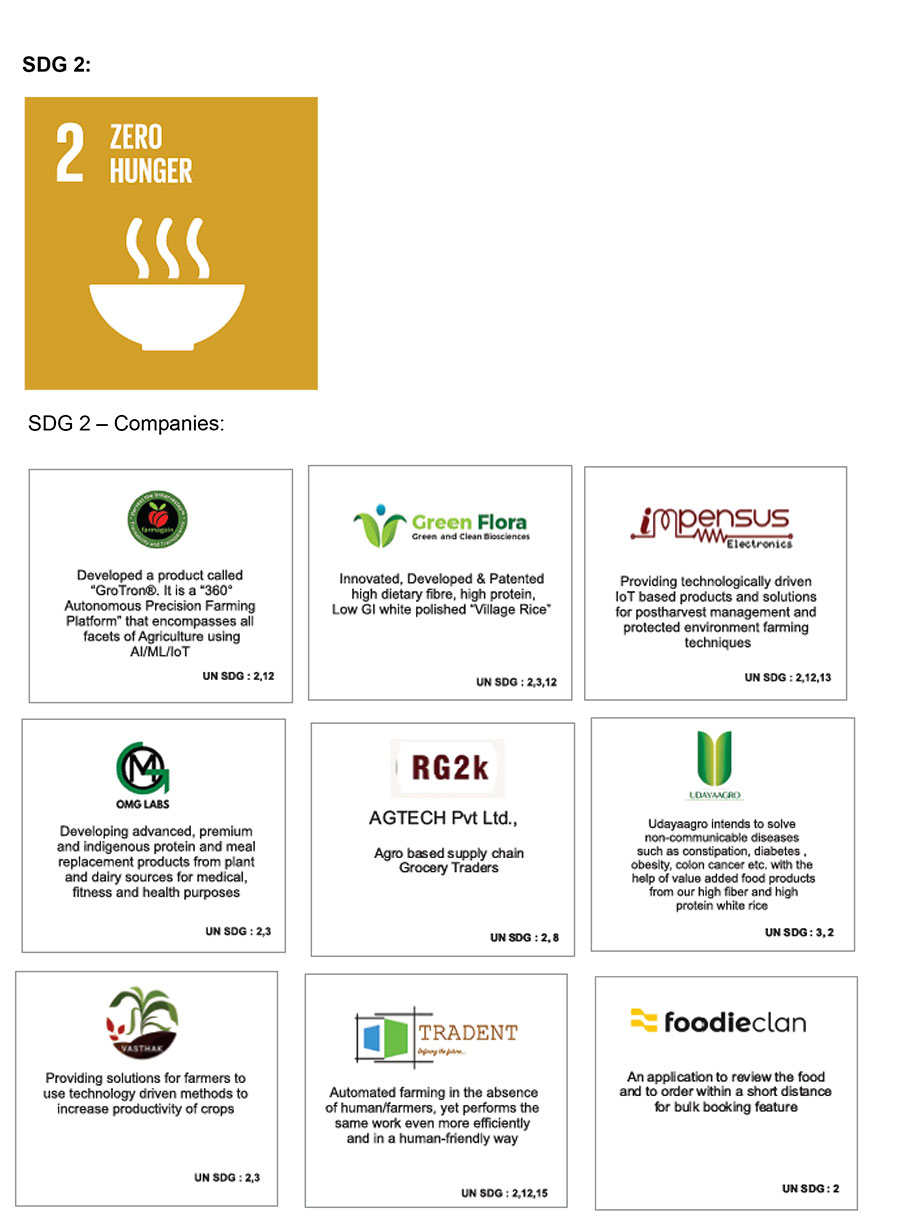
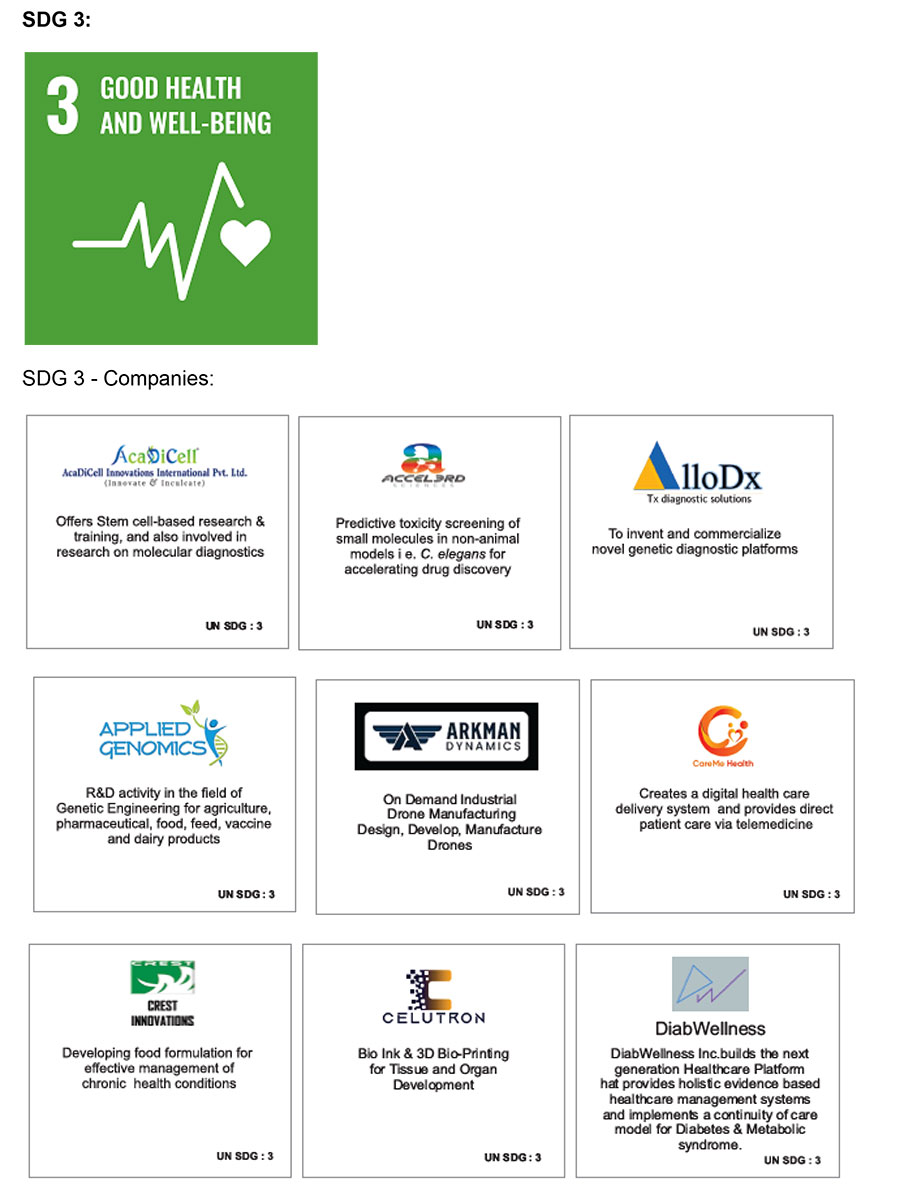
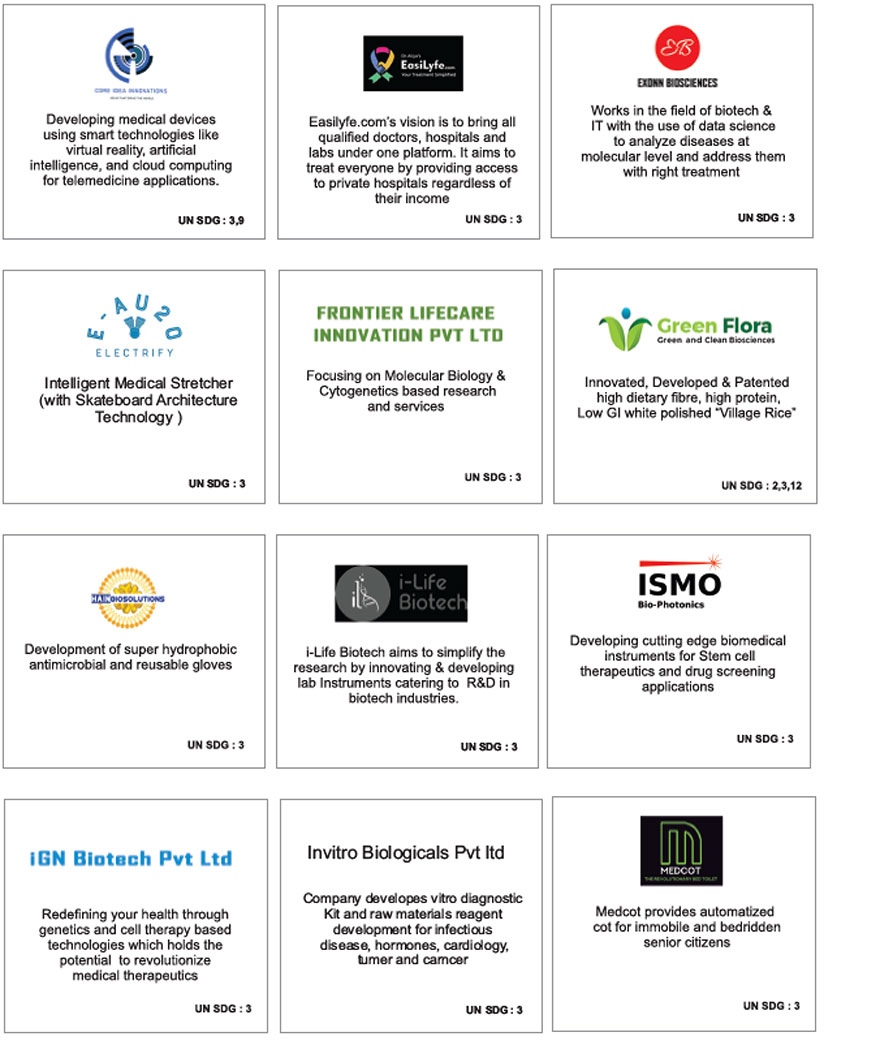
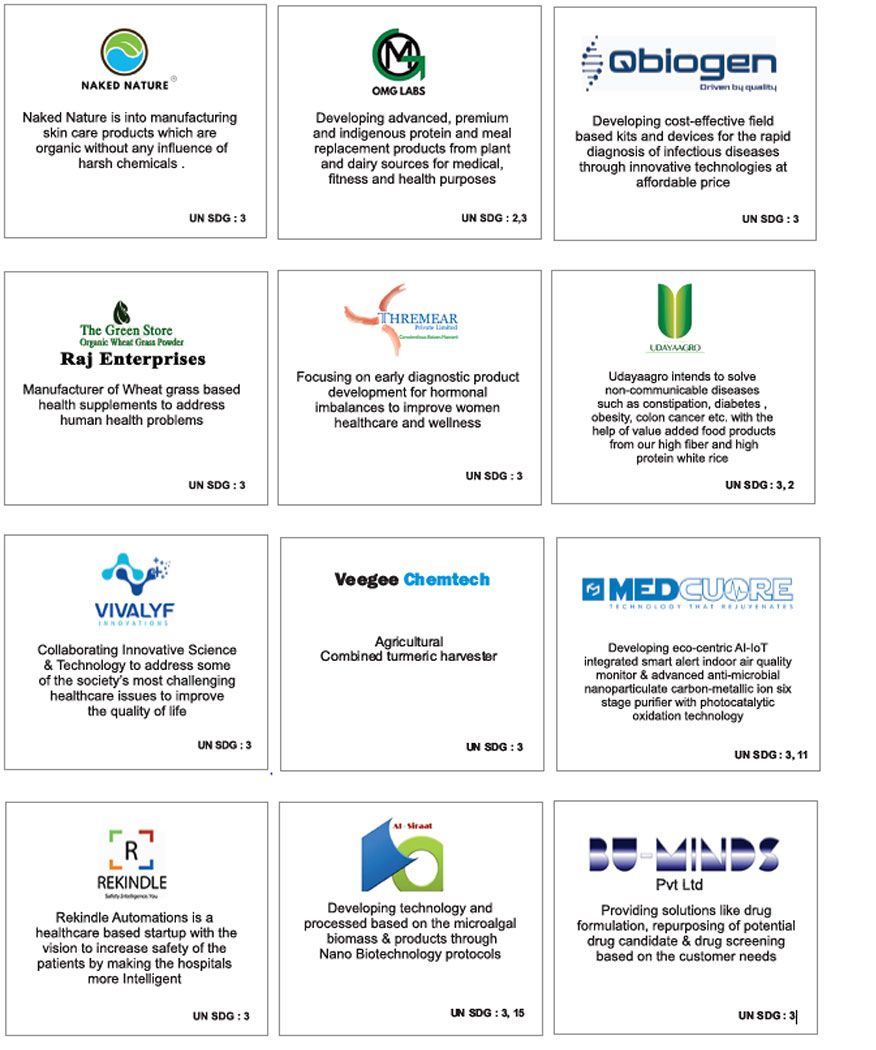
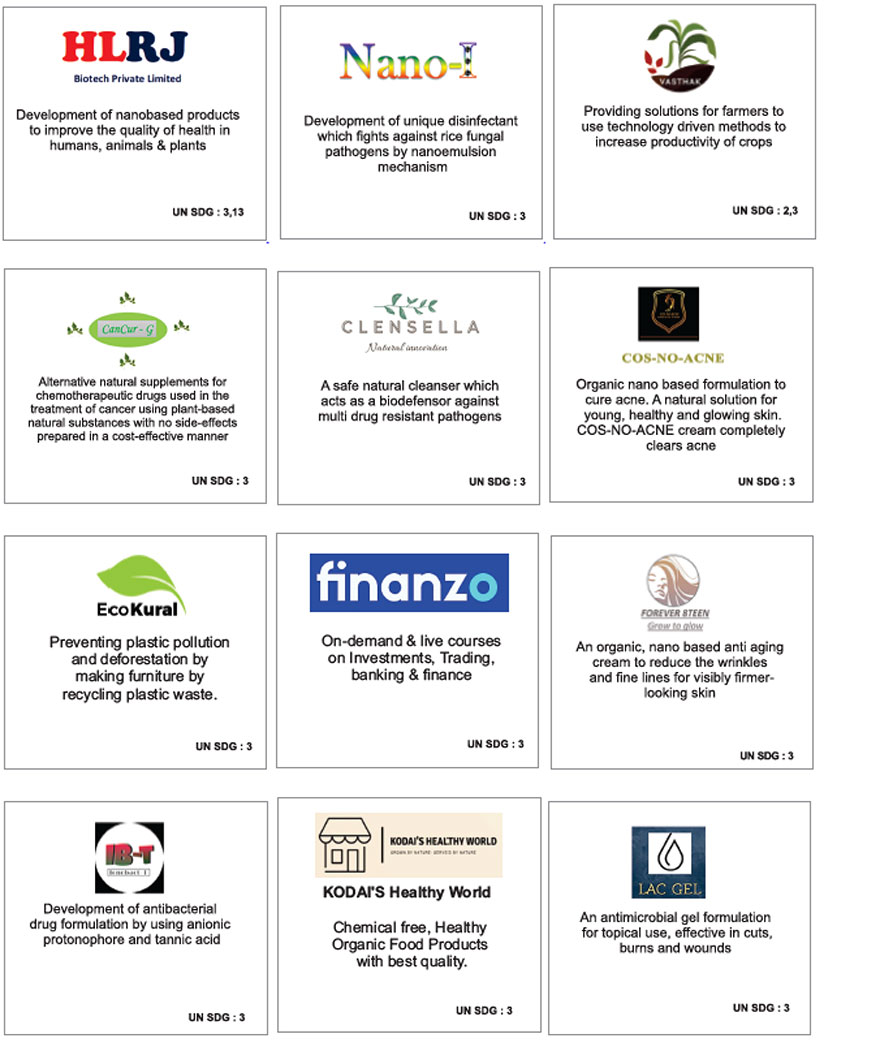
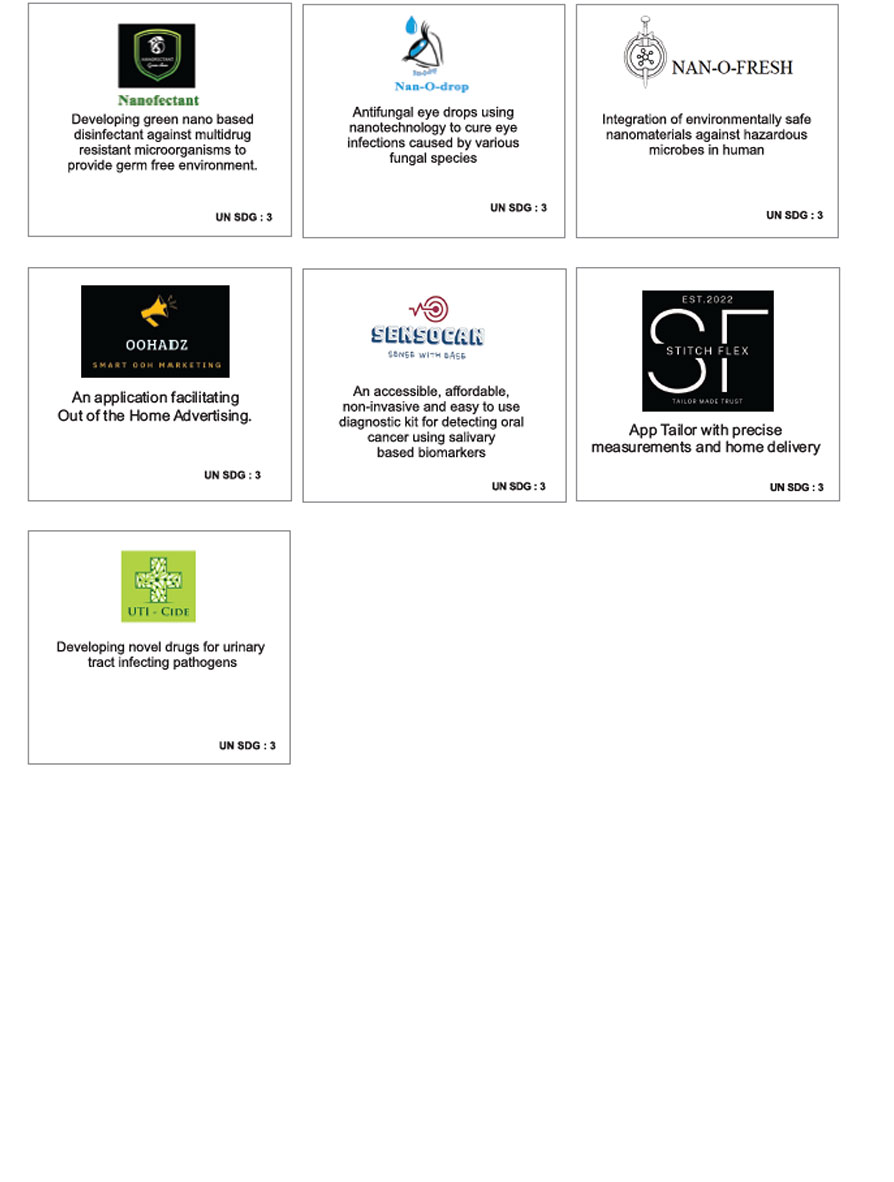
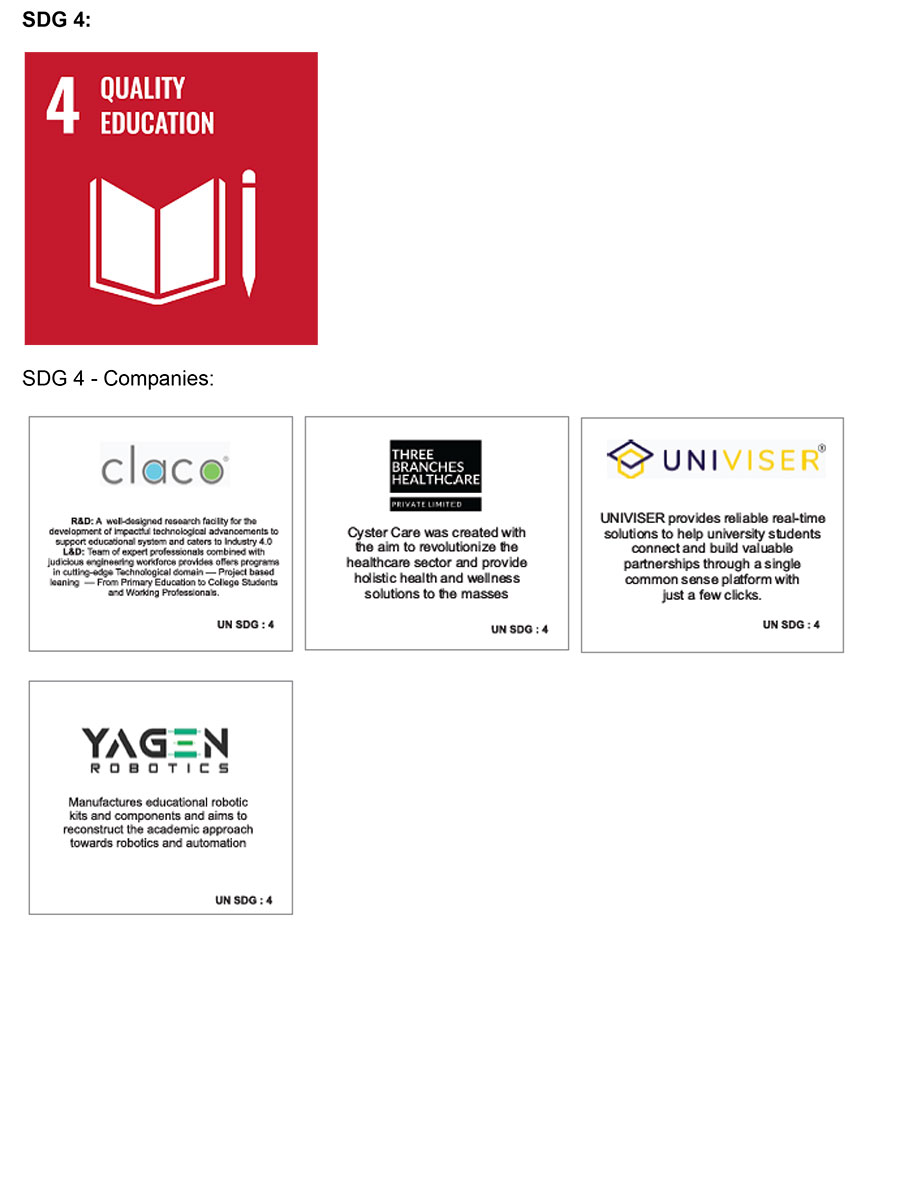
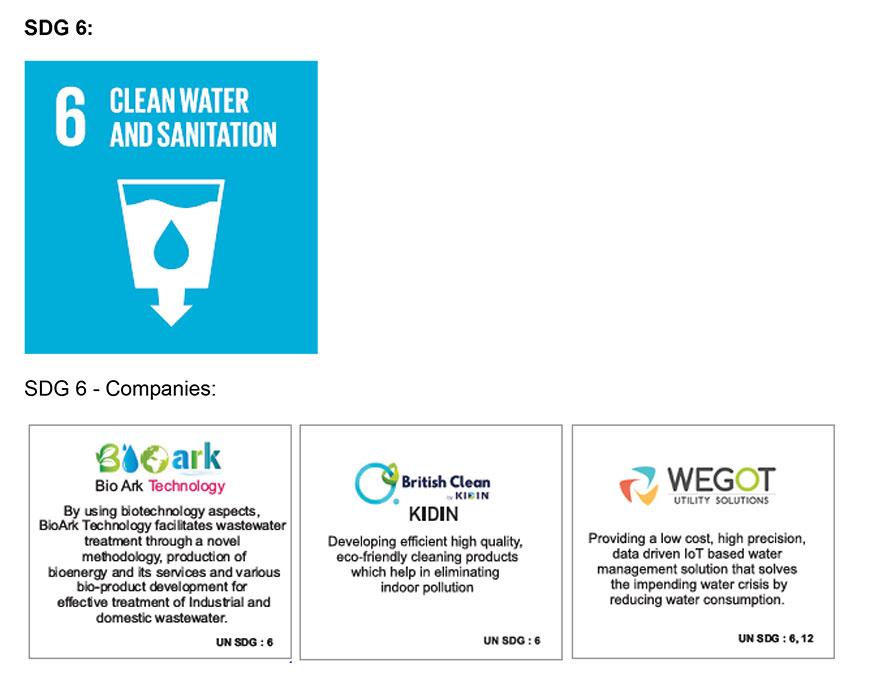
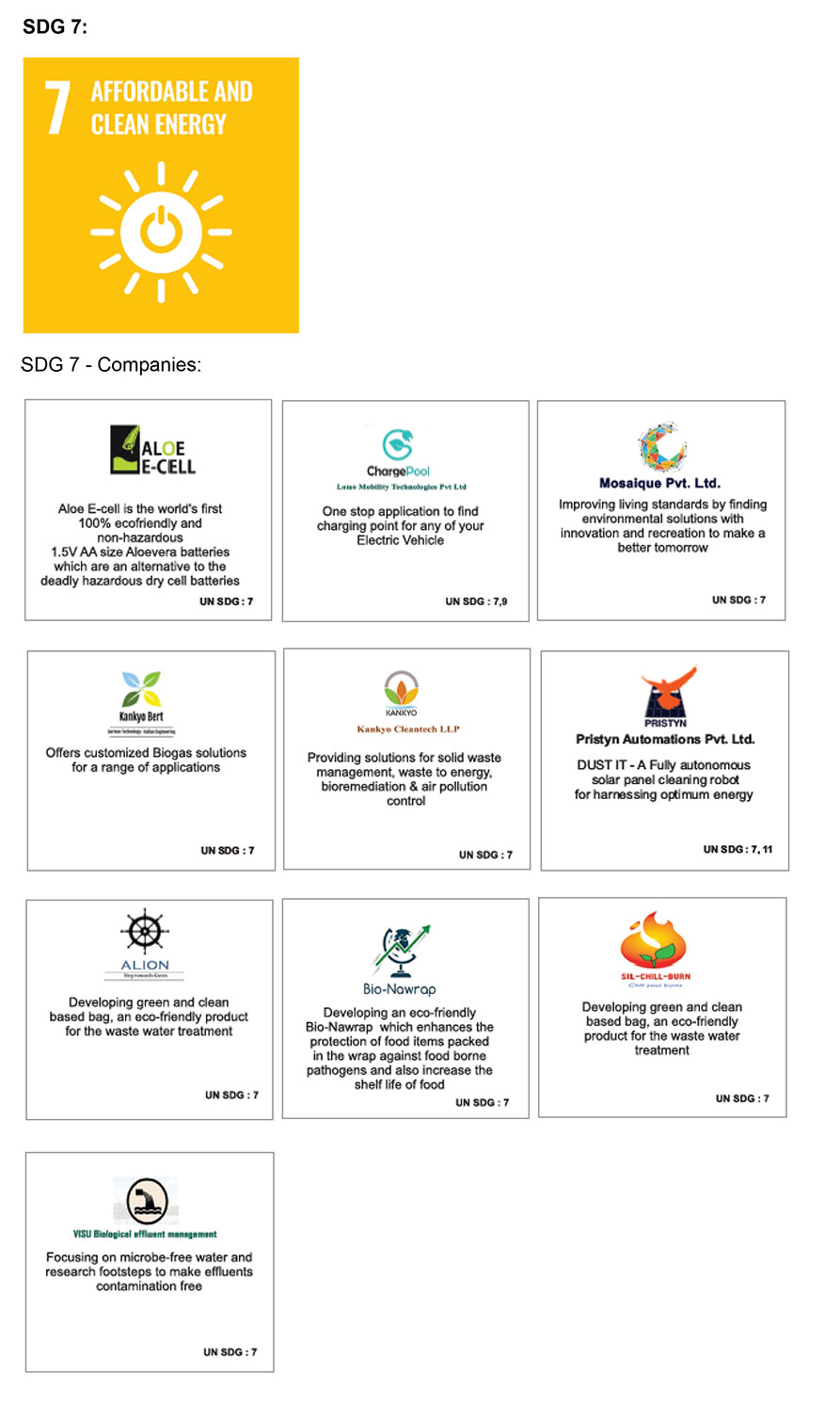
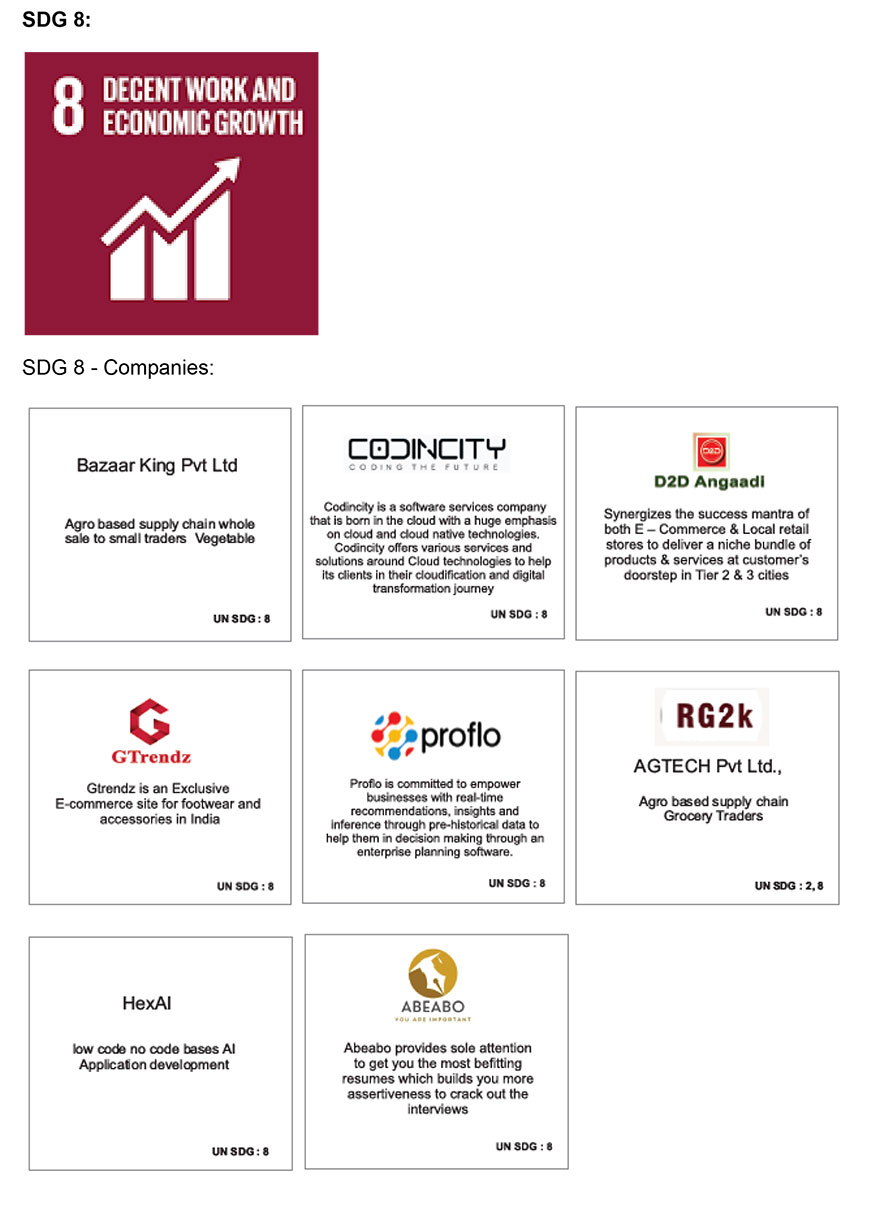
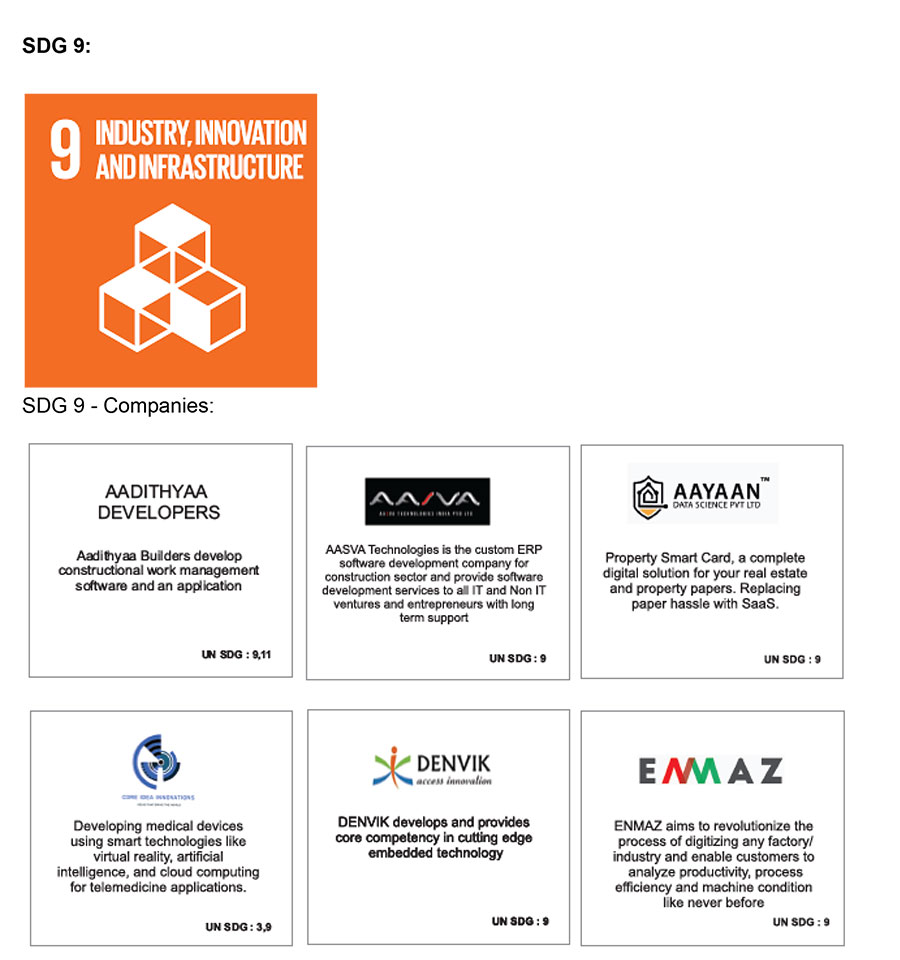
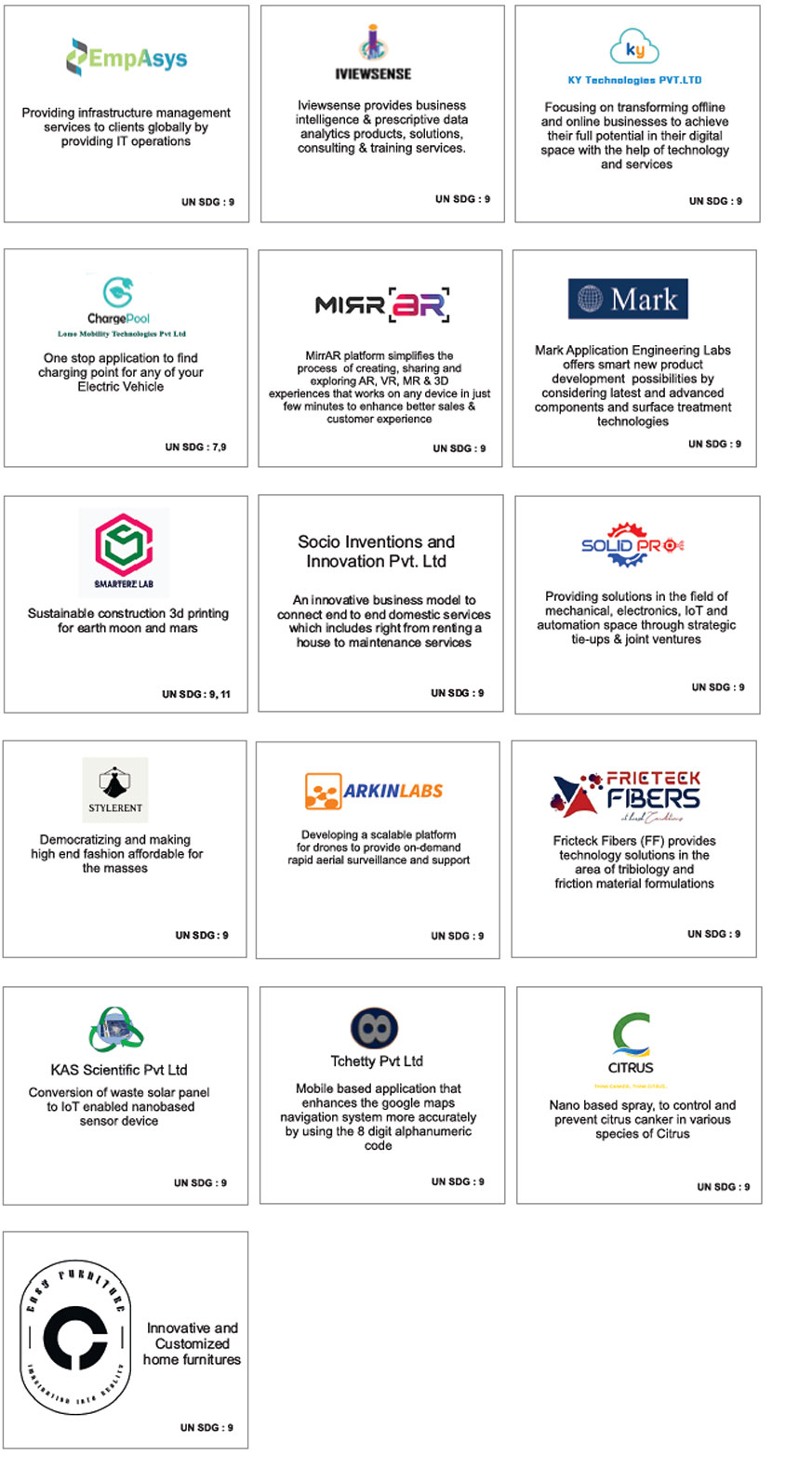
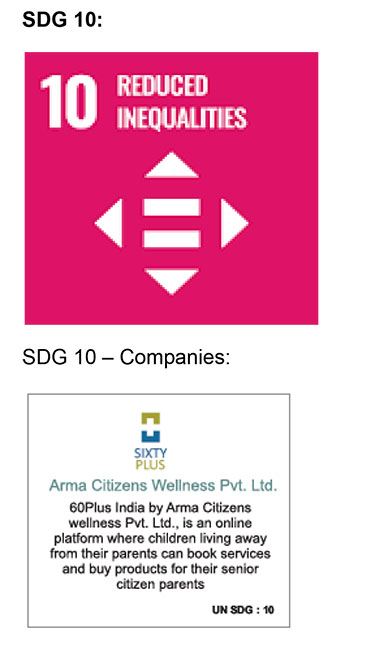
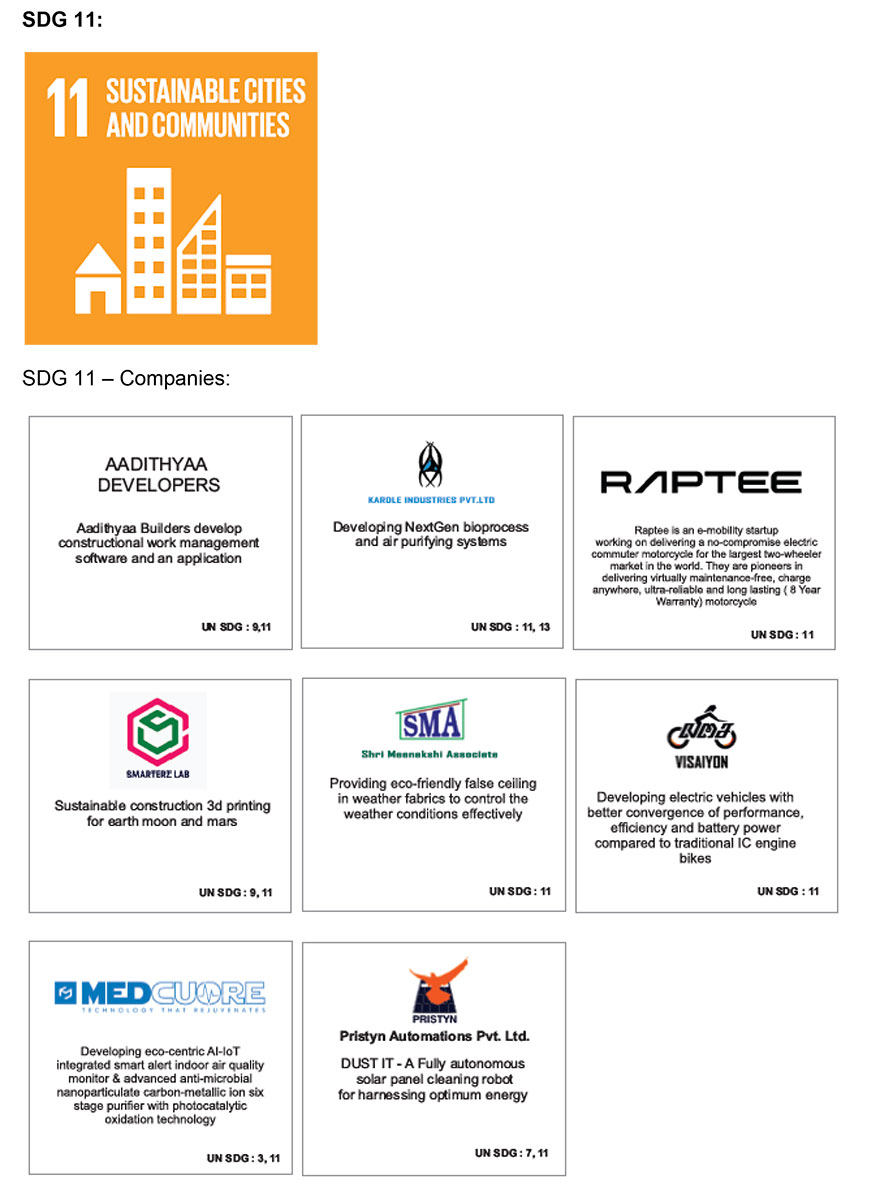
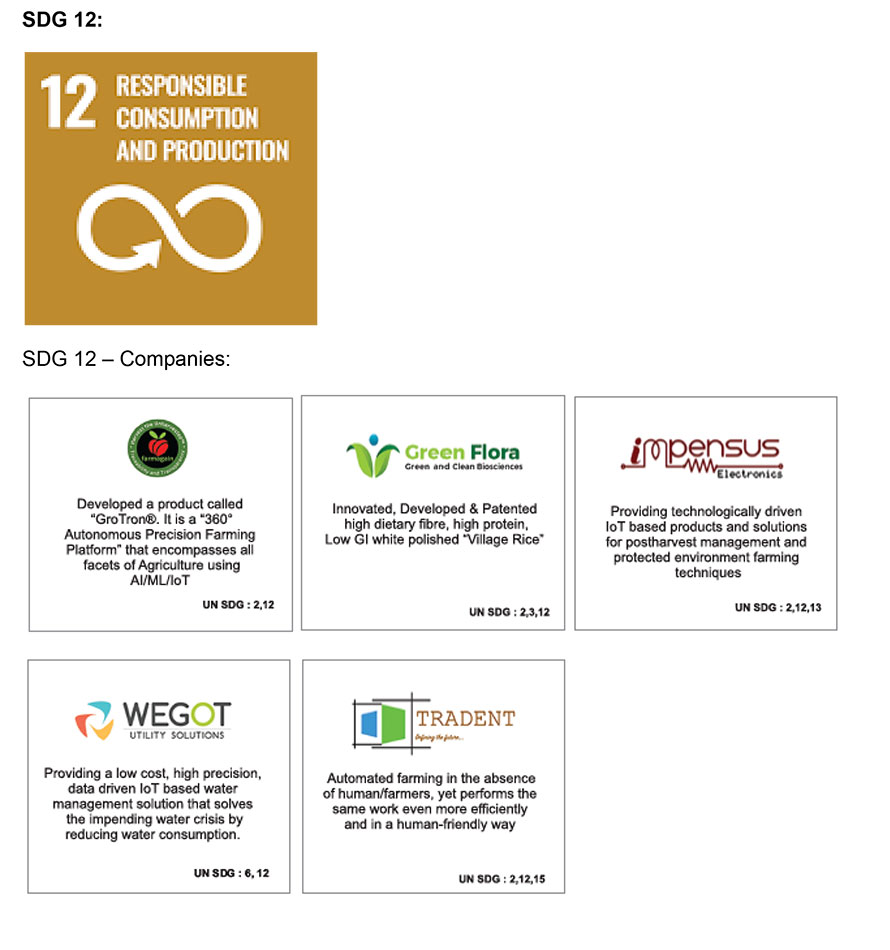
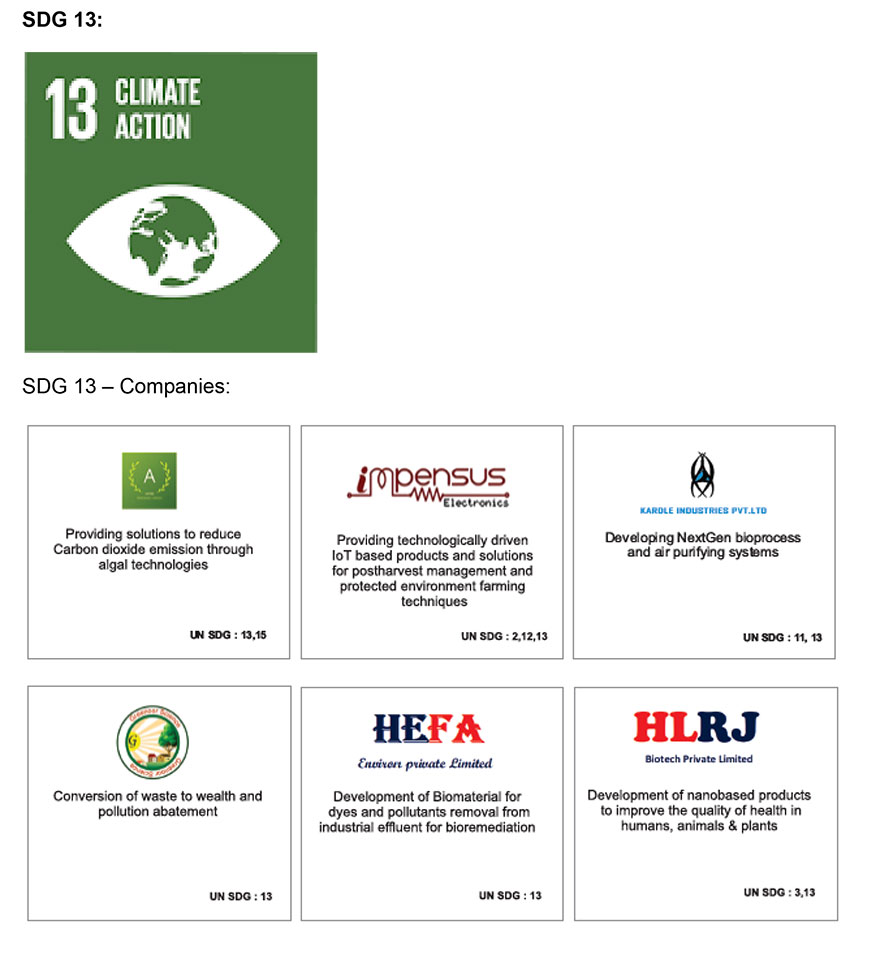
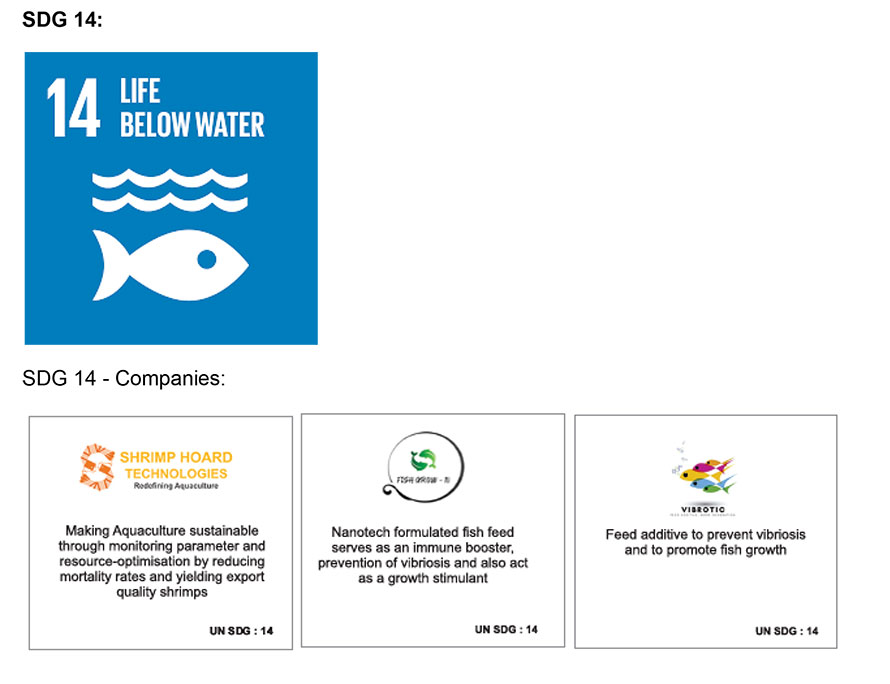
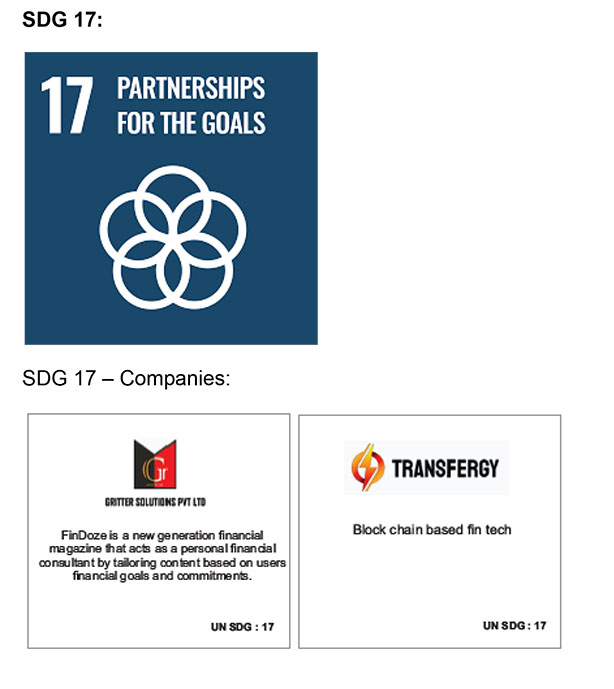
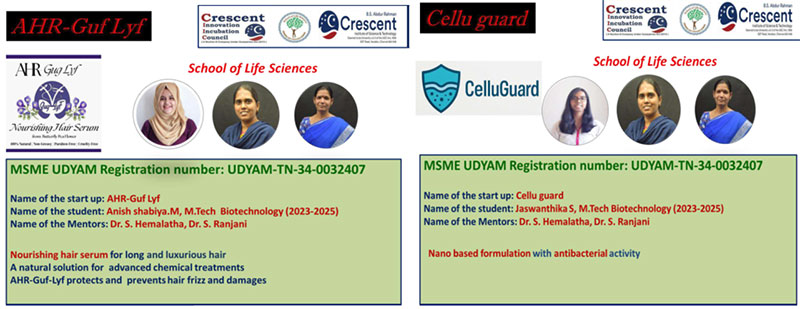
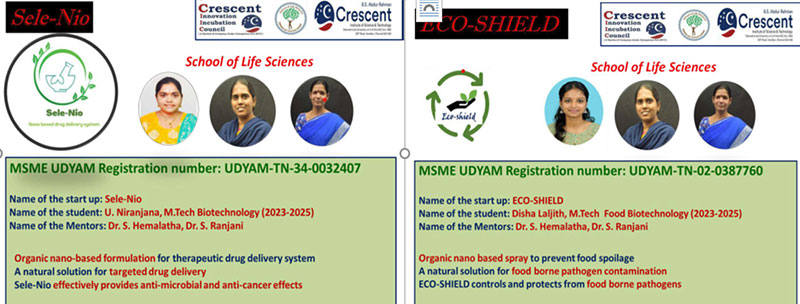
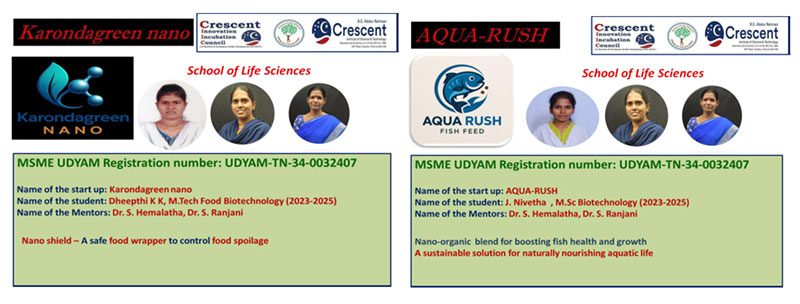
B. S. Abdur Rahman Crescent Institute of Science and Technology possesses one of the top Incubators in India- Crescent Innovation and Incubation Council (CIIC). The CIIC houses 120 start-ups from different sectors, such as Life Sciences, Industry 4.0, and Smart mobility and transportation. The CIIC builds and nurtures our society by nudging entrepreneurs with Integrity, Sustainability, and a Culture of innovation, a Triple ‘M’ Strategy (Mentor, Money, and Market). The CIIC encourages Start-ups to provide the solution for the SDG problem. The Start-ups are as follows:

F. Policy for Partnerships for the Goals
Issue: 04; Revised on 2023| Policy Created on | July 2009 |
| 1st Revision amended on | IQAC Meeting held on 27th October 2017 |
| 2nd Revision amended on | IQAC Meeting held on 31st March 2021 |
| 3rd Revision amended on | IQAC Meeting held on 16th June 2023 |
The primary objective of this policy is to establish and strengthen partnerships among universities, government bodies, NGOs, and the private sector to promote sustainable development through collaborative efforts, knowledge sharing, and resource mobilisation.
17.2 STATEMENT OF POLICY The following metrics and indicators will guide the implementation of this policy.- Research into Partnerships for the Goals: Increase the proportion of academic publications co-authored with low or lower-middle-income countries to foster global collaboration.
- Relationships to Support the Goals: Develop mechanisms to gather data on SDG progress and promote best practices through cross-sectoral dialogue.
- Publication of SDG Reports: Institutions must commit to publishing data on their performance against each of the 17 SDGs, ensuring transparency and accountability.
- Education for SDGs: Ensure a commitment to meaningful education around the SDGs across all university programs relevant to all students.
- Collaboration for SDG Best Practices: Engage in international collaboration to review and develop best practices for tackling the SDGs.
- Establish Collaborative Frameworks:
- Create Memoranda of Understanding (MoUs) with local and international organizations, NGOs, and government agencies to formalise partnerships.
- Engage in joint research initiatives that align with SDGs
- Enhance Sustainability Literacy:
- Integrate sustainability concepts into the curriculum across all disciplines, ensuring that students acquire the necessary knowledge, skills, and values to contribute to sustainable development.
- Implement workshops and training sessions for faculty and students to enhance understanding of the SDGs and their interconnections.
- Promote Cross-Sectoral Dialogue:
- Organize annual conferences and seminars that bring together stakeholders from academia, industry, and government to discuss progress, challenges, and innovative solutions related to the SDGs.
- Facilitate platforms for knowledge exchange, such as webinars and collaborative projects, to share best practices and successful case studies.
- Monitor and Evaluate Partnerships:
- Develop a robust monitoring and evaluation framework to assess the effectiveness of partnerships and their contributions to achieving the SDGs.
- Utilize data collected from partnerships to inform policy decisions and improve collaborative efforts.
- Short-term (1-2 years): Establish partnerships, integrate sustainability literacy into the curriculum, and initiate cross-sectoral dialogues.
- Medium-term (3-5 years): Expand collaborative research projects, publish annual SDG reports, and evaluate the impact of partnerships.
- Long-term (5+ years): Foster a culture of sustainability within the institution and the community, ensuring ongoing commitment to the SDGs.
- Campus Signage:
- Display clear and informative signage throughout the campus highlighting key aspects of the Partnerships for the Goals policy, focusing on sustainability practices.
- Utilize engaging visuals and infographics that effectively capture attention and communicate important messages.
- Regular Workshops and Seminars:
- Conduct awareness programs at regular intervals, including workshops, seminars, and training sessions to educate the campus community about the importance of partnerships for sustainability.
- Use interactive formats to promote engagement, encourage dialogue, and facilitate knowledge sharing among participants.
- Student and Faculty Involvement:
- Involve students and faculty in planning and executing awareness programs, fostering a sense of ownership and responsibility towards the policy’s implementation.
- Encourage student-led initiatives that promote collaboration and sustainability practices across campus.
- Website Updates:
- Post the Partnerships for the Goals policy on the Institute’s official website, ensuring easy access for all stakeholders.
- Regularly update the webpage with new information regarding events, initiatives, and progress related to the policy.
- Social Media Engagement:
- Utilize social media platforms to raise awareness about the policy, share success stories, and promote upcoming events related to partnerships and sustainability.
- Create engaging content, including videos, infographics, and testimonials, to reach a broader audience and enhance visibility.
- Track the effectiveness of dissemination strategies through metrics.
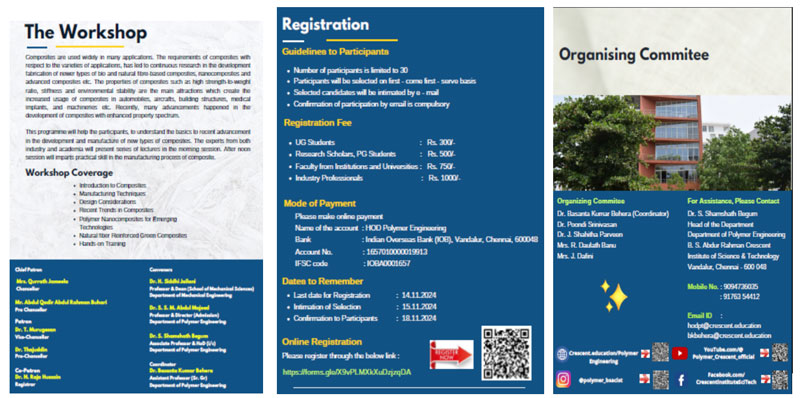
National Workshop
The Complete Report of the Startup Data has uploaded in the following web link :
https://crescent.education/wp-content/uploads/2025/07/Startup-July-2025_compressed.pdf
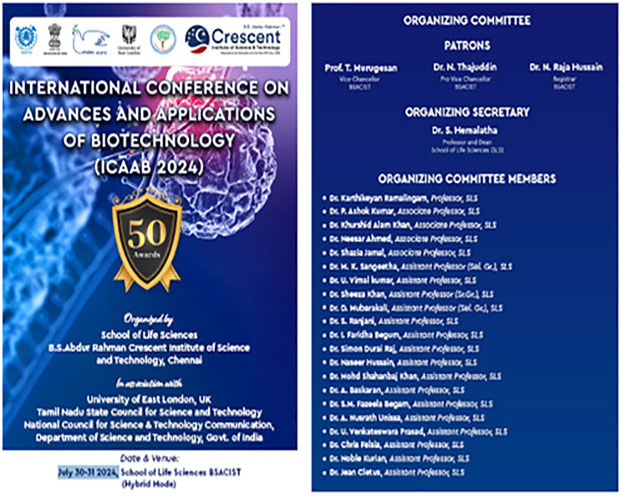
I. International conference on advances and applications of biotechnology (ICAAB 2024)
International conference on Advances and applications of biotechnology (ICAAB 2024) was organized in association with University of East London, UK supported by TamilNadu State Council for Science and Technology National Council for Science & Technology Communication, Department of Science and Technology, Govt.of India on July 30, 31, 2024
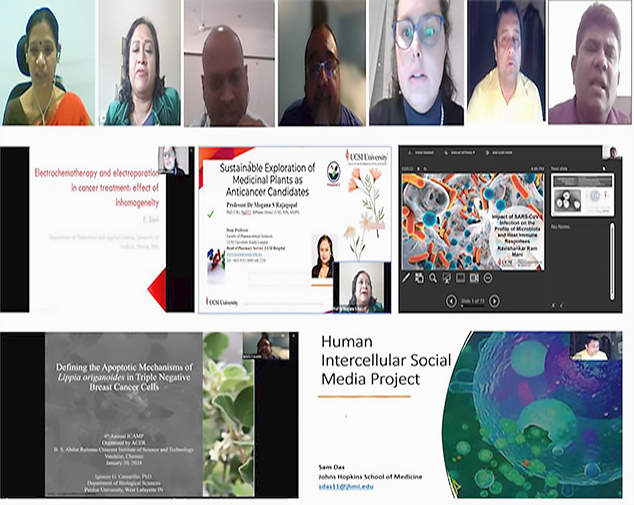
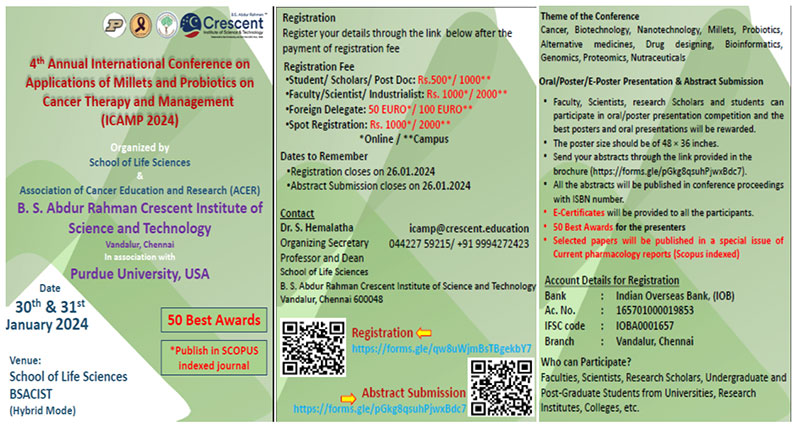
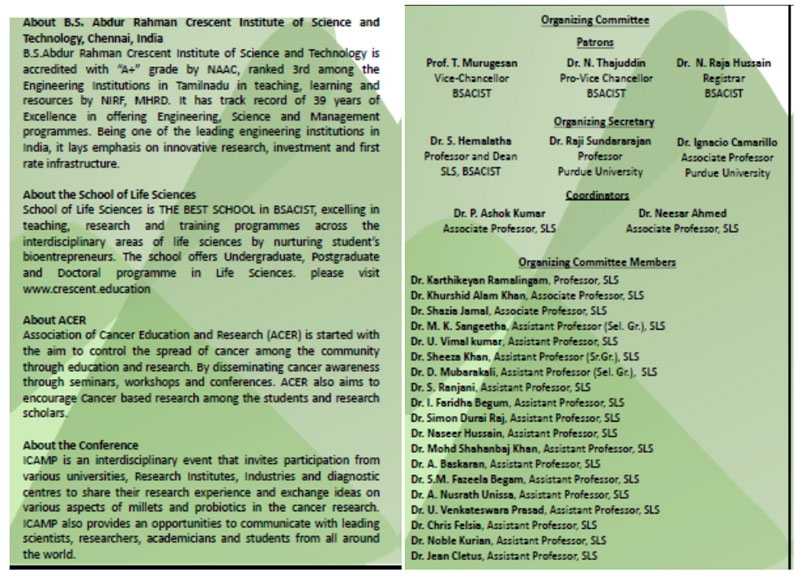
4th Annual International Conference on Applications of Millets and Probiotics on Cancer Therapy and Management (ICAMP 2024)
4th Annual International Conference on Applications of Millets and Probiotics on Cancer Therapy and Management (ICAMP 2024) was Organized in association with Association of Cancer Education and Research (ACER) and Purdue University, USA on January, 30-31, 2024