
B.S. Abdur Rahman Crescent Institute of Science and Technology is committed to advancing Sustainable Development Goal (SDG 7) by ensuring universal access to reliable, affordable, and modern energy for all within our campus community. Through energy-efficient building upgrades, smart energy management, and the integration of on-site renewable energy, we strive to reduce energy demand, lower operating costs, and improve indoor environmental quality for students, faculty, and staff. Our ongoing initiatives—ranging from LED retrofits and inverter-driven HVAC systems to cloud-based controls and solar installations—reflect a clear dedication to sustainable development, resilience, and leadership in energy stewardship.
LED LIGHTS
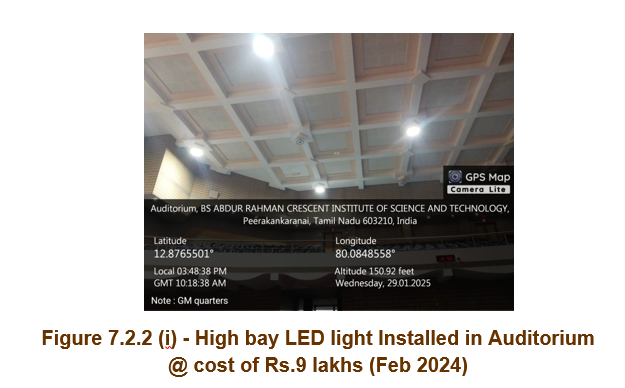
LED light fixtures are being extensively used for all new interior renovation works in the campus. So far, 159.79kW capacities of LED lights are fixed which provide around 100% energy saving compared to conventional lighting.
SL NO | BUILDING | QTY | TOTAL WATTS |
1 | ACADEMIC BLOCK | 3916 | 68609 |
2 | AUDITORIUM | 255 | 9787 |
3 | MENS HOSTEL | 1712 | 27085 |
4 | WOMENS HOSTEL | 752 | 9455 |
5 | NEW STAFF QUARTERS | 408 | 5635 |
6 | CAMPUS STREET LIGHT | 286 | 8570 |
7 | MEDICAL | 35 | 589 |
8 | ESTATE OFFICE | 47 | 910 |
9 | MAIN CANTEEN | 45 | 1042 |
10 | VC OFFICE | 100 | 620 |
11 | VC VILLA | 71 | 971 |
12 | GUEST HOUSE | 37 | 680 |
13 | DRIVERS CABIN | 8 | 120 |
14 | OLD STAFF QUARTERS | 78 | 1505 |
15 | SPORTS LIGHTING | 64 | 12800 |
16 | HR OFFICE | 27 | 500 |
17 | FOOD WASTE MANAGEMENT PLANT | 26 | 640 |
18 | SOLAR STREET LIGHT | 10 | 250 |
19 | PURCHASE OFFICE (EO) | 2 | 30 |
20 | CIIC BLOCK | 328 | 5479 |
21 | CIIC 2ND FLOOR STUDIO | 13 | 225 |
22 | CANTEENS | 119 | 1984 |
23 | OUTDOOR LIGHTING | 103 | 2306 |
| TOTAL | 8442 | 1,59,792 |
Table 7.2.2 (i) – LED Fixtures in the Campus

Passive Infrared Motion Sensor Lights
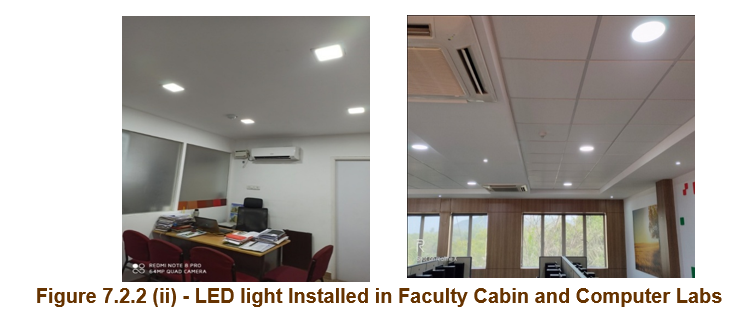
Motion Sensor lights are provided in computer science lab, staff cabins and toilets for energy savings.
B. BEE 5-Star Rated Air Conditioners
With an emphasis to energy conservation, all split AC units purchased since the year 2012 are of BEE star energy rating. The star rated AC units are free from ozone depleting CFC.
Old non-inverter split AC units and window AC units are gradually being replaced with centralized VRF AC systems and inverter-type AC units. The VRF and inverter-type AC units save space, cost, and electricity.
| MODEL | QTY | TON |
| 1.0 TON Split Inverter | 17 | 17 |
| 1.5 Ton Split 5* | 29 | 44 |
| 2.0 Ton Split 5* | 71 | 142 |
| TOTAL | 117 | 203 |
Table 7.2.2 (ii) – BEE 5-Star Rated Air Conditioners details
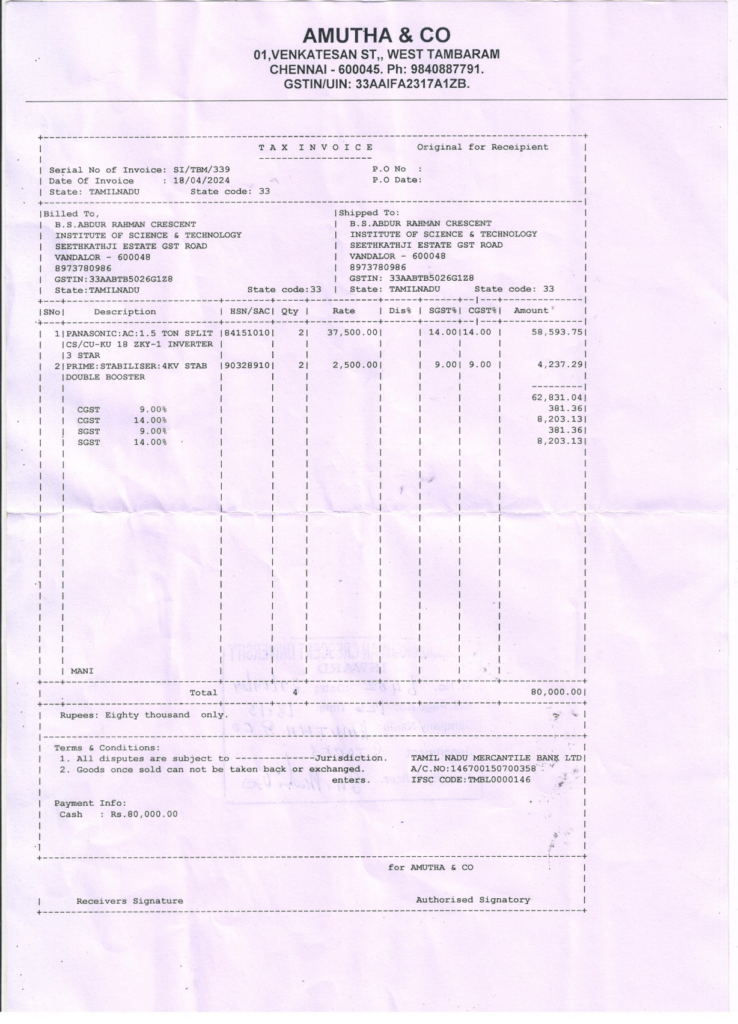
Figure 7.2.2 (iii) – Sample Invoice copy for the procurement of Inverter AC Units
C. Enhancing Energy Efficiency with Smart Door Locks
B.S. Abdur Rahman Crescent Institute of Science and Technology (BSACIST) has implemented energy-sparing solutions through the installation of smart door locks in its facilities, such as the KBA Men’s Hostel. These state-of-the-art locking systems not only enhance security but also contribute to energy efficiency by controlling access to communal spaces based on real-time occupancy. The integration of smart technology allows for automatic locking and unlocking, reducing the frequency of door handling and minimizing energy loss associated with heating or cooling open areas. By ensuring that doors remain closed when not in use, these smart locks help maintain optimal indoor climates, furthering BSACIST’s commitment to sustainable practices. This innovative approach reflects the institution’s dedication to creating a more energy-conscious campus environment while prioritizing the safety and comfort of its residents.
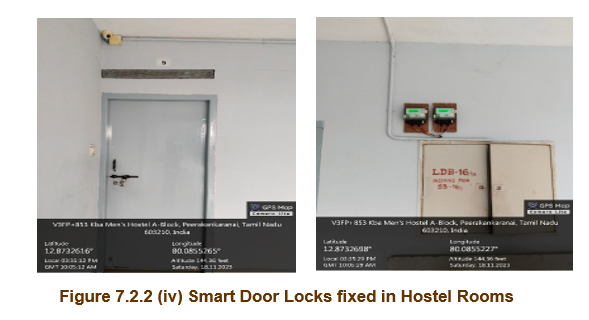
D. Energy Efficiency Design Strategies
Comprehensive simulation studies have been pivotal in modelling the energy-consuming systems of the building, leading to an impressive reduction in overall energy consumption of about 25%. These studies informed a series of strategic design decisions aimed at optimizing energy efficiency across various dimensions.
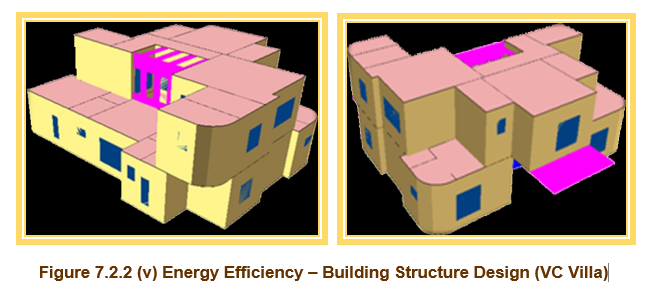
- Window to Wall Ratio:The building features an optimal design for its window-to-wall ratio, ensuring that windows are strategically placed to maximize natural light while minimizing heat gain. This balance is crucial in creating a comfortable indoor environment and reducing reliance on artificial lighting.
- Natural Lighting Utilization:The design effectively harnesses natural light, ensuring that over 75% of each apartment is well-lit during the day. This thoughtful approach minimizes the need for artificial lighting, thereby conserving energy.
- External Shading Devices:To further enhance energy efficiency, external shading devices have been incorporated into the design. These devices play a critical role in reducing solar radiation exposure, thereby contributing to a more stable indoor temperature and decreasing the demand for cooling.
- High-Performance Building Envelope:The building incorporates a high-performance envelope using AAC (Autoclaved Aerated Concrete) blocks. This choice significantly reduces heat ingress, which helps in lowering the overall energy requirements for heating and cooling.
- Efficient Lighting Systems:The implementation of efficient lighting systems is essential for reducing overall energy consumption. By utilizing modern, energy-saving bulbs, the building ensures adequate illumination while minimizing electricity usage.
- Solar Hot Water System:The provision of a solar hot water system integrates renewable energy into the building’s operational strategy. This system significantly reduces the dependency on conventional energy sources for heating water, aligning with sustainability goals.
- Adherence to BEE Standards:Lastly, the building meets minimum Bureau of Energy Efficiency (BEE) standards, targeting a rating of 4 or 5 stars. This commitment to energy efficiency is reflected in the choice of split units that are CFC-free, further enhancing the building’s sustainable profile.
Holistic Sustainability: Transforming Campus Energy Ecosystem
By integrating multiple approaches – solar power generation, energy-efficient technologies, smart infrastructure design, and collaborative student-driven projects – B.S. Abdur Rahman Crescent Institute of Science and Technology, has created a holistic framework for upgrading buildings to higher energy efficiency. The institute’s commitment goes beyond mere technological implementation, fostering a culture of sustainability and innovation. These strategic upgrades not only reduce operational costs and carbon footprint but also serve as a model for sustainable institutional development, demonstrating how existing infrastructure can be transformed into energy-efficient, environmentally responsible spaces.
E. Strategic Solar Infrastructure: BSACIST’s Comprehensive Energy Efficiency Approach
B.S. Abdur Rahman Crescent Institute of Science and Technology (BSACIST) has implemented a comprehensive strategy to upgrade existing buildings to higher energy efficiency through innovative renewable energy solutions. As part of its ‘Green Campus’ initiative, the institute has installed multiple rooftop solar photovoltaic power plants with a total capacity of 650 kWp, strategically positioned across various campus buildings. A new 125 kWp rooftop plant is currently being installed on the New Hostel Block, to operate alongside the existing 650 kWp system. Together, these installations bring the campus’s total solar capacity to 775 kWp, enhancing clean and green energy generation.
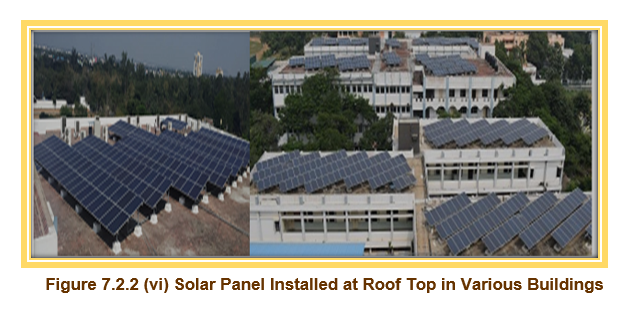
Quantifying Success: Solar Power Generation and Financial Savings
The solar power implementation has yielded significant energy efficiency improvements.
Plant | Units | Amount Saved |
150Kwp | 16,49,008 | 1,51,57,896 |
100kWp | 12,95,898 | 1,21,75,627 |
300kWp | 20,38,673 | 2,02,81,665 |
100kWp | 4,33,469 | 44,55,983 |
Total | 54,17,048 | 5,20,71,171 |
Table 7.2.2 (iii) Total Solar Power Generation – 650kWp
from 2014 to 31st December 2024
These solar installations now constitute 20% of the total electricity consumption since June 2014, representing a substantial upgrade in the campus’s energy efficiency infrastructure.
Innovative Energy Solutions: Beyond Solar Power Generation
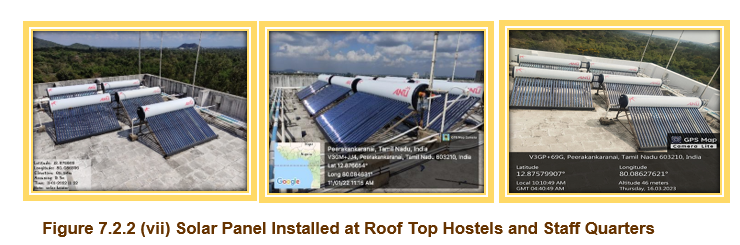
Beyond solar power, BSACIST has implemented complementary energy-efficient technologies to upgrade existing buildings. A notable example is the installation of solar water heating systems with a total capacity of 39,500 litres, equivalent to 365 electric geysers of 2kW capacity. These systems are strategically placed in Men’s Hostel blocks, Ladies Hostel, and New Staff Quarters, estimated to save approximately 24 lakhs in power consumption annually. The institute has also introduced innovative solutions like zero-export devices to manage surplus solar power generation and prevent potential damage to diesel generator sets.
Block | No. of tanks | Capacity in litres |
Men’s Hostel | ||
A Block | 20 | 5000 |
B Block | 6 | 3000 |
C Block | 6 | 3000 |
D Block | 8 | 4000 |
Main block | 20 | 5000 |
PG block | 12 | 3000 |
Ladies Hostel | ||
Main block | 10 | 5000 |
Annexure Block | ||
New Block Phase 1 | 17 | 5750 |
Staff Quarters | ||
New Staff Quarters | 23 | 5750 |
Total Capacity | 122 | 39,500Litres |
Table 7.2.2 (iv) Total capacity of water through Solar Heater
Smart Infrastructure: Collaborative Energy Management Strategies
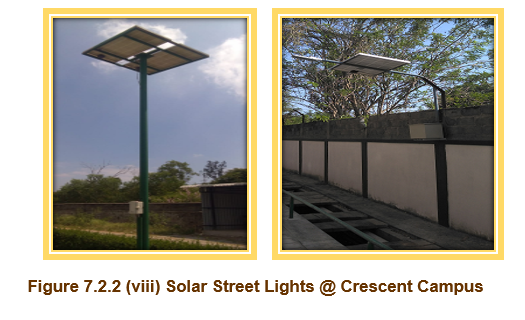
To further enhance energy efficiency, the institute has developed additional infrastructure improvements. Solar street lighting projects have been implemented along the road connecting staff quarters to the men’s hostel and the architecture block – a collaborative effort between third-year electrical engineering students and the estate electrical department. The zero-export device ensures that excess power generated by the solar power plant does not damage the diesel generator sets, while allowing the solar power to be shared across the campus grid during load shedding.