

B.S. Abdur Rahman Crescent Institute of Science and Technology (BSACIST) is committed to ensuring safe, affordable, and reliable access to clean water while safeguarding water quality and ecosystems. We advance wastewater treatment and pollution prevention, and promote water-conscious practices. We strengthen water reuse and measurement, and track consumption to drive efficiency. Our ongoing initiatives aim to reduce water stress, protect aquatic ecosystems, and expand safe water access, with progress demonstrated through defined metrics and regular monitoring.
A. VETIVER PLANTING TO REDUCE WATER POLLUTION: LOCAL COMMUNITY ENGAGEMENT AND ENVIRONMENTAL BENEFIT (03RD AUGUST, 2023)
Community-driven action by National Service Scheme (NSS) volunteers from B.S. Abdur Rahman Crescent Institute of Science & Technology, in collaboration with local authorities, targeted sewage-induced water pollution in the 27-foot-deep Urapakkam Kolatchiammal temple pond. The intervention focused on planting Vetiver grass along pond banks and upstream catchment areas to stabilize soil, reduce erosion, filter runoff, and enhance infiltration, thereby limiting pollutant transport to the pond. NSS volunteers from B.S. Abdur Rahman Crescent Institute of Science & Technology, alongside participants from SRM University, SRM Valliammai Engineering College, and Aadhi Engineering College, worked with local authorities to implement the plan. Vetiver’s deep, dense, fibrous root system is central to the approach, as it improves soil stability and infiltration, reduces surface runoff, and exhibits pollutant-retention properties. Expected outcomes include reduced sediment and nutrient loads entering the pond, improved groundwater recharge, and long-term soil rehabilitation around the watershed.
COMMUNITY AND GOVERNANCE FOCUS
The Urapakkam Kolatchiammal Temple pond faces long-standing sewage discharge from nearby residences, with unauthorized connections channeling wastewater into stormwater drains that should carry only rainwater. This situation contaminates the pond, accelerates sedimentation, risks eutrophication, and degrades water quality, potentially affecting local biodiversity and the pond’s cultural and community uses. The pollution also poses health risks to nearby residents and undermines the pond’s aesthetic and communal value. Addressing these issues requires a dual approach: managing soil erosion and runoff at the watershed level while simultaneously tackling sewage leakage through governance and infrastructure improvements.
EMPHASIS ON EDUCATION AND STEWARDSHIP
The primary objective is to reduce pollutant loads entering the pond by enhancing soil stability and filtering runoff at the source and along runoff pathways. A secondary aim is to improve soil health and infiltration around the pond to promote groundwater recharge and resilience against erosion. The intervention also seeks to foster collaborative learning and stewardship by involving NSS volunteers from multiple institutes and linking community action with local authorities, thereby building a model for cross-institutional watershed management and pollution prevention.
INTERVENTION DETAILS
Vetiver grass (Chrysopogon zizanioides) was introduced along the pond’s banks and in key erosion-prone zones within the upstream catchment. NSS volunteers from B.S. Abdur Rahman Crescent Institute of Science & Technology and partner institutions, under guidance from local authorities, participated in planting Vetiver. Vetiver was chosen for its deep, dense, and fibrous root system that stabilizes banks, reduces runoff velocity, and improves soil porosity and infiltration in compacted soils. Additionally, Vetiver can act as a biofilter, supporting microbial communities in the rhizosphere that aid in pollutant degradation and sequestration, including uptake of certain nutrients and heavy metals. Planting sites focused on the pond’s banks, upstream catchment areas, and zones most susceptible to runoff entry points.
MECHANISMS BY WHICH VETIVER REDUCES WATER POLLUTION
Vetiver reduces water pollution through several interrelated mechanisms. Its extensive root network anchors soil, significantly reducing bank instability and sediment entrainment during rainfall. Dense vegetative cover slows runoff, promotes infiltration, and lowers both the volume and velocity of runoff that would otherwise transport sediments and attached pollutants to the pond. As a biofilter, Vetiver’s root zone traps particulates and supports uptake of nutrients such as nitrogen and phosphorus, thereby reducing nutrient leakage to the water body. Improved soil structure from root penetration enhances infiltration rates, further diminishing surface runoff. Infiltration improvements also aid groundwater recharge, contributing to watershed resilience. Vetiver’s low-maintenance, drought-tolerant characteristics make it a robust, scalable solution for interfaces between rural and urban environments, supporting long-term sustainability.
EXPECTED ENVIRONMENTAL AND COMMUNITY BENEFITS
The initiative is anticipated to yield several benefits: improved pond water quality through reduced turbidity and nutrient loads; decreased sedimentation, which enhances the pond’s storage capacity and ecological health; strengthened ecosystem resilience with better habitat conditions around the pond; and empowered communities through NSS-led engagement that raises awareness about pollution sources and promotes responsible waste disposal. The approach also holds promise for informing local watershed management plans and anti-pollution strategies, particularly when integrated with proactive sewage management and enforcement of wastewater discharges.
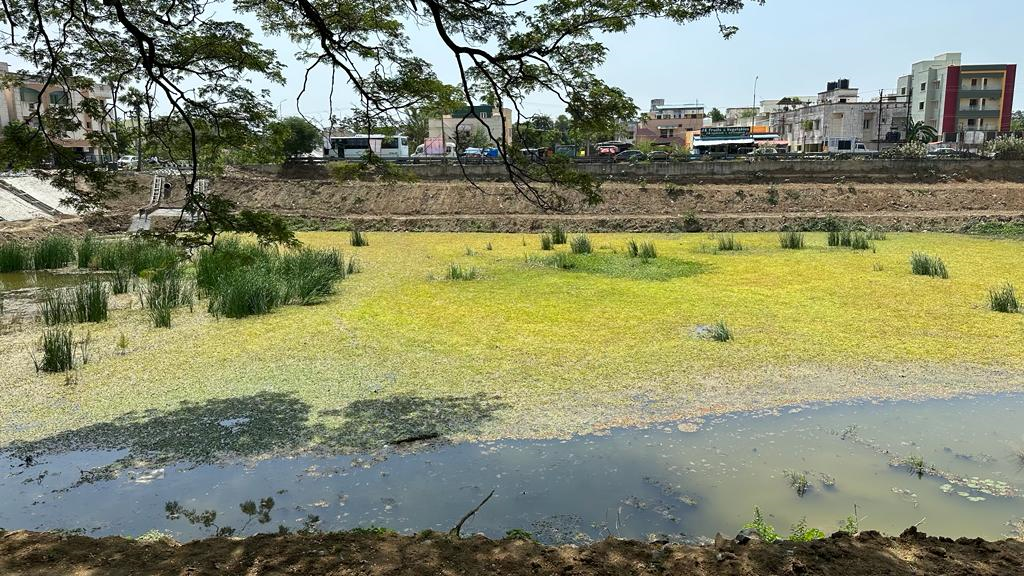
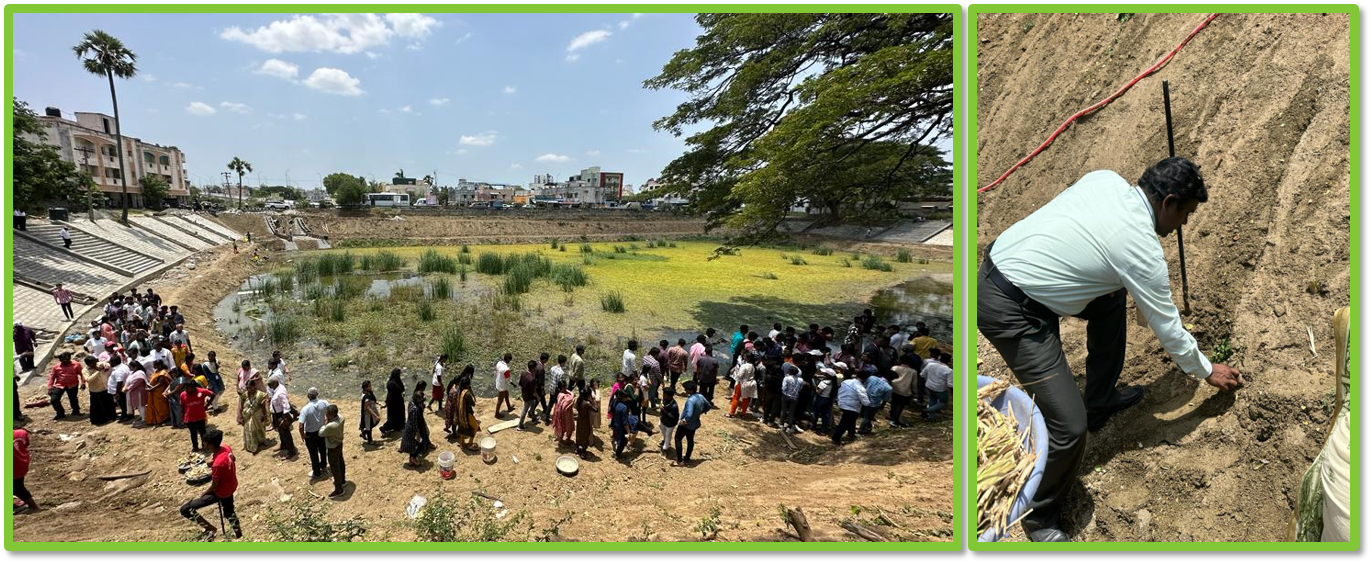

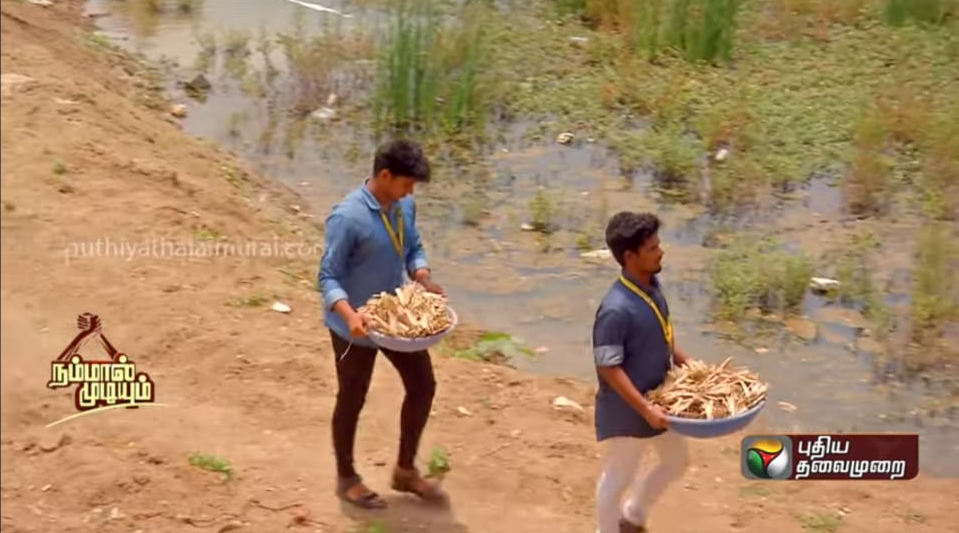
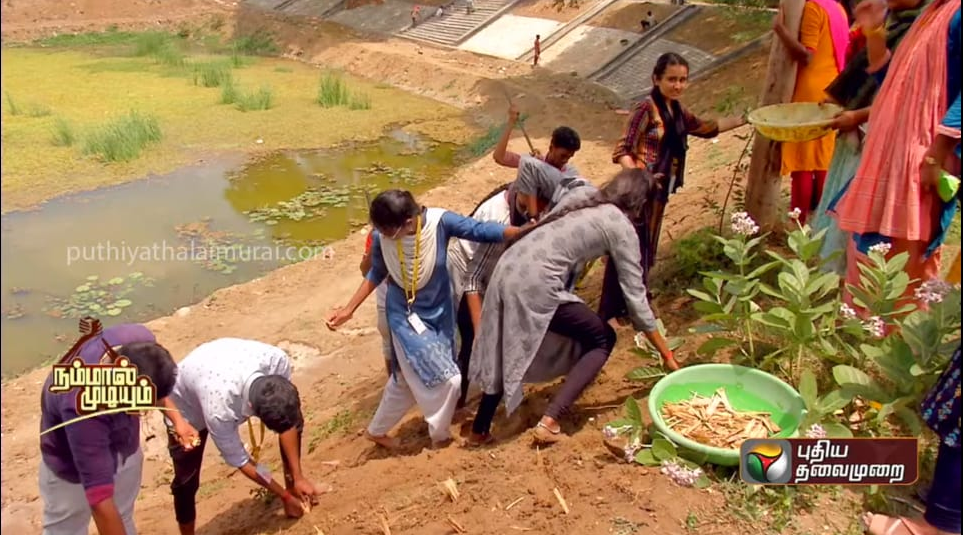
Figure VI (5.3) – 3: NSS Volunteers from Crescent University in Field Work


Figure VI (5.3) – 4: Pond after plantation of Vettiver

Water Management and Reuse Policy
Issue: 04; Revised on 2023
| Policy Created on | July 2009 |
| 1st Revision amended on | IQAC Meeting held on 27th October 2017 |
| 2nd Revision amended on | IQAC Meeting held on 31st March 2021 |
| 3rd Revision amended on | IQAC Meeting held on 16th June 2023 |
Responsible Executive : Director (IQAC)
Responsible Office : Internal Quality Assurance Cell,
Student Affairs, Estate Office, Academic Office, Library and SDG Cell
Contacts : Registrar and Director (IQAC)
6.1 STATEMENT OF POLICY
The B.S. Abdur Rahman Crescent Institute of Science and Technology is committed to achieving the following objectives in alignment with Sustainable Development Goal 6 (SDG 6) – Clean Water and Sanitation:
a) Ensure universal and equitable access to safe and affordable drinking water for all stakeholders.
b) Provide adequate and equitable sanitation and hygiene for all, with special attention to the needs of women, girls, and vulnerable groups.
c) Improve water quality by reducing pollution, eliminating dumping, and minimizing the release of hazardous chemicals and materials.
d) Halve the proportion of untreated wastewater and substantially increase recycling and safe reuse globally.
e) Substantially increase water-use efficiency across all sectors and ensure sustainable withdrawals and freshwater supply to address water scarcity.
f) Implement integrated water resources management at all levels, including transboundary cooperation as appropriate.
g) Protect and restore water-related ecosystems, including mountains, forests, wetlands, rivers, aquifers, and lakes.
h) Expand international cooperation and capacity-building support to developing countries in water- and sanitation-related activities and programs.
i) Support and strengthen the participation of local communities in improving water and sanitation management.
6.2 REASON FOR THIS POLICY
The policy aims to provide all stakeholders with adequate water supply, sanitation, and hygiene. It emphasises maximising the collection and treatment of sewage generated and the reuse of treated wastewater sustainably, thereby reducing dependency on freshwater resources. The policy promotes treating wastewater as an economic resource.
6.3 RESPONSIBILITIES
6.3.1 Policy Principles
a) The campus shall provide adequate water supply and maximize water reuse by adhering to the following principles:
- Equitable access to safe and affordable drinking water for all stakeholders.
- Access to adequate sanitation and hygiene, ending open defecation, with special attention to vulnerable groups.
- Calculation of water usage per person (students, staff, and faculty) annually.
- Improving water quality by reducing pollution and increasing recycling and safe reuse.
- Utilization of recycled/treated wastewater for beneficial purposes, such as irrigation and toilet flushing.
- Implementation of integrated water resources management at all levels.
- Protection and restoration of water-related ecosystems on campus.
- Expansion of rainwater harvesting initiatives.
- Collaboration with government, NGOs, and industries in water-related activities.
- Support for student and staff participation in water management.
6.4.1 Water Reuse Policy Objectives
Establish a comprehensive policy to maximize water reuse across the university.
- Ensure that all new buildings adhere to water-conscious building standards that facilitate water reuse.
- Implement systems for tracking and measuring water consumption and reuse.
6.4.2 Water Reuse
- Water Reuse Policy: maximise water reuse across the university.
- Water Reuse Measurement: Measure water reuse across the university.
6.5 DISSEMINATION OF POLICY
a) Display signage promoting water use efficiency across the campus.
b) Conduct awareness programs at regular intervals to increase water-use efficiency.
c) Post the policy on the Institute’s website and update it as necessary.
6.6 ENFORCEMENT OF POLICY
a) The Director (Planning & Development) and Deputy Director monitor compliance and address breaches.
b) Awareness of the policy among students, staff, and visitors is essential.
c) Breaches may lead to disciplinary action as per the Institute’s code of conduct.