


B.S. Abdur Rahman Crescent Institute of Science and Technology (BSACIST) is committed to ensuring safe, affordable, and reliable access to clean water while safeguarding water quality and ecosystems. We advance wastewater treatment and pollution prevention, and promote water-conscious practices. We strengthen water reuse and measurement, and track consumption to drive efficiency. Our ongoing initiatives aim to reduce water stress, protect aquatic ecosystems, and expand safe water access, with progress demonstrated through defined metrics and regular monitoring.
INTRODUCTION TO WATER-CONSCIOUS PRACTICES
B.S. Abdur Rahman Crescent Institute of Science and Technology has made significant strides in promoting water conservation through its landscaping practices. With approximately 38% of the campus covered in greenery, the institution has strategically integrated drought-tolerant plants into its landscape design. This approach not only enhances the aesthetic appeal of the campus but also plays a crucial role in minimizing water usage, particularly in a region where water scarcity can be a pressing issue. The total built-up area of the campus is 17,04,024 square feet, while the landscaped area covers 8,09,823 square feet, showcasing a commitment to maintaining a balance between built and natural environments.
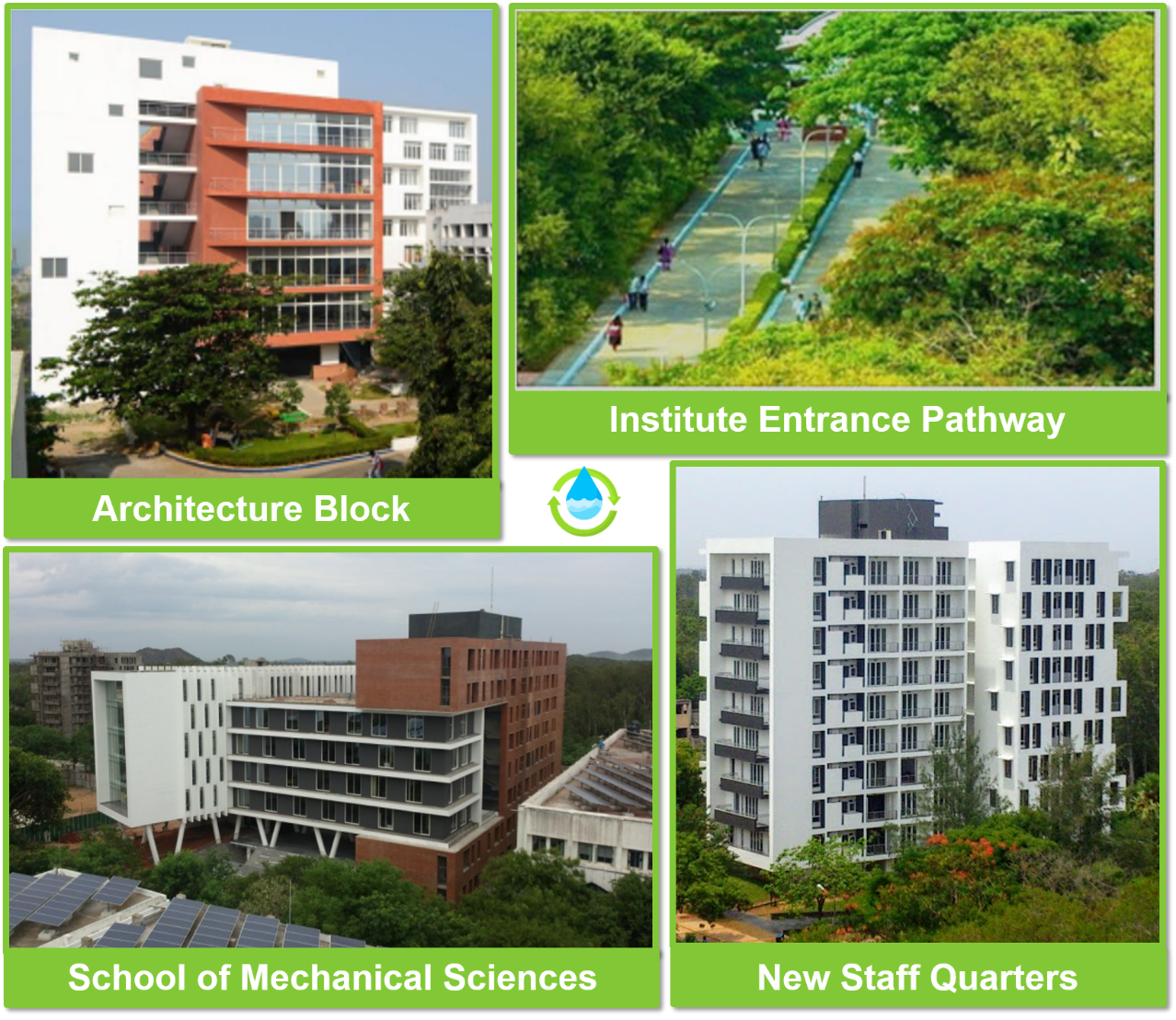
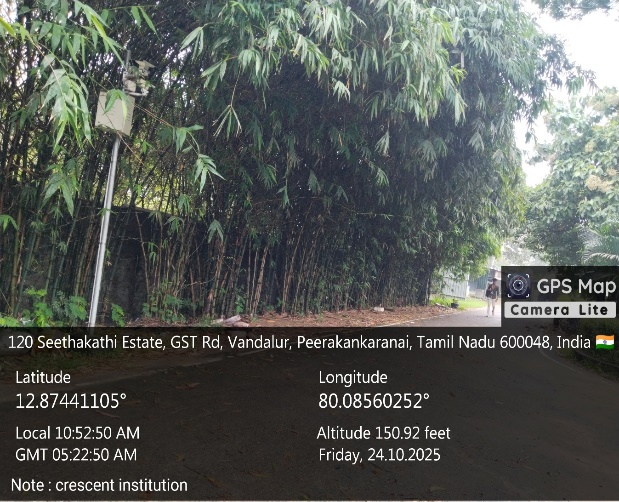
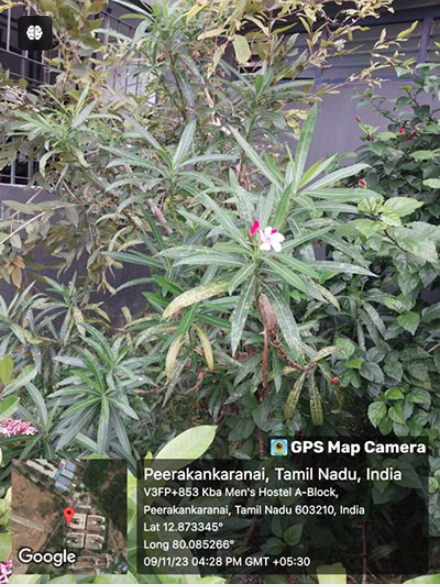
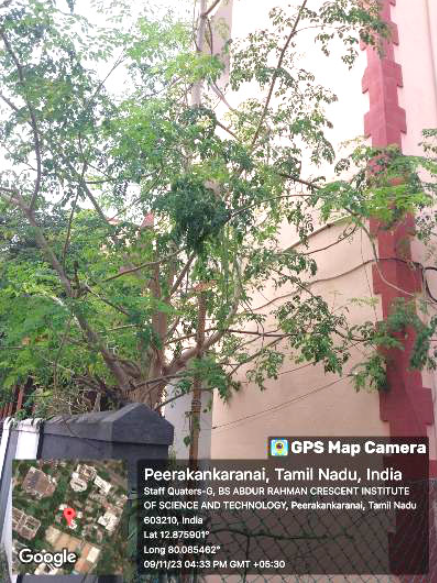
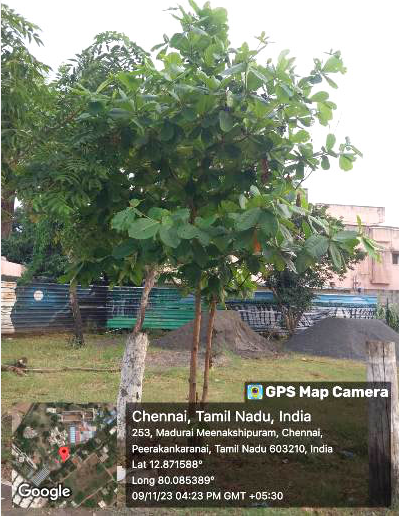
Figure VI (3.5) – 1: Photographs showing the various drought – tolerant plants around various buildings
B. DROUGHT-TOLERANT PLANT SELECTION
The selection of drought-tolerant plants is a cornerstone of the campus’s landscaping strategy. Notable species include Bougainvillea, which thrives in arid climates and requires minimal water, making it an ideal choice for the region. Aloe Vera, another resilient plant, originates from desert environments and exhibits a strong tolerance for dry conditions. Additionally, the Ash Gourd (Benincasa pruriens) is highlighted for its low water requirements, needing irrigation only once every 5-6 days during dry spells. The presence of these plants not only conserves water but also contributes to the biodiversity of the campus.
C. DIVERSE PLANT SPECIES AND THEIR BENEFITS
The campus features a variety of other drought-tolerant species, such as Tecoma stans, commonly known as the Trumpet Flower, which adds vibrant colour while requiring minimal water. Calotropis gigantean, or milkweed, is another species that thrives in dry conditions and is known for its fragrant flowers. Bamboo, while initially requiring more water, becomes drought-tolerant once established, providing an excellent example of how certain plants can adapt to varying water availability. Other species like Oleander, Moringa, and Terminalia catappa further enhance the campus’s green cover while supporting water conservation efforts.
D. MODEL FOR SUSTAINABLE LANDSCAPING
The commitment of B.S. Abdur Rahman Crescent Institute of Science and Technology to water-conscious planting serves as a model for other educational institutions. By integrating drought-tolerant plants into their landscaping, the campus not only reduces water consumption but also fosters an environment that supports local biodiversity. This initiative reflects a broader understanding of sustainable practices, emphasizing the importance of conserving water resources while creating beautiful and functional green spaces. As the campus continues to evolve, its focus on water conservation will undoubtedly inspire similar efforts in other regions facing water scarcity challenges.
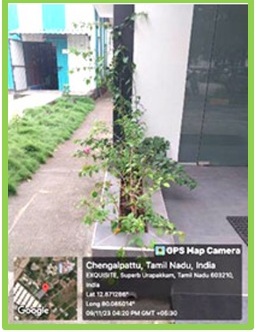
1. BOUGAINVILLEA
Bougainvillea is a drought-tolerant plant that thrives in arid climates, making it an excellent choice for regions with limited water availability. Its vibrant flowers add aesthetic value to the landscape while requiring minimal water once established. This resilience to dry conditions ensures that Bougainvillea remains a superb option for sustainable planting in environments where water conservation is crucial.
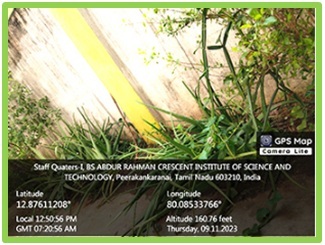
2. ALOE VERA
Aloe Vera originates from desert-like settings characterized by hot weather and sandy soil. This succulent plant flourishes in arid, warm climates and exhibits a strong tolerance for drought. Its limited tolerance to over-watering makes it ideal for water-conscious gardening, as it requires very little water to thrive, contributing to sustainable landscaping practices.
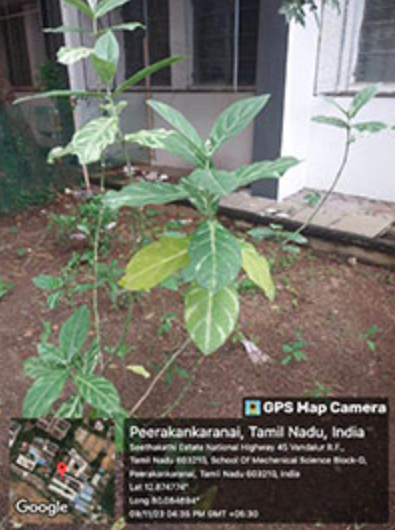
3. ASH GOURD (BENINCASA PRURIENS)
Ash gourds are easy-to-care-for plants that demonstrate significant drought tolerance. They require minimal fertilizer and only need watering once every 5-6 days during dry spells. This makes them a practical choice for sustainable gardening. The plant’s growth cycle begins with male flowers, followed by the appearance of female flowers, showcasing its adaptability in various conditions.

4. TECOMA STANS
Tecoma stans, commonly known as the Trumpet Flower, belongs to the Bigoniaceae family, which includes tropical trees and shrubs. This plant is well-suited for tropical climates and can withstand periods of drought. Known by various names such as Esperanza and Yellow Bells, Tecoma stans requires minimal water once established, making it a low-maintenance option for water-conscious landscaping.

5. CALOTROPIS GIGANTEAN
Calotropis gigantean, commonly referred to as milkweed, is known for the latex it produces. This hardy plant is often found in abandoned farmland and is considered a common weed in some regions. The fragrant flowers are used in making floral tassels, and the plant’s ability to thrive in dry conditions makes it a valuable addition to water-conscious gardens.
6. BAMBOO PLANTS
Bamboo initially requires a generous amount of water to establish its rhizome root system. However, once established, many species of bamboo can thrive with minimal irrigation. While some varieties may have higher water needs, specific drought-tolerant species are well-suited for water-conscious landscaping, contributing to sustainable practices in garden design.
7. OLEANDER
Oleander is a hardy shrub that can withstand dry conditions, making it an ideal choice for water-conscious planting. Once established, it requires little water and thrives in poor soil, making it suitable for xeriscaping. Its vibrant flowers not only enhance the landscape but also contribute to biodiversity in the area.
8. MORINGA
Moringa trees are known for their resilience to drought and can survive with minimal water. This versatile plant offers nutritional benefits and is often used in various culinary applications. Its ability to thrive in dry conditions makes it a valuable addition to sustainable landscaping efforts.
9. TERMINALIA CATAPPA
Terminalia catappa, also known as the tropical almond tree, is well-adapted to dry conditions and requires little water once established. This tree not only provides shade but also has various uses, including its leaves and nuts, which contribute to its value in sustainable landscaping.
10. EUCALYPTUS GLOBULUS
Eucalyptus Globulus is known for its ability to thrive in dry environments and can tolerate drought conditions. Once established, this tree requires minimal water, making it suitable for water-conscious planting strategies. Its fast growth and adaptability make it a popular choice for enhancing green spaces while promoting sustainability.
Water Management and Reuse Policy
Issue: 04; Revised on 2023
| Policy Created on | July 2009 |
| 1st Revision amended on | IQAC Meeting held on 27th October 2017 |
| 2nd Revision amended on | IQAC Meeting held on 31st March 2021 |
| 3rd Revision amended on | IQAC Meeting held on 16th June 2023 |
Responsible Executive : Director (IQAC)
Responsible Office : Internal Quality Assurance Cell,
Student Affairs, Estate Office, Academic Office, Library and SDG Cell
Contacts : Registrar and Director (IQAC)
6.1 STATEMENT OF POLICY
The B.S. Abdur Rahman Crescent Institute of Science and Technology is committed to achieving the following objectives in alignment with Sustainable Development Goal 6 (SDG 6) – Clean Water and Sanitation:
a) Ensure universal and equitable access to safe and affordable drinking water for all stakeholders.
b) Provide adequate and equitable sanitation and hygiene for all, with special attention to the needs of women, girls, and vulnerable groups.
c) Improve water quality by reducing pollution, eliminating dumping, and minimizing the release of hazardous chemicals and materials.
d) Halve the proportion of untreated wastewater and substantially increase recycling and safe reuse globally.
e) Substantially increase water-use efficiency across all sectors and ensure sustainable withdrawals and freshwater supply to address water scarcity.
f) Implement integrated water resources management at all levels, including transboundary cooperation as appropriate.
g) Protect and restore water-related ecosystems, including mountains, forests, wetlands, rivers, aquifers, and lakes.
h) Expand international cooperation and capacity-building support to developing countries in water- and sanitation-related activities and programs.
i) Support and strengthen the participation of local communities in improving water and sanitation management.
6.2 REASON FOR THIS POLICY
The policy aims to provide all stakeholders with adequate water supply, sanitation, and hygiene. It emphasises maximising the collection and treatment of sewage generated and the reuse of treated wastewater sustainably, thereby reducing dependency on freshwater resources. The policy promotes treating wastewater as an economic resource.
6.3 RESPONSIBILITIES
6.3.1 Policy Principles
a) The campus shall provide adequate water supply and maximize water reuse by adhering to the following principles:
- Equitable access to safe and affordable drinking water for all stakeholders.
- Access to adequate sanitation and hygiene, ending open defecation, with special attention to vulnerable groups.
- Calculation of water usage per person (students, staff, and faculty) annually.
- Improving water quality by reducing pollution and increasing recycling and safe reuse.
- Utilization of recycled/treated wastewater for beneficial purposes, such as irrigation and toilet flushing.
- Implementation of integrated water resources management at all levels.
- Protection and restoration of water-related ecosystems on campus.
- Expansion of rainwater harvesting initiatives.
- Collaboration with government, NGOs, and industries in water-related activities.
- Support for student and staff participation in water management.
6.4.1 Water Reuse Policy Objectives
- Establish a comprehensive policy to maximize water reuse across the university.
- Ensure that all new buildings adhere to water-conscious building standards that facilitate water reuse.
- Implement systems for tracking and measuring water consumption and reuse.
6.4.2 Water Reuse
- Water Reuse Policy: maximise water reuse across the university.
- Water Reuse Measurement: Measure water reuse across the university.
6.5 DISSEMINATION OF POLICY
a) Display signage promoting water use efficiency across the campus.
b) Conduct awareness programs at regular intervals to increase water-use efficiency.
c) Post the policy on the Institute’s website and update it as necessary.
6.6 ENFORCEMENT OF POLICY
a) The Director (Planning & Development) and Deputy Director monitor compliance and address breaches.
b) Awareness of the policy among students, staff, and visitors is essential.
c) Breaches may lead to disciplinary action as per the Institute’s code of conduct.