

Crescent Sustainability Initiatives
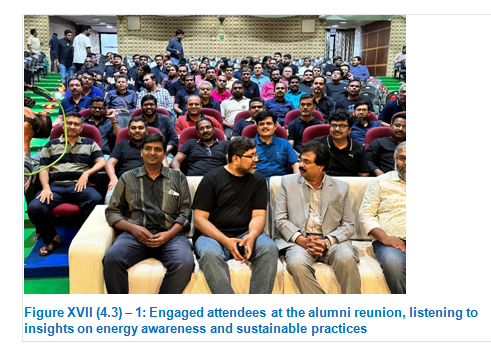
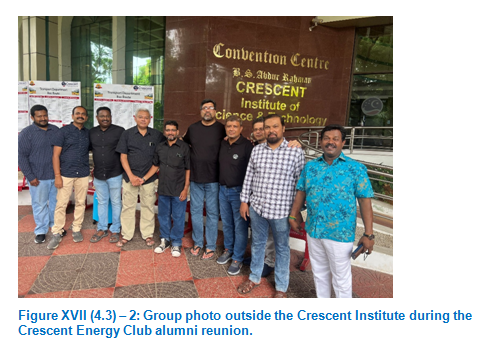
ENGAGING ALUMNI FOR A GREENER FUTURE: ENERGY AWARENESS OUTREACH DURING REUNIONS (20th July 2024)
In line with the institute’s commitment to promoting energy conservation and advancing the United Nations Sustainable Development Goals (SDGs), the Crescent Energy Club launched a targeted outreach program at alumni reunion events. The initiative aims to empower alumni—who hold influential positions across industries and organizations—to adopt and implement sustainable energy practices within their workplaces, extending the impact of campus-based energy awareness beyond the university.
Objective
- Extend energy awareness beyond campus through the alumni network
- Encourage alumni to become ambassadors of clean and efficient energy usage
- Motivate industries and workplaces to adopt energy-saving actions aligned with SDG goals
Program Highlights
- Crescent Energy Club members engaged with alumni at reunion gatherings
- Awareness sessions centered on the 9 ENSav Mantras for saving one unit of electricity per day
- Alumni were introduced to:
- Energy-efficient workplace practices
- Star-rated appliances and green procurement
- Policies to minimize standby power losses
- Solar lighting and clean mobility initiatives
- Alumni were encouraged to implement at least one green action in their workplaces
- Feedback and willingness to collaborate on extended sustainability programs were collected
Impact & Expected Outcomes
- Alumni adopt and advocate energy-saving policies in their professional environments
- Potential for industry-level collaboration on green projects, audits, and clean energy adoption
- Strengthened Crescent–Alumni sustainability partnership
- Measurable contributions to SDGs:
- SDG 7 – Affordable & Clean Energy
- SDG 12 – Responsible Consumption & Production
- SDG 13 – Climate Action
- SDG 9 – Industry, Innovation & Infrastructure
- SDG 17 – Partnerships for the Goals
Future Plans
- Establish Green Alumni Champions Network
- Conduct workplace energy audit support through faculty–student collaborations
- Launch an Annual Energy Sustainability Award for alumni-led organizations
- Expand outreach to all upcoming alumni meets, including Silver/Golden Jubilee batches
Conclusion
The initiative reinforces the institute’s vision of a carbon-conscious society by transforming alumni into sustainability leaders. Through practical energy-saving actions in their organizations, the impact will multiply beyond campus, contributing to a greener nation.
CRESCENT ENERGY CLUB HOSTS GREEN ENERGY AWARENESS WORKSHOP FOR INDUSTRY 2024 (19TH NOVEMBER 2024)
The Crescent Energy Club at B.S. Abdur Rahman Crescent Institute of Science & Technology organized a Green Energy Awareness Workshop for Industry on 19 November 2024. The event engaged employees from Jayam Engineering Services (Karapakkam, Chennai) and Mega Solar Solutions (Chennai), with the aim of fostering sustainability and accelerating the adoption of green energy practices within industrial operations.
Objectives
- Build awareness of green energy solutions and their relevance to industrial operations.
- Equip participants with practical knowledge on energy efficiency and clean energy adoption.
- Encourage organizations to contribute toward the United Nations Sustainable Development Goals (SDGs).
Workshop Highlights
- Introduction to renewable energy sources and their expanding role in industry.
- Best practices for reducing power consumption in the workplace.
- Insights into cost-effective solar energy implementations and energy-efficient technologies.
- Case examples demonstrating measurable environmental and economic benefits.
- Interactive discussions addressing workplace-specific sustainability challenges.
- Delivery by faculty experts and Crescent Energy Club student members, emphasizing energy conservation’s role in mitigating climate change and reducing carbon footprints.
Impact and Outcomes
- Increased awareness of clean energy adoption among the industry workforce.
- Strengthened academia–industry collaboration in sustainability initiatives.
- SDG Alignment: Actions contributing to SDG 7 (Affordable and Clean Energy), SDG 12 (Responsible Consumption and Production), and SDG 13 (Climate Action).
- Acknowledgement through Certificates of Appreciation to partner organizations for their proactive participation.
Certificates and Acknowledgements
- Certificate of Appreciation awarded to employees of Jayam Engineering Services, Karapakkam, Chennai, for attending the workshop on Green Energy (19 November 2024) organized by Crescent Energy Club.
- Certificate of Appreciation awarded to employees of Mega Solar Solutions, Chennai, for attending the same workshop.
- Certificates were issued by B.S. Abdur Rahman Crescent Institute of Science & Technology, with coordination by S. Jerney and Dr. S. Jennathu Beevi (Coordinator/Crescent Energy Club).
Outcomes and Future Outlook
- The event marked a significant step in extending Crescent’s sustainability mission to the industrial sector.
- Plans are in place for additional outreach programs to support organizations in their transition toward greener, more energy-efficient operations.
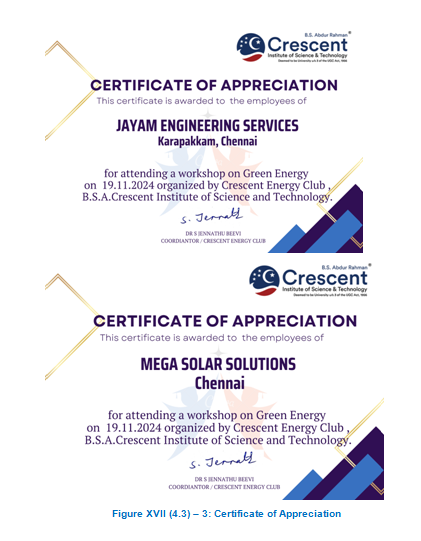
Figure XVII (4.3) – 3: Certificate of Appreciation
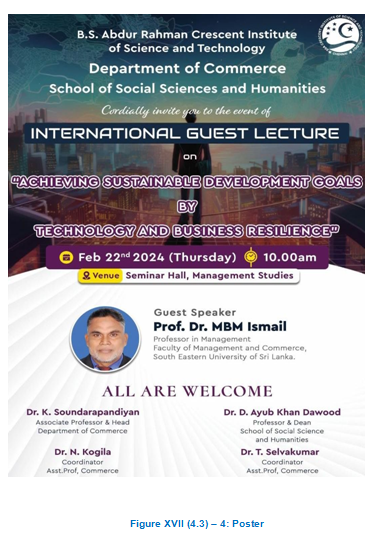
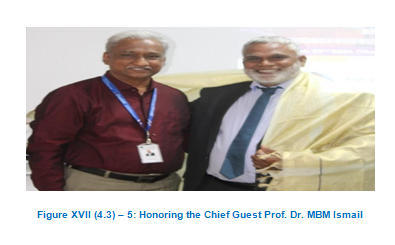
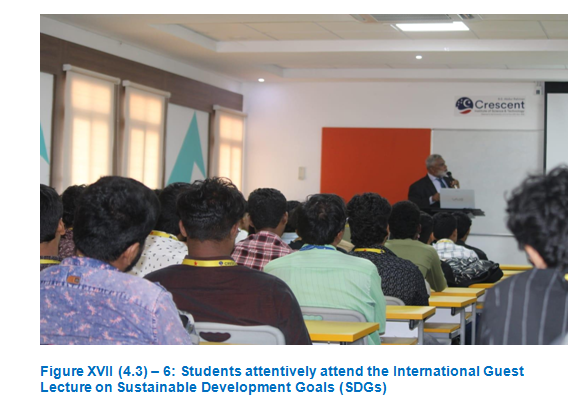
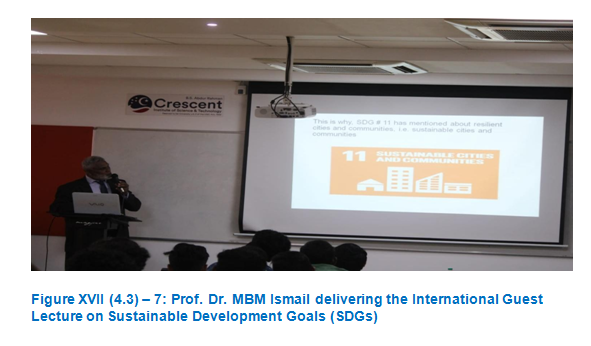
The International Guest Lecture, organized by the Department of Commerce at B.S. Abdur Rahman Crescent Institute of Science and Technology, featured Prof. Dr. MBM Ismail as the guest speaker and focused on achieving the Sustainable Development Goals (SDGs) through technology and business resilience. The talk opened with a brief overview of the SDGs and underscored the pivotal role technology plays in driving progress toward sustainable development. Prof. Ismail highlighted the intersection of technology, business resilience, and sustainability, emphasizing how innovative solutions can accelerate progress toward global goals while addressing real-world challenges. The session also explored practical strategies for stakeholders—businesses, governments, and civil society—to implement technology-driven solutions that bolster resilience and foster sustainable practices.
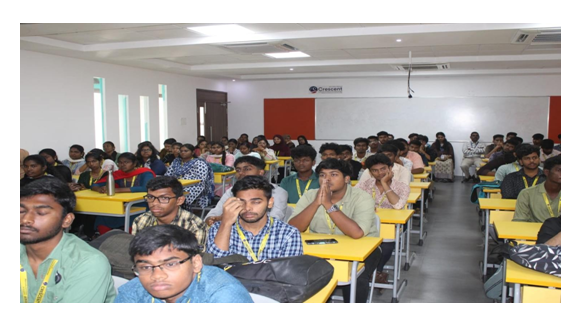
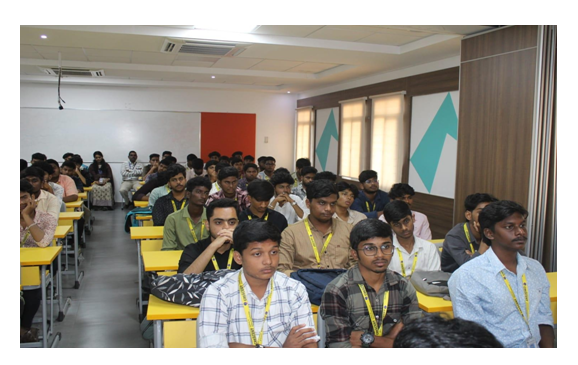
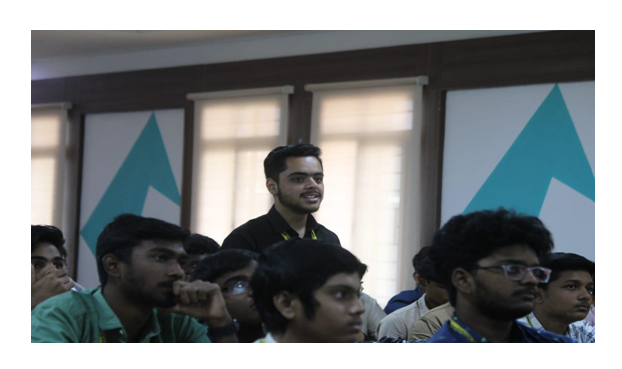
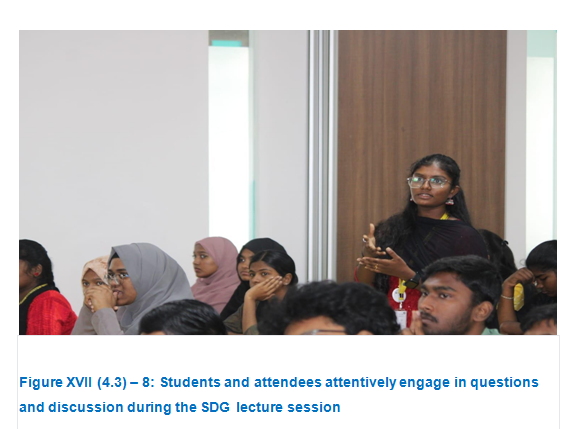
The audience, comprising first- and second-year B.Com (Hons) and BBA students, engaged with the lecture through a structured program that included a Qur’ath and opening remarks, followed by a detailed presentation on the challenges of implementing technology-driven SDG solutions. The speaker shared actionable insights and recommendations, stressing the importance of resilient organizational models, circular economy concepts, supply chain optimization, and risk mitigation. The talk culminated with a vote of thanks delivered by Dr. N. Kogila and left participants with a sense of inspiration and practical guidance on how technology and business resilience can align with social and environmental objectives to advance the SDGs. Student testimonials echoed the session’s impact, noting increased awareness and motivation to drive positive change within their future careers.
Student Testimonials on the SDG Guest Lecture
The International Guest Lecture on Sustainable Development Goals (SDGs), organized by the Department of Commerce at B.S. Abdur Rahman Crescent Institute of Science and Technology, featured Prof. Dr. MBM Ismail and focused on leveraging technology and business resilience to advance sustainable development. The session stimulated thoughtful discourse and provided practical insights for students preparing to enter a rapidly changing global landscape.
Testimonial highlights
- Irshath Mohammed A (III BBA General) described the session as enlightening. He noted Prof. MBM Ismail’s practical strategies and engaging approach, which inspired students to tackle complex global challenges and empowered them to drive positive change.
- Sumetha (I B.Com Hons) appreciated the discussion on business resilience, emphasizing the importance of adaptive and agile organizations that weather disruptions while upholding sustainability. She highlighted the value of circular economy concepts, supply chain optimization, and risk mitigation as actionable pathways to align business operations with environmental and social objectives.
- Sameer Shaik S (I BBA General) emphasized the central role of technology in achieving SDGs and addressing global challenges. He expressed gratitude to the Department of Commerce and faculty for organizing a program that provided actionable insights into business strategies and development, underscoring the potential for positive environmental, social, and economic impact.
NSS SPECIAL CAMP 2023-24 | GREEN INDIA CLEAN INDIA
KEERAPAKKAM ADOPTED VILLAGES: KEERAPAKKAM, ARUNGAL, MURUGAMANGALAM
FEBRUARY 21–27, 2024
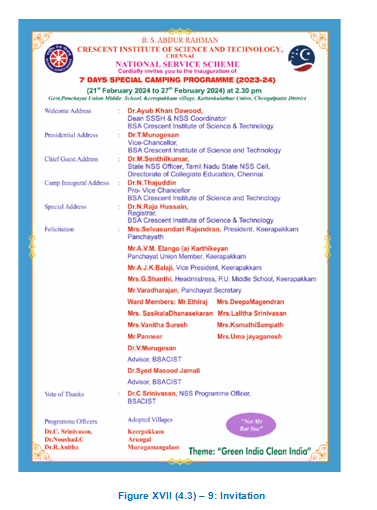
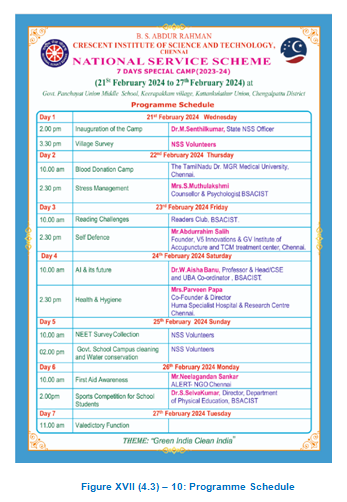
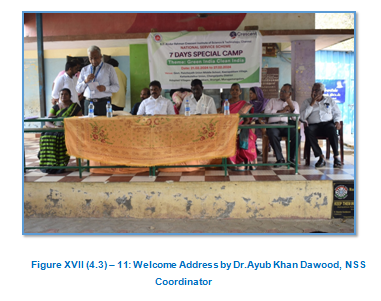
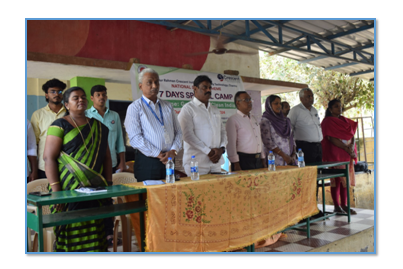
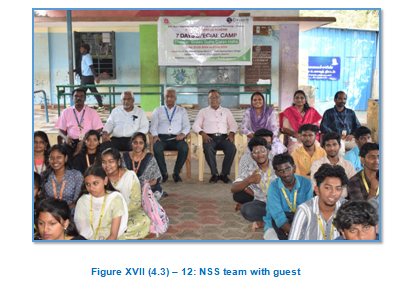
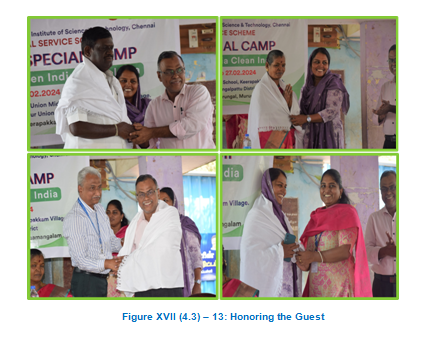
The NSS Special Camp 2023-24 organized by B.S. Abdur Rahman Crescent Institute of Science and Technology brought together around 120 volunteers for a week of community service under the theme “Green India Clean India.” The program featured a carefully structured schedule that included a village survey, blood donation camp, stress management sessions, reading challenges, self-defense demonstrations, health and hygiene awareness, water conservation drives, and sports outreach. Inaugurated by senior institute officials and local dignitaries, the camp fostered teamwork, discipline, and civic responsibility among participants while engaging Adopted Villages Keerapakkam, Arungal, and Murugamangalam. The activities were designed to empower students with leadership skills, practical service experience, and a deeper understanding of rural dynamics and sustainable development.
Key highlights included a collaborative Blood Donation Camp with Dr. MGR Medical University, emphasizing safe practices and post-donation care; Day 2 stress management sessions addressing emotional well-being and resilience; Day 3 self-defense demonstrations integrating holistic approaches; Day 4 sessions on AI & its future and Health and Hygiene, exploring the role of technology in sustainable living and practical health practices; and Day 5–6 community-oriented efforts such as NEET survey collection, school cleanliness, water conservation, and first aid awareness. The program concluded with a valedictory function, reflecting on the participants’ contributions and the broader impact of NSS initiatives in fostering active citizenship, social transformation, and a lasting spirit of volunteerism in both the campus and the adopted communities.
WATER CONSERVATION AWARENESS
Water conservation was a central focus of Day 5–6 activities, where volunteers conducted community outreach and practical demonstrations to promote sustainable water use. Initiatives included surveying local water resources, identifying leakage points in village systems, and coordinating with residents to implement simple, high-impact practices such as rainwater harvesting, reuse of greywater, and the installation of water-saving devices. Educational sessions highlighted the importance of preserving dwindling groundwater, maintaining clean waterways, and adopting behavioral changes like timely water reporting and mindful irrigation. Through hands-on demonstrations, awareness drives, and collaborative planning with Keerapakkam, Arungal, and Murugamangalam communities, the camp fostered a practical understanding of sustainable water management and empowered participants to champion ongoing conservation efforts beyond the seven-day program.
GUEST LECTURE ON “WATER FOR PEACE – WORLD WATER DAY CELEBRATION” (21ST MARCH 2024)
Brief details about the programme:
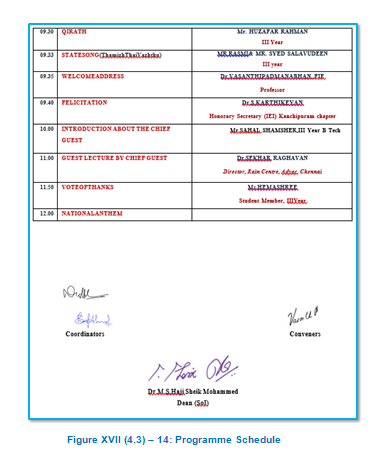
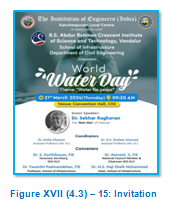
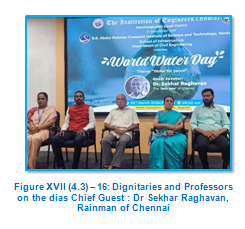
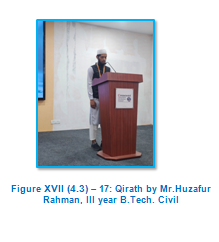
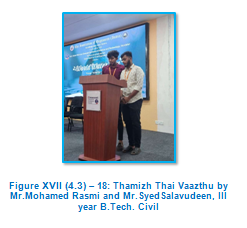
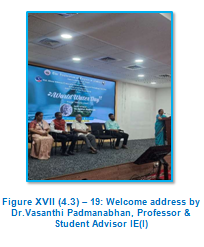
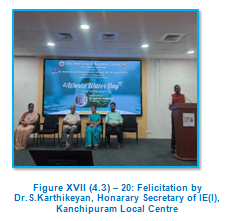
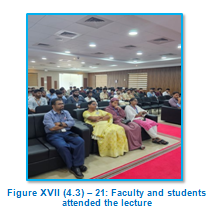
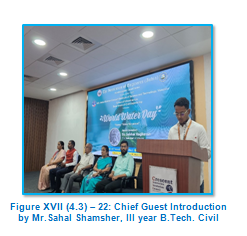
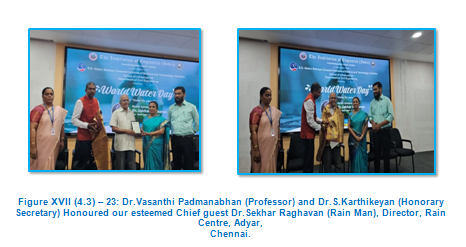
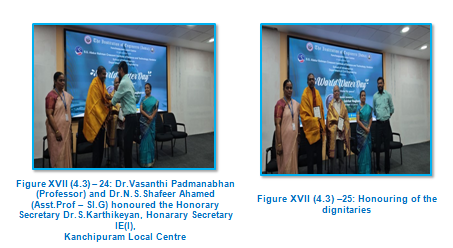
Guest Lecture on “Water for Peace – World Water Day 2024”,was organized by the Institution of Engineers (India), Kancheepuram Local Centre in association with the Department of Civil Engineering, School of Infrastructure, B.S.Abdur Rahman Crescent Institute of Science & Technology on 21stMarch 2024 as part of World Water Day Celebrations. Dr.Vasanthi Padmanabhan, Professor & Student Advisor IE(I) School of Infrastructure, B.S.Abdur Rahman Crescent Institute of Science & Technology welcomed the chief guest Dr.Sekhar Raghavan (Rain Man), the honorary secretary of IE(I) – KLC Dr.S.Karthikeyan, and the audience. She appraised the importance of conserving and effectively storing the rainwater and available water for the future use. Dr.S.Karthikeyan, honorary secretary IE(I) felicitated the gathering and briefed the essential role of water in our human life and its importance. He stated that the Institution of Engineers (India) is the National organization of engineering professionals in India. It is the largest multi-disciplinary engineering professional society. He insisted everyone to become member of IEI and encouraged the students to apply for the project proposal for which the fundings are given in order to motivate the students.
About the Lecture
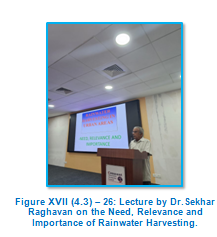
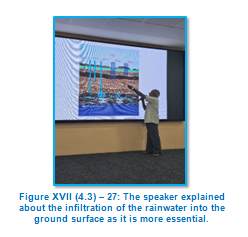
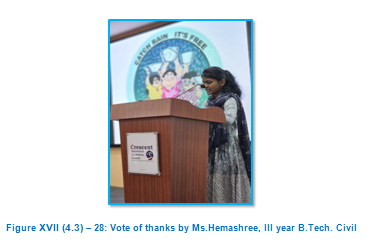
Dr.Sekhar Raghavan is the Director of Rain centre at Adyar, Chennai which was been inaugurated by the Former Chief Minister Late. Dr.J.Jayalalitha. Dr.Sekhar Raghavana is also known as Rain man. The speaker started the lecture explaining the need, relevance and importance of rainwater harvesting. During his lecture he explained to students about his initiating the rain centre which was a part of his Akash Ganga Trust that spreads awareness about rainwater conservation in a country that thirsts for water yet allows the precious fluid to go waste. Hence a universal access to water still remains an issue in India and in particular in Chennai. He also shared his experience in bridging the gaps between society and rainwater harvesting in his life long journey to keep the water-tables high and the groundwater sweet (as opposed to salty groundwater due to over-use and seawater ingress). In this case moving forward to the future generation and needs. It’s that time of year when we should start worrying about our rain water harvesting systems and get them ready for the coming rains. The speaker shared about the most common problems that can be expected in RWH structures for which he has given few tips to follow. The issues are deposit of silt picked up by rainwater from dirty rooftops and driveways. Take preventive measures like pruning tree branches, empty and clean the filters, wash, dry and fill them. Regularly check the roof top pipes for leaks and replace where necessary. Finally, the speaker concluded by saying save rainwater as it is free. Around 70 students from IV and VI semester B.Tech, Civil Engineering participated in the event and got benefited. This lecture was useful and compliments the UG courses viz. CEDX 53 – Stormwater and Flood management, CEDX 51 –Hydrology and CED 2205 –Water Resources Engineering.
INTERNATIONAL CONFERENCE ON “SMART MATERIALS FOR GREEN ENERGY & ENVIRONMENTAL SUSTAINABILITY” (SMAGEES 2024) (Date 11th-12th December 2024)
In 2024, BSACIST positions itself as an active facilitator of cross-sector dialogue on the Sustainable Development Goals. By engaging with government bodies, regional NGOs, industry partners, and academic peers through events like the SMaGEES – Smart Materials for Green Energy & Environmental Sustainability conference, the institute embodies the expectation of initiating and participating in multi-stakeholder discussions. This approach helps translate SDG ambitions into concrete policy questions, research agendas, and collaborative projects that bridge science, policy, and practice. The SMaGEES-2024 conference (in Figure 1.1) provides a structured platform for BSACIST to showcase relevant research and facilitate dialogue on green energy and environmental sustainability. By bringing together government representatives, NGO leaders, and industry practitioners, the event creates an environment for identifying policy gaps, testing ideas, and co-creating recommendations. Such cross-sector engagement aligns with the methodology’s emphasis on modelling potential futures, monitoring impacts, and refining interventions through collaborative learning.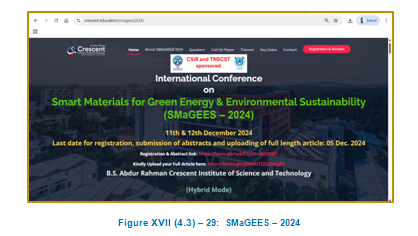
The Complete Report of the International Conference on “Smart Materials for Green Energy & Environmental Sustainability (SMaGEES 2024) is available in the following web link shown in XVII(2.3)-1.
A core benefit of cross-sector SDG dialogue is the opportunity to model future scenarios with and without specific interventions. BSACIST can leverage the expertise gathered at SMaGEES-2024 to co-develop scenario analyses that illuminate trade-offs between energy innovation, environmental protection, and social outcomes. This aligns with the methodology’s emphasis on scenario planning as a tool for policy development and strategic decision-making.
Cross-sector dialogues generate diverse inputs that can feed monitoring and reporting mechanisms. BSACIST can curate learning from the conference discussions into a set of indicators, case studies, and monitoring frameworks. These outputs support adaptive management by providing evidence on what interventions work in practice, helping policymakers and partners adjust strategies in response to real-world feedback.
The attendance, presentations, and panel discussions at SMaGEES-2024 yield tangible knowledge products—policy briefs, research summaries, and best-practice guidelines—that can be disseminated to regional NGOs and government agencies. Such outputs serve as evidence of BSACIST’s contribution to SDG policy knowledge, fulfilling the cross-sector dialogue objective and enhancing the institute’s credibility as a policy-informing actor.
To sustain cross-sector SDG dialogue, BSACIST should formalize mechanisms that capture conference insights, track policy-relevant contributions, and report progress to internal and external stakeholders. Establishing a cross-sector SDG task force or working group can institutionalize collaboration with government and NGOs, ensuring that dialogues translate into policy inputs, funding opportunities, and coordinated action across sectors.
For robust reporting, BSACIST can track indicators such as: number of cross-sector events participated in or hosted (including SMaGEES-2024), policy recommendations submitted, joint research proposals with government or NGOs, SDG-aligned outputs (briefs, policy papers, or case studies), and documented adaptive management decisions influenced by multi-stakeholder inputs.
EVENT DETAILS
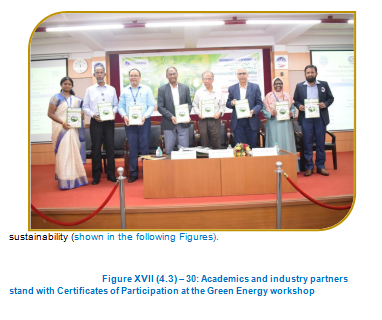
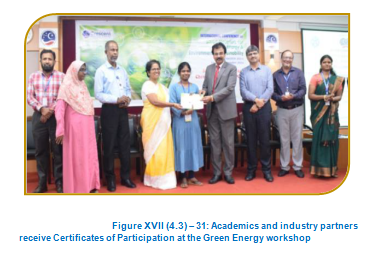
On behalf of the School of Physical and Chemical Sciences, B. S. Abdur Rahman Crescent Institute of Science and Technology, 2 days International Conference on “Smart Materials for Green Energy & Environmental Sustainability is organized during 11-12 December 2024.The conference was presided by Dr. T. Murugesan, Vice Chancellor, BSACIST and felicitated by Dr. N. Raja Hussain, Registrar, BSACIST. Padma Bhushan Dr. T. Ramasami, Distinguished Professor of Eminence, Anna university, Chennai and former secretary, DST India has inaugurated the conference and delivered the inaugural address with mentioning the importance of conference theme, materials towards green energy and environmental sustainability (shown in the following Figures).
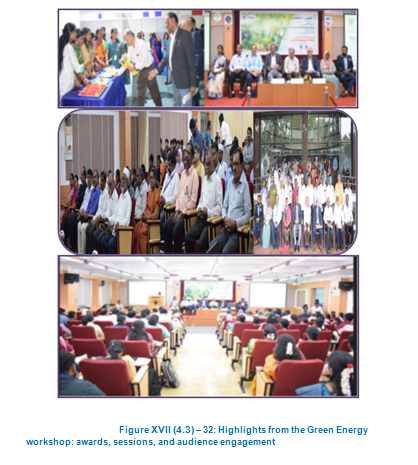
The Conference arrangements were done by a team consist of conveners Dr. I. Raja Mohamed, Dean, SPCS, Dr. N. Hajara beevi, HoD / Chemistry and Dr. G. V. Vijayaraghavan, HoD / Physics, coordinators Dr. M. Mohamed Sheik Sirjuddeen, Associate Professor/Physics and Dr. M. Asha Jhonsi, Associate Professor/Chemistry. On day two, the valedictory program of the conference was presided by Dr. N. Thajuddin, Pro-Vice Chancellor, felicitated by Dr. Irfan, Deputy Registrar and the valedictory address was delivered by Dr. D. Kalpana, Senior Principal Scientist, CSIR Madras Complex, Chennai. From different universities and colleges around 300 researchers and students were participated in the international conference.
Our International Partners
| S.No | Photo of the Guest Speakers | Name | Name of University | Country |
|---|---|---|---|---|
| 1 |  | Dr. Dennis solomon Balami | Nuclear Physicist University of Maiduguri | Nigeria |
| 2 |  | Prof.Michel Rerat | University de pau et des pays de|’ Adour, University of pau | France |
| 3 |  | Veerappan mani | Leibniz Universitat Hannover | Germany |
| 4 |  | Prof. Dr. Detlef W.Bahnemann | University of Strathclyde | United kingdom |
Outcome of the conference
As a leading institution in India, BSA Crescent Institute of Science and Technology is ideally positioned to host this prestigious conference. The conference will not only showcase cutting-edge research but also provide a platform for students, early-career researchers, and professionals to network, gain knowledge, and collaborate on future innovations that will contribute to a more sustainable world.
Details of Participants (SMaGEES 2024)
| S. No | NAME OF THE PARTICIPANT | NAME OF THE INSTITUTION | TITLE OF THE PRESENTATION |
|---|---|---|---|
| 1 | KISHOREE T | Manakula Vinayagar Institute of Technology, Puducherry | Quantum Dots: Bright future for Environmental Sustainability and Biomedicine |
| 2 | DHIYANESHWARI B | Vellore Institute of Technology, Vellore | Synthesis of K+ and Mn Codoped Cs2NaInCl6 Double Perovskites for White LEDs Application |
| 3 | AROCKIA JULIAS A | B. S. Abdur Rahman Crescent Institute of Science and Technology, Chennai | Vibration Study on Cashew shell sandwiched fiber Reinforced Materials |
| 4 | SRIVIDYA T | B. S. Abdur Rahman Crescent Institute of Science and Technology, Chennai | Bond Behaviour of FA GGBS based Geopolymer Concrete |
| 5 | NISHATH BEGUM J | Vellore Institute of Technology, Vellore | Thermoelectric Properties of Higher Manganese Silicide Synthesized by Molten Salt Shielded Synthesis Method |
| 6 | VAISHNAVI CHANDRAN K | Vellore Institute of Technology, Vellore | Effect of Tungsten and Cobalt as dopants to tune the metal insulator transition of VO2 |
| 7 | SAIKRISHNA V | SRM Institute of Science and Technology | Biocomposite sponges loaded with bioactive small molecules: A sustainable solution for advanced wound healing |
| 8 | HARIHARASUDAN S | SRM Institute of Science and Technology, Ramapuram | A Comprehensive Review of Hyperspectral Remote Sensing Images Spectral – Spatial Classification Approaches |
| 9 | KAYASHRINI S | Vels Institute of Science, Technology & Advanced Studies (VISTAS), Chennai | Spectroscopic (FT-IR and UV-Vis) Structure Conformation, Electronic Properties, ELF, LOL, RDG Quantum Chemical Computational Investigation of 1,4-Benzenedicarboxylic Acid, Bis(2-Ethylhexyl) Ester Γ- Sitosterol and Molecular Docking Analysis of Anti-Cancer |
| 10 | HUSSAMULLAH V | B. S. Abdur Rahman Crescent Institute of Science and Technology, Chennai | Modeling and control of pH processes: Comparative Analysis of PID and Fractional PID Controllers |
| 11 | HEMASHREE | B. S. Abdur Rahman Crescent Institute of Science and Technology, Chennai | Development of Sustainable Self-Compacting Concrete with Copper Slag as a Partial Replacement for Fine Aggregates: A Green Building Approach |
| 12 | KATHIRAVAN A | Vels Institute of Science, Technology and Advanced Studies (VISTAS), Chennai | Inner Filter Effect-Based Sensor for Selective Discrimination of Picric Acid |
| 13 | PAULINE IDA P | Sri Sivasubramaniya Nadar College of Engineering, Chennai | Characterization of Solid Biopolymer Electrolyte developed for sustainable Na-based Energy Storage Systems |
| 14 | GAJALAKSHMI P | B. S. Abdur Rahman Crescent Institute of Science and Technology, Chennai | Development of Sustainable Self-Compacting Concrete with Copper Slag as a Partial Replacement for Fine Aggregates: A Green Building Approach |
| 15 | ANBAZHAGAN V | Vinayaka Mission’s Kirupananda Variyar Arts and Science College, Vinayaka Mission’s Research Foundation (Deemed to be University), Salem | Synthesis, Characterization and Fluorescent Probe properties of Phenothiazine Derivative |
| 16 | JEYAKANTHAN M | Vinayaka Mission’s Kirupananda Variyar Arts and Science College, Vinayaka Missions Research Foundation,(Deemed to be University), Salem | Photoluminescence, Magnetic and Electrochemical studies of near white light emitting nanostructured Sr0.675Pb0.225Ca0.1WO4 mixed solid solution |
| 17 | MUKUND V | B. S. Abdur Rahman Crescent Institute of Science and Technology, Chennai | IoT based localized air quality monitoring and prediction for construction sites |
| 18 | HEMAMALINI V | B. S. Abdur Rahman Crescent Institute of Science and Technology, Chennai | Investigation of Fe₂O₃/PVDF-HFP nanocomposites for electromagnetic interference shielding in secure communication systems |
| 19 | SRINIVASAN V | Vels Institute of Science, Technology and Advanced Studies (VISTAS), Chennai | Anthracene-based Potential Biomaterials: Synthesis, Characterization, Computational and Biological Applications |
| 20 | PRITHIKA A | IIBAT, International Institute of Biotechnology & Toxicology, Shanmuga Nagar, Padappai | Valorisation of toxic Methyl Red Dye and its multifarious Applications |
| 21 | VISHNUVARATHANAN M | Kalasalingam Academy of research and Education | Development , Physical and mechanical characterization of Tree Bark Nano Powder Reinforced 3D Printed PLA Bio Nanocomposites |
| 22 | AJAY G | B. S. Abdur Rahman Crescent Institute of Science and Technology, Chennai | Investigation of the structural, electronic, and magnetic properties of NiSe in cubic phase by incorporating Hubbard U corrections: A DFT+U study |
| 23 | CHENTHIS KANISHA C | B. S. Abdur Rahman Crescent Institute of Science and Technology, Chennai | Synthesis of Graphene oxide nanoparticles for enhanced antimicrobial properties against multi drug resistant bacteria |
| 24 | RAJAPRAKASH R | Kalasalingam Academy of research and Education | Development , Physical and mechanical characterization of Tree Bark Nano Powder Reinforced 3D Printed PLA Bio Nanocomposites |
| 25 | PALANISAMY S | B. S. Abdur Rahman Crescent Institute of Science and Technology, Chennai | Super hydrophobic Polyurethane Nano composite coating for Aluminium Composite Panel- (ACP) |
| 26 | NASREEN SAYED | B. S. Abdur Rahman Crescent Institute of Science and Technology, Chennai | Microwave-Assisted Green Synthesis of CuO Nanoparticles: A Rapid and Efficient Approach for Biomedical Applications |
| 27 | NIKITHA S | Kalasalingam Academy of research and Education | Development , Physical and mechanical characterization of Tree Bark Nano Powder Reinforced 3D Printed PLA Bio Nanocomposites |
| 28 | PERCY J. SEPHRA | B. S. Abdur Rahman Crescent Institute of Science and Technology, Chennai | Highly sensitive pH-dependent electrochemical detection of phosphate ions using CoMoO₄ and Ammonium molybdate- modified electrodes |
| 29 | BENITA MERLIN B | Alpha Arts and Science College, Chennai | Theoretical study on the Structural, Electronic and Optical Properties of ABC stacked trilayer 2D Materials: Graphene, Silicene, Germanene and Stanene |
| 30 | MOHAMED RIYAZ ALI | B. S. Abdur Rahman Crescent Institute of Science and Technology, Chennai | Characterization and Bioactivity of Cation-Substituted Bioactive Glasses for Bone Tissue Engineering |
| 31 | PRAKASHRAJ M | Kalasalingam Academy of research and Education, Srivilliputhur | Development , Physical and mechanical characterization of Tree Bark Nano Powder Reinforced 3D Printed PLA Bio Nanocomposites |
| 32 | RAMYASHRI S | B. S. Abdur Rahman Crescent Institute of Science and Technology, Chennai | Realization of flexible pressure sensors based on ZnO nanowires /hybrid bilayers |
| 33 | SILVIYA N | Ethiraj College for Women, Chennai | Coprecipitated Ni2+ doped M-type hexaferrite – a superior catalyst with magnetoelectric properties |
| 34 | THENMOZHI R | Mother Teresa Womens University Kodaikanal, Dindigul | A Facile synthesis of Co Nanomaterial from Crotalaria Pallida leaves Extract by Hydrothermal method and their Anticancer, Ati-inflammatory, Antibioflim, Antifouling and Antibacterial Studies |
| 35 | KAMESHWARAN A | Sri Ramakrishna Mission Vidyalaya College of arts and science, Periyanaickenpalayam, Coimbatore | Photoinduced interactions of GSH capped CdX Quantum dots (X = S, Se and Te) for Luminescent road marking strips |
| 36 | SUDHARSAN M | Sri Ramakrishna Mission Vidyalaya College of arts and science, Periyanaickenpalayam, Coimbatore | Photoinduced interactions of GSH capped CdX Quantum dots (X = S, Se and Te) for Luminescent road marking strips |
| 37 | SRAVANTHI R | Ethiraj College for Women, Chennai | Quantum Computational Analysis of Pyridine Carboxylic Acid Derivative and its Interaction with the Silver Clusters |
| 38 | ROSARY V | B. S. Abdur Rahman Crescent Institute of Science and Technology, Chennai | An Investigation on Structural and Optical properties of the Green Extract doped Hippuric Acid Single Crystal |
| 39 | SHABITHA BANU I | B. S. Abdur Rahman Crescent Institute of Science and Technology, Chennai | An Investigation on Structural and Optical properties of the Green Extract doped Hippuric Acid Single Crystal |
| 40 | ARTANBUJ R | B. S. Abdur Rahman Crescent Institute of Science and Technology, Chennai | Effect of Catharanthus Roseus extract on the Physical Properties of Hippuric Acid Single Crystals |
| 41 | PACHAYAMMAAL T | B. S. Abdur Rahman Crescent Institute of Science and Technology, Chennai | Development and Evaluation of Hybrid Carbon Black-Silica Fillers in Natural Rubber Matrices for Enhanced Mechanical and Rheological Properties |
| 42 | MOHANRAJ.M | Vels Institute of Science, Technology and Advanced Studies (VISTAS), Chennai | Studies on the Growth, Structural, Optical, Thermal, and LDT analysis of Guanidinium Carbonate Single Crystal for Second- Order NLO Applications |
| 43 | NOOR AMAN AHRAR MUNDARI | B. S. Abdur Rahman Crescent Institute of Science and Technology, Chennai | Synthesis of Visible Light Active N, F Co-Doped TiO2 Based Mixed Oxide Photocatalysts for Environmental Remediation |
| 44 | POOJITHA V | Ethiraj College for Women, Chennai | A Systematic study on the Effect of Cerium Doping on Bismuth ferrites Structural, and Physical Properties |
| 45 | GAYATHRE LAKSHMI A | Sri Sivasubramaniya Nadar College of Engineering, Kalavakkam, Chennai | Synergy of cuboidal In2O3 and cubic TiO2 as electron transport bilayer in carbon-perovskite solar cell |
| 46 | MAHALAKSHMI N | Vel Tech Rangarajan Dr. Sagunthala R & D Institute of Science and Technology, Chennai | Inner Filter Effect-Based Sensor for Selective Discrimination of Picric Acid |
| 47 | VISHAL M | B. S. Abdur Rahman Crescent Institute of Science and Technology, Chennai | Enhancing Mechanical and Fire Resistance of Cementitious materials through Graphene oxide |
| 48 | MANIVANNAN A | Vel Tech Rangarajan Dr. Sagunthala R & D Institute of Science and Technology, Chennai | Sustainable concrete solutions using bacterial Geopolymerization of Industrial By-Products |
| 49 | REVATHI G | Vel Tech Rangarajan Dr. Sagunthala R & D Institute of Science and Technology, Chennai | DFT Investigation of Cyclohexanone, 2,3-dimethyl-2-(3- oxobutyl)- And Molecular Docking for Anti-Cancer Activity |
| 50 | DIANA J | B. S. Abdur Rahman Crescent Institute of Science and Technology, Chennai | Recycling of used mobile phone temper glass into carbonaceous nanomaterial towards luminescent road marking strip: Scrap to Score |
| 51 | PAVITHRA K | IIBAT, International Institute of | Valorisation of toxic Methyl Red Dye and its multifarious |
| 52 | MOHAMED HISAM R | Vels Institute of Science and Technology & Advanced Studies, (VISTAS), Chennai | Theoretical and experimental study on 6-(3,3-Dimethyl- oxiran-2-ylidene)-5,5-dimethyl-hex-3-en-2-one compound: Its optimization with DFT and structural and spectroscopic investigation, HOMO-LUMO, MEP, atomic charge, and NBO Analysis |
| 53 | JEFFRIN JA LAURA | Vels Institute of Science and Technology & Advanced Studies, (VISTAS), Chennai | Quantum Chemical Computation Calculations, Structural, Spectroscopic Characterization, Molecular Docking and HOMO-LUMO studies of 11,4-Methanoazulene-9-methanol, decahydro-4,8,8-trimethyl-, [1S-(1α,3aβ,4α,8aβ,9R*)] |
| 54 | POORNIMA K | Vel Tech Rangarajan Dr. Sagunthala R & D Institute of Science and Technology, Chennai | Anthracene-based Potential Biomaterials: Synthesis, Characterization, Computational and Biological Applications |
| 55 | RAJPRAKASH R | Kalasalingam Academy of Research and Education Krishnankovil, Srivilliputtur | Development, Physical and Mechanical Characterization of Tree Bark Nano Powder Reinforced 3D Printed PLA Bio Nanocomposites |
| 56 | MEERA A | Sri Sivasubramaniya Nadar College of Engineering, Kalavakkam, Chennai | Synergistic effects of Z-scheme band engineering for enhanced hydrogen evolution in TiO2 based ternary nanocomposite |
| 57 | PAVITHRAA R | Anna University-BIT Campus, Tiruchirappalli | Development of organic semiconductor-tailored transition metal phosphides and Application of electrochemical hydrogen evolution and photocatalytic degradation |
| 58 | ABDULLAH R | Anna University –BIT Campus, Tiruchirappalli | Metal based bio-nanocomposite for Biological & Environmental Application |
| 59 | TAMILARASI R | SRM Institute of Science and Technology, Kattankulathur, Chennai | Investigating the role of aluminium doping in Ca3Co4O9 for enhanced supercapacitor applications |
| 60 | SUGUNA P | Vel Tech Rangarajan Dr. Sagunthala R&D Institute of Science and Technology, Chennai | Investigating the Interaction between 9-Aminoacridine and Reduced Graphene Oxide |
| 61 | GAJALAKSHMI T | SRM Institute of Science and Technology | Development of Food Waste-Derived Electrode Material for Energy Storage Applications |
| 62 | KAVYA G | Saveetha College, Chennai | A Study on Waste Water Treatment with Special Reference to Chennai |
| 63 | VISHWA PREETHI V S | B. S. Abdur Rahman Crescent Institute of Science and Technology, Chennai | Effect of Catharanthus Roseus extract on the Physical Properties of Hippuric Acid Single Crystals |
| 64 | LAVANYA Y | B. S. Abdur Rahman Crescent Institute of Science and Technology, Chennai | An Investigation on Structural and Optical properties of the Green Extract doped Hippuric Acid Single Crystals |
| 65 | ASHWIN K | B. S. Abdur Rahman Crescent Institute of Science and Technology, Chennai | Smart Earthing Monitoring System for Enhanced Electrical Safety |
| 66 | NAGARAJAN N | Government Polytechnic College, Keezhapalur, Ariyalur | Synthesis and Characterisation of 2- (trifluoromethyl)pyrimidine and Carbazole based D-A-D Fluorophore |
| 67 | SHAHITHA PARVEEN J | B. S. Abdur Rahman Crescent Institute of Science and Technology, Chennai | Development and Characterization of Poly (vinyl) alcohol- based Hydrogel with long term biocompatibility for skin wound repair |
| 68 | DAULATH BANU R | B. S. Abdur Rahman Crescent Institute of Science and Technology, Chennai | Studies on Dynamic Properties of Polypropylene /Al-C LDH /GNPs Hybrid Composites |
| 69 | MOHAMED BAK K | B. S. Abdur Rahman Crescent Institute of Science and Technology, Chennai | Synerization of Tal Palm Fiber and Coir Fiber with Combination of Tamarind Seed Powder and Nanoparticles Reinforced Epoxy Composite Material and Change in its Mechanical Attributes |
| 70 | PADMAVATHY | Thiru Kolanjiappar Government Presentation | Co Doped Haematite Nanoparticles Crystallographical Optical Morphological Magnetic Properties and Application for Antibactrial Activity |
| 71 | SUJATHA DEVI S | Periyar Arts College , Cuddalore | Effect of Dariegated Groundnut Shell Ash Incorporation on the Technological Properties of Fried Clay Bricks |
| 72 | MAHALAKSHMI V | Thiru Kolanjiappar Government Presentation | Effect of Dariegated Groundnut Shell Ash Incorporation on the Technological Properties of Fried Clay Bricks |
| 73 | GOPINATHAN N | Adhiyaman College of Engineering | Analysis of structural, morphological and optical properties of Rb3Bi2I9 perovskite-structured semiconductors for optoelectronic applications |
| 74 | SARAVANAPERUMAL.V | Manakula Vinayagar Institute of Technology, Puducherry | Carbon diooxide Capture |
| 75 | PRIYADHARSHINI SIDDARTH | Manakula Vinayagar Institute of Technology, Puducherry | Carbon diooxide Capture |
| 76 | CATHERINE SHALOM.G | Manakula Vinayagar Institute of Technology, Puducherry | Carbon diooxide Capture |
| 77 | MOHANA KRISHNA . C | Manakula Vinayagar Institute of Technology, Puducherry | Carbon diooxide Capture |
| 78 | BHAGYASHRI.K | SRM Institute of Science and Technology, Kattankulathur, Chennai | Carbon Quantum Dots Incorporated Aloe Vera Hydrogel for Effective Wound Healing |
| 79 | RAMAPRIYA. C | Mother Teresa Womens University Kodaikanal, | A Facile Synthesis Of Co Nanomaterial from Crotalaria Pallida leaves Extract by Hydrothermal Method and Their Antiulcer, Anticancer, Anti-inflammatory, Antibiofilm, Antifouling and Antibacterial Studies |
| 80 | VEERA MUTHAMMAL | B. S. Abdur Rahman Crescent Institute of Science and Technology, Chennai | Synthesis, characterization and antimicrobial activity of Zn(II) complex incorporating adamantylazo Schiff base ligand |
| 81 | YOGESWARI.K | B. S. Abdur Rahman Crescent Institute of Science and Technology, Chennai | Investigating the synergy of LLDPE and Photovoltaic cells in Roof Tile Applications |
| 82 | SOWMIYA NARAYAN .K | Manakula Vinayagar Institute of Technology, Puducherry | Quantum Dots: Bright future for Environmental Sustainability and Biomedicine |
| 83 | YOGAPRIYA.S | Vinayaka Mission’s Kirupananda Variyar Arts and Science College, Vinayaka Mission’s Research Foundation (Deemed to be University), Salem | Invasion of Zinc in BiFeO3/Bi25FeO40 Perovskite-Structured Material as an Efficient Electrode for Symmetric Supercapacitor |
| 84 | VENKATRAMANAN KUMAR | CSIR- Central Leather Research Institutev(CLRI) | Water soluble sulphur quantum dots: A novel approach to fibrillation inhibition and latent fingerprint visualization |
| 85 | ARUN DANIEL | B. S. Abdur Rahman Crescent Institute of Science and Technology, Chennai | Effect of Catharanthus Roseus extract on the Physical Properties of Hippuric Acid Single Crystals |
| 86 | PADMAVATHI.R | B. S. Abdur Rahman Crescent Institute of Science and Technology, Chennai | Super Hydrophobic Carbonaceous Nanomaterials for Surface Coatings |
| 87 | ABINAYA | SRM Institute of Science and Technology, Kattankulathur, Chennai | A novel approach for profiling of nature-inspired and bioactive proteins and peptides isolated from selected medicinal plants as bio-factories and their implications in Alzheimer diseases by in-silico analysis |
| 88 | PINKI KUMARI SINGH | SRM Institute of Science and Technology, Kattankulathur, Chennai | Insights into metabolites & hormonal regulation in Lagenaria siceraria for agricultural sustainability |
| 89 | LILLY PRIYADHARSHINI.M | B. S. Abdur Rahman Crescent Institute of Science and Technology, Chennai | An Investigation on Structural and Optical properties of the Green Extract doped Hippuric Acid Single Crystals |
| 90 | MAHALAKSHMI.S | B. S. Abdur Rahman Crescent Institute of Science and Technology, Chennai | A tool for Estimate the Carbon footprint Calculation for Flexible Pavement Construction in India |
| 91 | MOHAMMED THOUFEEQUE P K | B. S. Abdur Rahman Crescent Institute of Science and Technology, Chennai | PVDF based polymer nanocomposites for Flexible Electronics Application |
| 92 | GEETHA A | SRM Institute of Science and Technology, Kattankulathur, Chennai | Investigating the role of aluminium doping in Ca3Co4O9 for enhanced supercapacitor applications |
| 93 | ABDUL MAAJITH B | B. S. Abdur Rahman Crescent Institute of Science and Technology, Chennai | Smart Earthing Monitoring System for Enhanced Electrical Safety |
| 94 | SHABITHA BANU I | B. S. Abdur Rahman Crescent Institute of Science and Technology, Chennai | An Investigation on Structural and Optical properties of the Green Extract doped Hippuric Acid Single Crystals |
WATER MANAGEMENT REUSE POLICY
Issue: 04; Revised on 2023
| Policy Created on | July 2009 |
| 1st Revision amended on | IQAC Meeting held on 27th October 2017 |
| 2nd Revision amended on | IQAC Meeting held on 31st March 2021 |
| 3rd Revision amended on | IQAC Meeting held on 16th June 2023 |
Responsible Executive : Director (IQAC)
Responsible Office : Internal Quality Assurance Cell, Student Affairs,
Estate Office, Academic Office, Library and
SDG Cell
Contacts : Registrar and Director (IQAC)
6.1 STATEMENT OF POLICY
The B.S. Abdur Rahman Crescent Institute of Science and Technology is committed to achieving the following objectives in alignment with Sustainable Development Goal 6 (SDG 6) – Clean Water and Sanitation:
- a) Ensure universal and equitable access to safe and affordable drinking water for all stakeholders.
- b) Provide adequate and equitable sanitation and hygiene for all, with special attention to the needs of women, girls, and vulnerable groups.
- c) Improve water quality by reducing pollution, eliminating dumping, and minimizing the release of hazardous chemicals and materials.
- d) Halve the proportion of untreated wastewater and substantially increase recycling and safe reuse globally.
- e) Substantially increase water-use efficiency across all sectors and ensure sustainable withdrawals and freshwater supply to address water scarcity.
- f) Implement integrated water resources management at all levels, including transboundary cooperation as appropriate.
- g) Protect and restore water-related ecosystems, including mountains, forests, wetlands, rivers, aquifers, and lakes.
- h) Expand international cooperation and capacity-building support to developing countries in water- and sanitation-related activities and programs.
- i) Support and strengthen the participation of local communities in improving water and sanitation management.
6.2 REASON FOR THIS POLICY
The policy aims to provide all stakeholders with adequate water supply, sanitation, and hygiene. It emphasises maximising the collection and treatment of sewage generated and the reuse of treated wastewater sustainably, thereby reducing dependency on freshwater resources. The policy promotes treating wastewater as an economic resource.
6.3 RESPONSIBILITIES
6.3.1 Policy Principles
- a) The campus shall provide adequate water supply and maximize water reuse by adhering to the following principles:
- Equitable access to safe and affordable drinking water for all stakeholders.
- Access to adequate sanitation and hygiene, ending open defecation, with special attention to vulnerable groups.
- Calculation of water usage per person (students, staff, and faculty) annually.
- Improving water quality by reducing pollution and increasing recycling and safe reuse.
- Utilization of recycled/treated wastewater for beneficial purposes, such as irrigation and toilet flushing.
- Implementation of integrated water resources management at all levels.
- Protection and restoration of water-related ecosystems on campus.
- Expansion of rainwater harvesting initiatives.
- Collaboration with government, NGOs, and industries in water-related activities.
- Support for student and staff participation in water management.
6.4 WATER REUSE POLICY
6.4.1 Water Reuse Policy Objectives
- Establish a comprehensive policy to maximize water reuse across the university.
- Ensure that all new buildings adhere to water-conscious building standards that facilitate water reuse.
- Implement systems for tracking and measuring water consumption and reuse.
6.4.2 Water Reuse
- Water Reuse Policy: maximise water reuse across the university.
- Water Reuse Measurement: Measure water reuse across the university.
6.5 DISSEMINATION OF POLICY
- a) Display signage promoting water use efficiency across the campus.
- b) Conduct awareness programs at regular intervals to increase water-use efficiency.
- c) Post the policy on the Institute’s website and update it as necessary.
6.6 ENFORCEMENT OF POLICY
- a) The Director (Planning & Development) and Deputy Director monitor compliance and address breaches.
- b) Awareness of the policy among students, staff, and visitors is essential.
c) Breaches may lead to disciplinary action as per the Institute’s code of conduct.