
B.S. Abdur Rahman Crescent Institute of Science and Technology demonstrates a robust commitment to water conservation and sustainability through various on-campus and off-campus initiatives. The institution’s Water Management and Reuse Policy, aligned with Sustainable Development Goal (SDG 6), emphasizes maximizing water reuse, reducing pollution, and implementing integrated water resources management. To support this policy, the university has invested in advanced water management technologies, including five sewage treatment plants (STPs) that recycle wastewater for non-potable applications and smart water management technologies for real-time tracking of water consumption. The institution also promotes water conservation through rainwater harvesting systems, diverse water sources, and adherence to national and international water conservation guidelines.
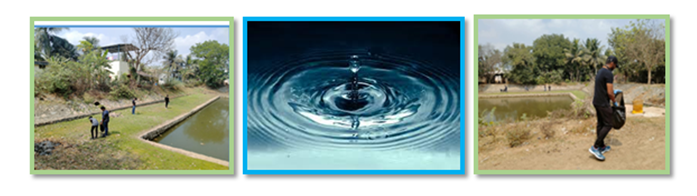
The university actively engages stakeholders in its sustainable water management strategy through extensive awareness programs and community-oriented projects. These initiatives include guest lectures, lake and beach clean-up drives, and vetiver planting projects to reduce water pollution and promote soil stabilization. The institution also implements measures to prevent water system pollution, such as a meticulously planned plumbing facility, separate sewer systems, and robust solid waste management practices. By integrating policy, infrastructure, community engagement, and continuous monitoring, B.S. Abdur Rahman Crescent Institute of Science and Technology effectively addresses its water needs and contributes to broader environmental sustainability goals.
A. Water Consumption and Tracking
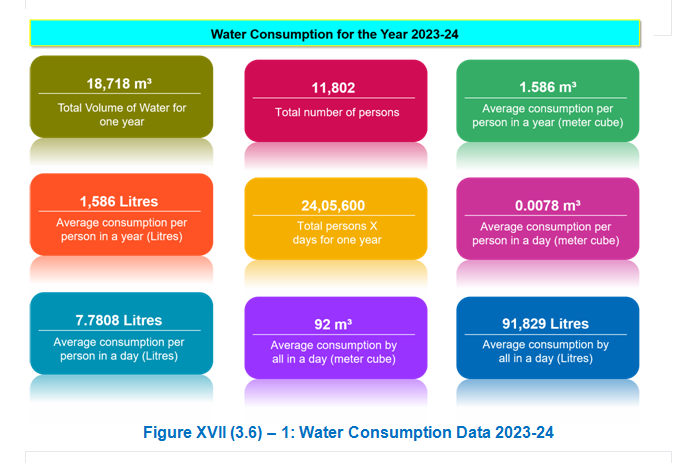
The report on water consumption tracking at B.S. Abdur Rahman Crescent Institute of Science and Technology emphasizes the importance of managing water resources sustainably. For the academic year 2023-24, the institution utilized various water sources: 17,795 m³ from private suppliers and 3,157 m³ from university wells, totaling 20,952 m³ annually. The average daily consumption of water is 92 m³, utilized mainly by faculty, staff, students in hostels, and other facilities. The Institute comprises five water treatment plants that purify water for multiple uses and successfully treat approximately 1,143 m³ of lorry water in January 2024. With a sewage generation of 14,694 m³ per year, the sewage treatment plant effectively treats 13,005 m³, with 85% reused for gardening. This comprehensive water management approach reflects the Institute’s commitment to sustainability and responsible resource usage.
Wastewater Treatment
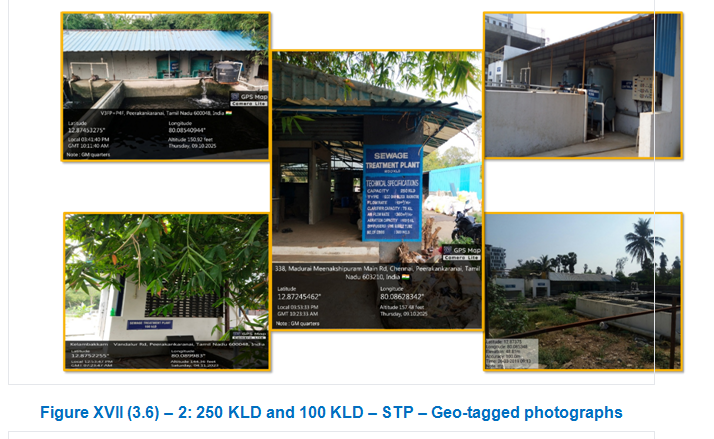
B.S. Abdur Rahman Crescent Institute of Science and Technology implements effective wastewater treatment strategies, operating two main sewage treatment plants with capacities of 250 KLD and an additional 100 KLD plant commissioned in 2022. The treatment process includes several stages, beginning with preliminary treatments to remove debris, followed by sedimentation and biological treatments enhanced by eco-bioblocks. The systems operate at 88.5% efficiency, with treated water primarily used for landscaping and toilet flushing, reducing fresh water reliance. Routine maintenance and monitoring of the water quality are conducted, focusing on parameters like pH, COD, and BOD to ensure effective reuse. The institute demonstrates a commitment to sustainable water management through continuous infrastructure enhancements and significant water recycling.
B. Preventing Water System Pollution
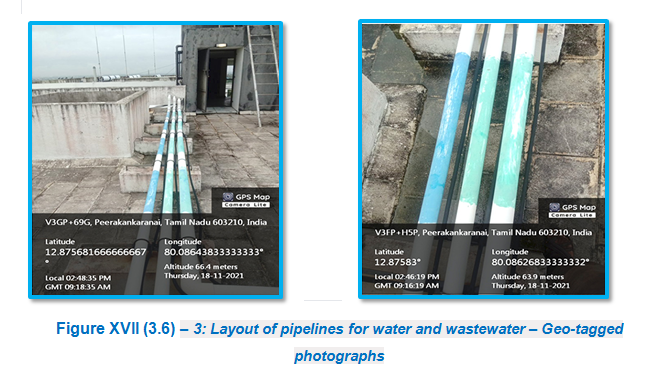
This document details the water management and pollution prevention strategies at B.S. Abdur Rahman Crescent Institute of Science and Technology. It describes the campus’s infrastructure, including color-coded water lines for raw water (green), treated water from the Sewage Treatment Plant (STP) (yellow), and sewage discharge (blue). Key features include the installation of a 25 kLD FOG treatment plant to manage kitchen wastewater and a decentralized 10 kLD STP for the Crescent Incubation Center to treat wastewater on-site. The layout emphasizes separate sewer systems to prevent contamination of potable water and guidelines for regular maintenance and inspections to avoid leaks. Solid waste management practices, such as garbage segregation and reduction of waste, are highlighted to mitigate pollution. The document underscores the institute’s commitment to sustainability and efficient resource management while maintaining clean water quality.
Water Conscious Planting
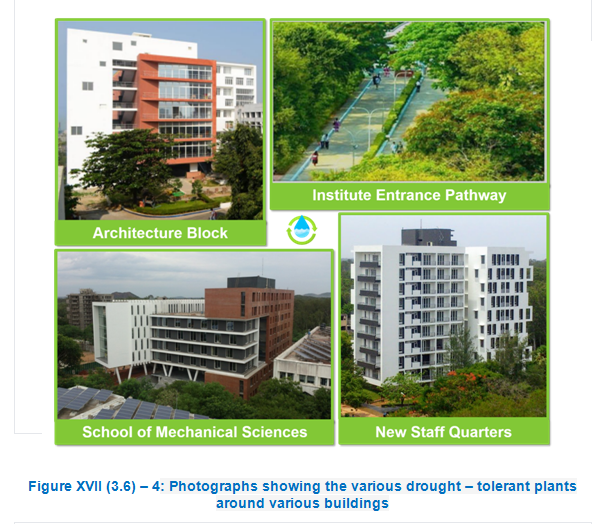
The B.S. Abdur Rahman Crescent Institute of Science and Technology emphasizes water conservation through its landscaping practices, covering 38% of the campus with greenery. The integration of drought-tolerant plants, such as Bougainvillea, Aloe Vera, and Tecoma stans, enhances both the aesthetic appeal and ecological balance of the campus while reducing water consumption. The campus serves as a sustainable model for other institutions by promoting local biodiversity and efficient use of water resources. This initiative aligns with the goals of Sustainable Development Goal 6, prioritizing clean water and sanitation through access, sanitation hygiene, water quality improvement, wastewater treatment, and increased water-use efficiency.
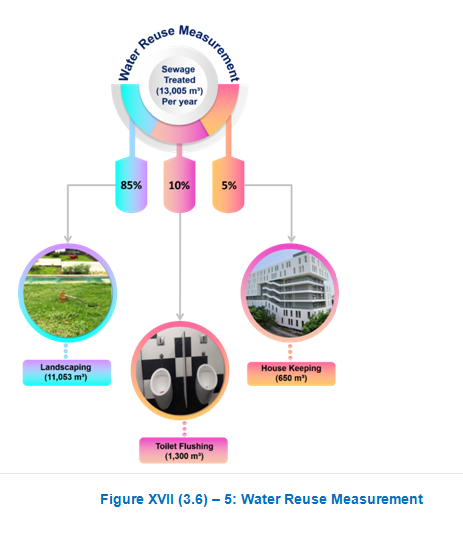
The university has established a comprehensive water reuse strategy, recycling approximately 13,005 cubic meters of treated wastewater annually from a total of 14,694 cubic meters generated. The recycled water is primarily used for landscaping (85%), toilet flushing (10%), and housekeeping (5%), emphasizing sustainability and efficient resource management. Monthly data from January to December 2024 reveals consistent recycling efforts, with peak usage in May at 1,351 cubic meters, and a total of 18,718 cubic meters of treated water overall. This proactive approach supports conservation, enhances campus green spaces, and sets a benchmark for other institutions. Furthermore, the university’s water management reuse policy adheres to the principles of Sustainable Development Goal 6, focusing on equitable water access, sanitation, quality improvement, and ecosystem protection.
Water Management and Educational Opportunities
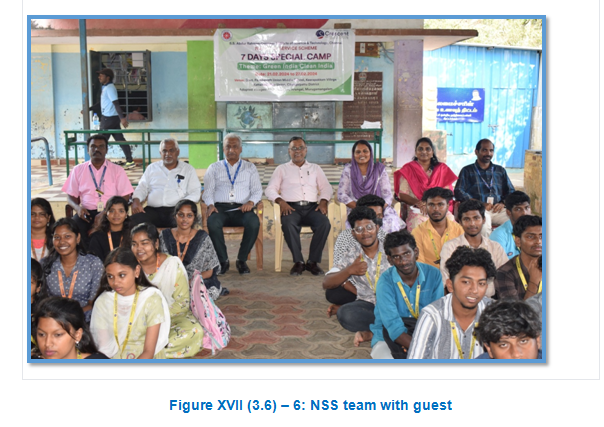
The NSS Special Camp 2023-24, themed “Green India Clean India,” was organized by B.S. Abdur Rahman Crescent Institute of Science and Technology, engaging 120 volunteers in community service across the adopted villages of Keerapakkam, Arungal, and Murugamangalam from February 21 to 27, 2024. Key activities included a village survey, blood donation camp, stress management sessions, and water conservation drives, designed to build teamwork and leadership among participants. Noteworthy initiatives on water conservation involved surveying local water resources, identifying leakage points, and promoting rainwater harvesting and the reuse of greywater. The camp concluded with a valedictory function reflecting on the participants’ contributions to social transformation and active citizenship. Additionally, a guest lecture titled “Water for Peace – World Water Day 2024” highlighted the significance of water conservation organized by the Institution of Engineers (India) in collaboration with the Department of Civil Engineering.
Off Campus Water Conservation Support
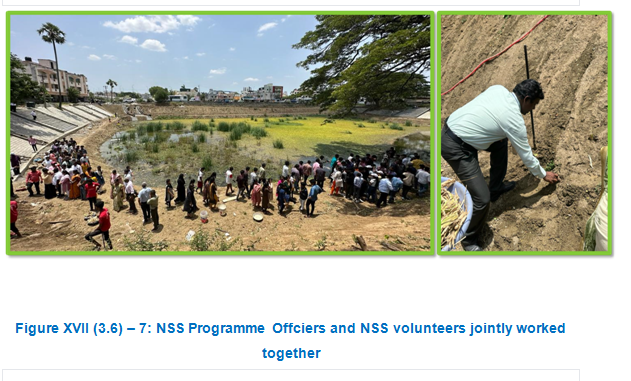
The document discusses a community-driven initiative led by volunteers from the National Service Scheme (NSS) and several engineering colleges to combat sewage-induced pollution in the Urapakkam Kolatchiammal temple pond through planting Vetiver grass. This intervention targets sedimentation and water quality degradation by utilizing Vetiver’s deep root systems to stabilize soil, filter runoff, and enhance groundwater recharge. The plants were strategically placed along the pond banks and in areas vulnerable to erosion to improve ecological health and reduce pollutant loads. Furthermore, the document outlines the broader water management reuse policy aimed at ensuring equitable access to clean water, improving sanitation, and fostering community engagement in water management. This policy emphasizes maximizing wastewater treatment and reuse while aligning with Sustainable Development Goals (SDGs) for clean water and sanitation.
Sustainable Water Extraction on Campus
The B.S. Abdur Rahman Crescent Institute of Science and Technology has developed a comprehensive sustainable water extraction strategy incorporating diverse water sources such as reverse osmosis, bore water, open wells, and rainwater harvesting. Advanced technologies like sewage treatment plants and IoT-based monitoring systems enhance water management efficiency. The institute strictly adheres to national and international water conservation regulations, ensuring sustainable practices. Engaging stakeholders through awareness programs promotes collective responsibility for water conservation. The institute aims for continuous improvement with goals to reduce groundwater extraction and enhance the use of treated water, while striving for EDGE certification for sustainability. This proactive approach addresses immediate water needs and contributes to broader environmental sustainability, serving as a potential model for other institutions.
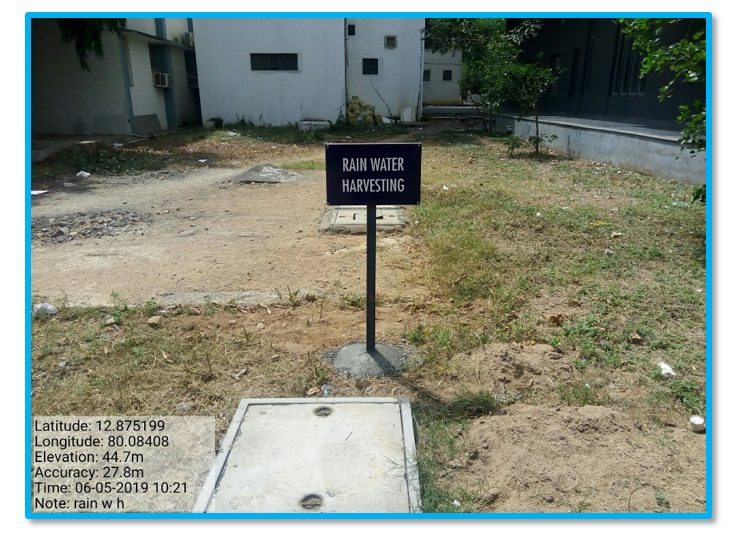
Figure XVII (3.6) – 8: Rainwater harvesting pit
Co-operation on Water Security
The B.S. Abdur Rahman Crescent Institute of Science and Technology collaborates with the Government of India to enhance sustainable water management through hands-on learning, promoting responsible water use among students and the community. On-campus initiatives include rainwater harvesting, sewage treatment, and monitoring water consumption, while off-campus efforts involve community education and clean-up projects. The Crescent Water Management Policy aims to align campus learning with external engagement, fostering water-conscious behavior and effective resource management. The Water Management Reuse Policy emphasizes equitable access to safe drinking water and sanitation, improving water quality, protecting ecosystems, and supporting local community participation. It encourages the sustainable reuse of treated wastewater and establishes a framework for tracking water usage. Ongoing awareness programs and signage are part of the policy dissemination strategy, ensuring compliance is supervised by designated officials.
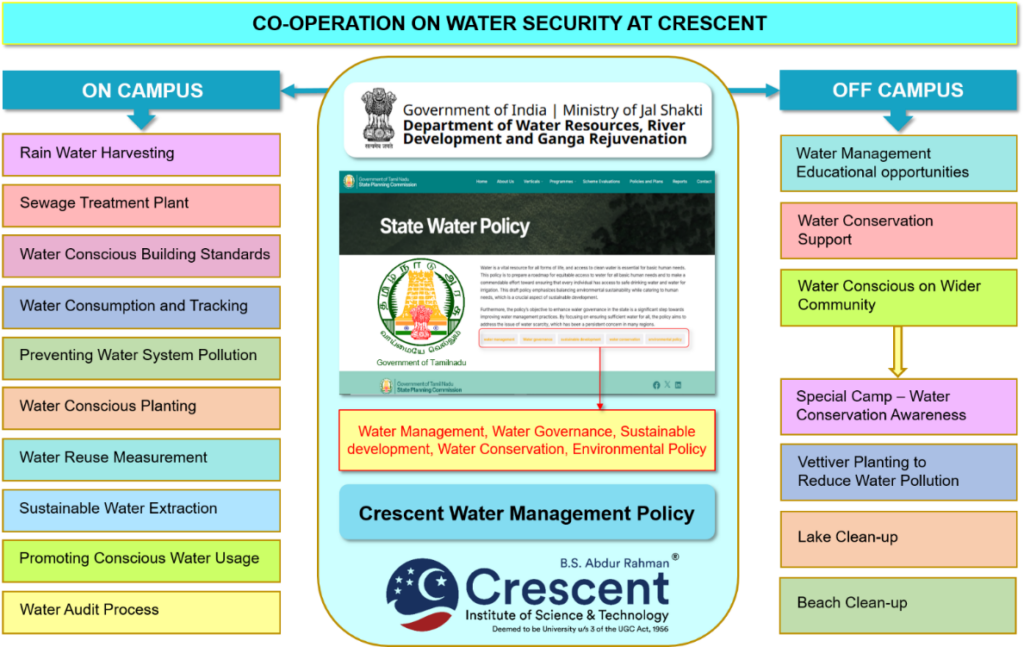
Figure XVII (3.6) – 9: Co-operation on Water Security at Crescent
Promoting Conscious Water Usage on Campus
On March 21, 2024, the Institution of Engineers (India) Kancheepuram Local Centre, in collaboration with B.S. Abdur Rahman Crescent Institute of Science & Technology, organized a guest lecture titled “Water for Peace” to celebrate World Water Day. Dr. Vasanthi Padmanabhan welcomed chief guest Dr. Sekhar Raghavan, an advocate for rainwater harvesting. Dr. Raghavan emphasized the importance of rainwater conservation in India, particularly in Chennai, and discussed strategies for effective rainwater harvesting. He offered practical tips for maintaining rainwater systems to ensure clean groundwater. Approximately 70 Civil Engineering students participated, benefiting from the lecture, which complemented their course materials on water resources. The institution is committed to promoting conscious water usage through operational protocols, and awareness programs aimed at sustainable water management were highlighted. Guidelines include requesting users to minimize tap usage and maintain cleanliness on campus.
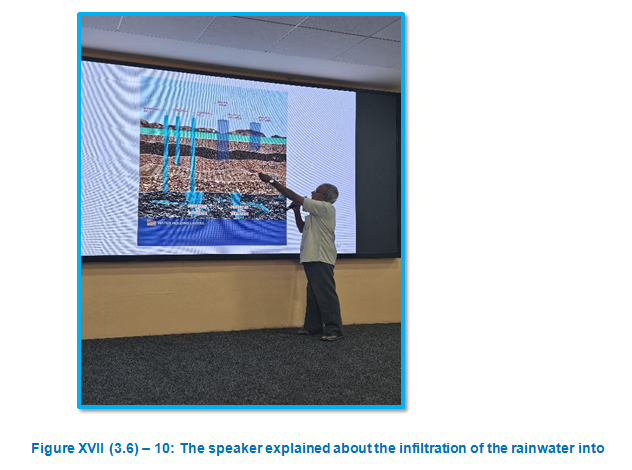
The ground surface as it is more essential.
Water Conscious on Wider Community
On October 4, 2023, the B.S. Abdur Rahman Crescent Institute of Science & Technology, in collaboration with the Environmentalist Foundation of India (EFI), hosted a community-centric initiative titled “Lake Clean-Up with Seed Ball Plantation” in Kolapakkam village. This dual-pronged effort aimed to clean a polluted lake and restore its ecological balance through community involvement and education. Volunteers, guided by NSS Programme Officers, participated in litter removal, water quality monitoring, and the innovative use of seed balls to promote native vegetation and biodiversity recovery. The clean-up highlighted the critical need for sustainable practices in freshwater conservation while also addressing public health, economic, and ecological benefits. Future plans include ongoing collaboration between the institute, NSS, and EFI for additional restoration efforts and educational outreach, reinforcing the importance of community action in environmental stewardship.
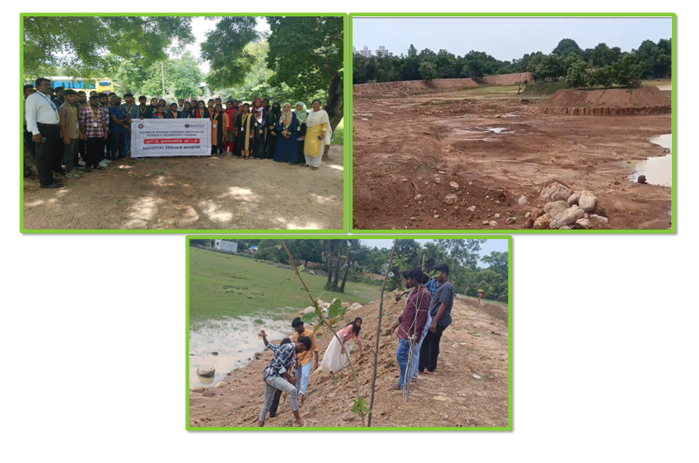
Figure XVII (3.6) – 11: Crescent NSS Volunteers in Field Work
Free Drinking Water
The university promotes free drinking water availability through numerous fountains on campus, ensuring all community members have access to clean water. Regular testing of water quality, including microbial and chemical analyses, is conducted to maintain health standards and build confidence. The institution has installed 64 water dispensers, equipped with Reverse Osmosis (RO) units, totaling a capacity of 3,900 liters across various campus buildings. Monitoring data includes detailed locations and conditions of dispensers, showing general functionality but some signs of wear. Additionally, the university operates several RO plants with a combined capacity of 13,000 liters per hour and 62,000 liters per day to meet hydration needs, strategically placing dispensers across all floors. Continuous maintenance and quality assurance of these systems are pivotal for safeguarding the health of students, staff, and visitors.
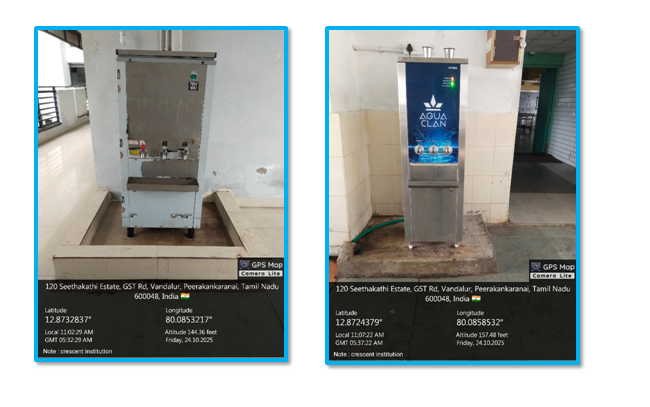
Figure XVII (3.6) – 12: Free Drinking Water dispenser units at different locations
D . Water-Conscious Building Standards
B.S. Abdur Rahman Crescent Institute of Science and Technology has established a comprehensive water-conscious building standard that adopts a holistic approach to sustainable infrastructure and water management. The institute integrates advanced technologies such as rainwater harvesting, efficient sewage treatment, and smart water management systems to optimize resource usage and tackle water scarcity. Compliance with national and international regulations ensures adherence to strict environmental standards. The institute actively engages its community through awareness programs to promote water conservation practices among students, faculty, and staff, fostering a culture of collective environmental responsibility. With a commitment to continuous improvement in water management, future initiatives include maximizing treated water use and developing comprehensive policies. Additionally, the Ladies Hostel has achieved EDGE certification, showcasing significant reductions in energy and water consumption through sustainable building practices. The institute’s water audit process highlights the effective use of diverse water sources and storage capacity, while ongoing construction projects comply with green building certification standards. Overall, the institute is dedicated to sustainable development and serves as a model for environmentally conscious practices in education.
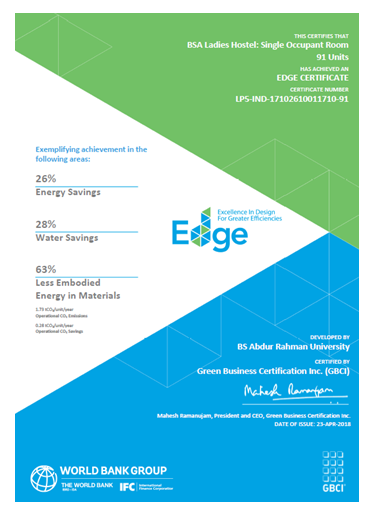
Figure XVII (3.6) – 13: GBCI-EDGE GREEN BUILDING Certification
WATER MANAGEMENT REUSE POLICY
Issue: 04; Revised on 2023
Policy Created on | July 2009 |
1st Revision amended on | IQAC Meeting held on 27th October 2017 |
2nd Revision amended on | IQAC Meeting held on 31st March 2021 |
3rd Revision amended on | IQAC Meeting held on 16th June 2023 |
Responsible Executive : Director (IQAC)
Responsible Office : Internal Quality Assurance Cell, Student Affairs, Estate Office, Academic Office, Library and SDG Cell
Contacts : Registrar and Director (IQAC)
6.1 STATEMENT OF POLICY
The B.S. Abdur Rahman Crescent Institute of Science and Technology is committed to achieving the following objectives in alignment with Sustainable Development Goal 6 (SDG 6) – Clean Water and Sanitation:
a) Ensure universal and equitable access to safe and affordable drinking water for all stakeholders.
b) Provide adequate and equitable sanitation and hygiene for all, with special attention to the needs of women, girls, and vulnerable groups.
c) Improve water quality by reducing pollution, eliminating dumping, and minimizing the release of hazardous chemicals and materials.
d) Halve the proportion of untreated wastewater and substantially increase recycling and safe reuse globally.
e) Substantially increase water-use efficiency across all sectors and ensure sustainable withdrawals and freshwater supply to address water scarcity.
f) Implement integrated water resources management at all levels, including transboundary cooperation as appropriate.
g) Protect and restore water-related ecosystems, including mountains, forests, wetlands, rivers, aquifers, and lakes.
h) Expand international cooperation and capacity-building support to developing countries in water- and sanitation-related activities and programs.
i) Support and strengthen the participation of local communities in improving water and sanitation management.
6.2 REASON FOR THIS POLICY
The policy aims to provide all stakeholders with adequate water supply, sanitation, and hygiene. It emphasises maximising the collection and treatment of sewage generated and the reuse of treated wastewater sustainably, thereby reducing dependency on freshwater resources. The policy promotes treating wastewater as an economic resource.
6.3 RESPONSIBILITIES
6.3.1 Policy Principles
a) The campus shall provide adequate water supply and maximize water reuse by adhering to the following principles:
- Equitable access to safe and affordable drinking water for all stakeholders.
- Access to adequate sanitation and hygiene, ending open defecation, with special attention to vulnerable groups.
- Calculation of water usage per person (students, staff, and faculty) annually.
- Improving water quality by reducing pollution and increasing recycling and safe reuse.
- Utilization of recycled/treated wastewater for beneficial purposes, such as irrigation and toilet flushing.
- Implementation of integrated water resources management at all levels.
- Protection and restoration of water-related ecosystems on campus.
- Expansion of rainwater harvesting initiatives.
- Collaboration with government, NGOs, and industries in water-related activities.
- Support for student and staff participation in water management.
6.4 WATER REUSE POLICY
6.4.1 Water Reuse Policy Objectives
- Establish a comprehensive policy to maximize water reuse across the university.
- Ensure that all new buildings adhere to water-conscious building standards that facilitate water reuse.
- Implement systems for tracking and measuring water consumption and reuse.
6.4.2 Water Reuse
- Water Reuse Policy: maximise water reuse across the university.
- Water Reuse Measurement: Measure water reuse across the university.
6.5 DISSEMINATION OF POLICY
a) Display signage promoting water use efficiency across the campus.
b) Conduct awareness programs at regular intervals to increase water-use efficiency.
c) Post the policy on the Institute’s website and update it as necessary.
6.6 ENFORCEMENT OF POLICY
a) The Director (Planning & Development) and Deputy Director monitor compliance and address breaches.
b) Awareness of the policy among students, staff, and visitors is essential.
c) Breaches may lead to disciplinary action as per the Institute’s code of conduct.


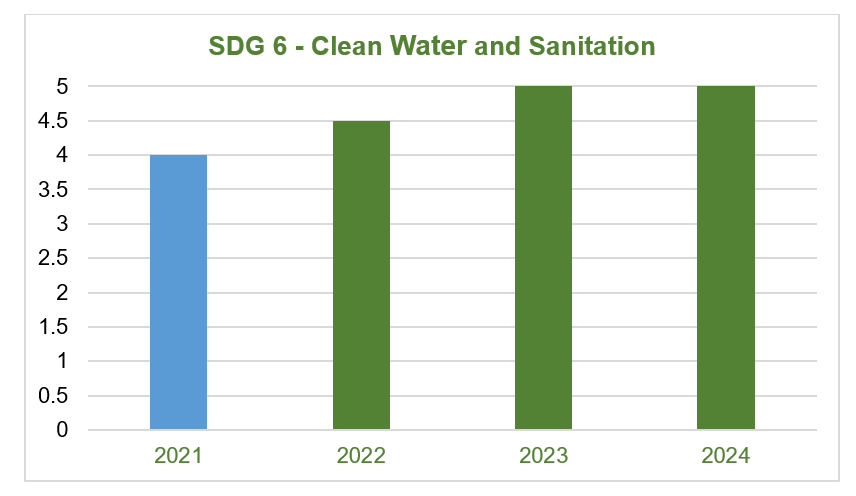
Rubrics for SDG 1: Clean Water Sanitation
| 4 to 5 | There is significant progress in effective implementation compared to the previous year |
| 3 to 4 | The necessary processes/activities (Support to students based on income, assistance to local start-ups) have been implemented |
| 2 to 3 | There is an explicit plan to address the ‘No Poverty’ and necessitated processes have been initiated |
| 1 to 2 | There is an understanding and willingness to contribute effectively for achieving the UN targets of SDG 1 |
| 0 to 1 | There is no/partial willingness and plan to contribute for achieving the UN targets of SDG 1 No Poverty |
SDG ACCORD REPORT 2025
B.S. Abdur Rahman Crescent Institute of Science and Technology (BSACIST), this positions the institute not only as a learner but as a contributor to national and regional SDG policy dialogues. The 2024 entry on relationships with regional NGOs and government for SDG policy underscores an ongoing posture of engagement with policy ecosystems, aligning institutional activity with policy development, monitoring, and adaptive management. This alignment suggests BSACIST can translate its SDG work into formal policy input, scenario modelling, and accountability mechanisms that inform broader regional development trajectories.
The 2025 SDG Accord report highlights that most signatories are moving toward embedding sustainability at an organizational level, with many reporting up-to-date sustainability policies endorsed by senior leadership. For BSACIST, the implication is to articulate a clear, leadership-backed sustainability policy or action plan that directly references SDGs most relevant to the institute’s mission and operations. Given the 2024 emphasis on engaging with government and regional NGOs, BSACIST could position its policy inputs as anchored in the connected governance and partnerships depicted in the report, ensuring that policy submissions, stakeholder consultations, and adaptive management are institutionally codified rather than ad hoc activities.
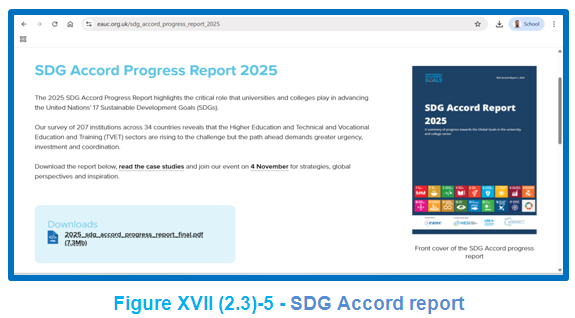
The SDG Accord Progress Report 2025 frames universities and colleges as pivotal agents for implementing the United Nations Sustainable Development Goals through whole-institution approaches. The thematic focus on Learning and Teaching reveals that while progress is ongoing, Learning and Teaching remains the least mature operational area for many signatories. BSACIST should view this as a guide to invest in curriculum integration of SDGs, faculty development, and assessment practices that explicitly test sustainability knowledge. The report notes significant barriers such as limited time for staff development and inadequate integration of sustainability into curricula. BSACIST can address these barriers by allocating dedicated funding and time for professional development, integrating SDG-related outcomes into degree programs, and creating standardized assessments that measure students’ sustainability competencies.
The progress report emphasizes the value of evidence-based case studies and peer learning. BSACIST can contribute through documenting and sharing successful Learning and Teaching innovations—for example, climate pedagogy initiatives, service-learning projects, and interdisciplinary modules that map to SDG4 (Quality Education), SDG 6 (Clean Water and Sanitation), SDG 7 (Affordable and Clean Energy) and SDG17 (Partnerships for the Goals). By contributing BSACIST-specific case studies to the SDG Accord platform, the institute would participate in a global knowledge network, enabling replication and contextual adaptation across similar universities and colleges in the region.
The results section of the report highlights top SDGs influenced by signatories and the priority SDGs for the upcoming year. In the last year, SDG4, SDG13, and SDG 6 (Clean Water and Sanitation), SDG 7 (Affordable and Clean Energy) were prominent, with SDG17 as a top priority for partnerships. For BSACIST, this pattern suggests focusing efforts on education quality, climate action initiatives, and strengthening collaborative frameworks with industry, government bodies, and civil society. Establishing formal partnerships and joint programmes with regional NGOs and the government can advance SDG implementation while creating opportunities for funding, capacity-building, and scalable impacts.
The report documents the internal and external support needs identified by signatories, with budget, dedicated staff capacity, and funding from external sources highlighted as top needs. BSACIST should prepare a resource plan that secures funding streams for SDG-aligned activities, including staff training, climate-related research, and curriculum transformation. Engaging government and sector partners can help unlock external support, align institutional priorities with national development plans, and provide procurement or grant-based pathways to sustain SDG initiatives over multiple years.
Finally, the BSACIST context benefits from the report’s emphasis on evaluating new partnerships and governance improvements. The Accord notes that sustainability work benefits from cross-departmental collaboration and a shared, mission-driven culture. BSACIST can leverage its 2024 policy-involvement experience to foster cross-disciplinary governance structures, establish an SDG steering committee, and implement a transparent reporting framework that communicates progress to internal and external stakeholders. By aligning these governance practices with the SDG Accord methodology, the institute can demonstrate measurable progress toward embedding the SDGs into education, research, operations, and community engagement.