

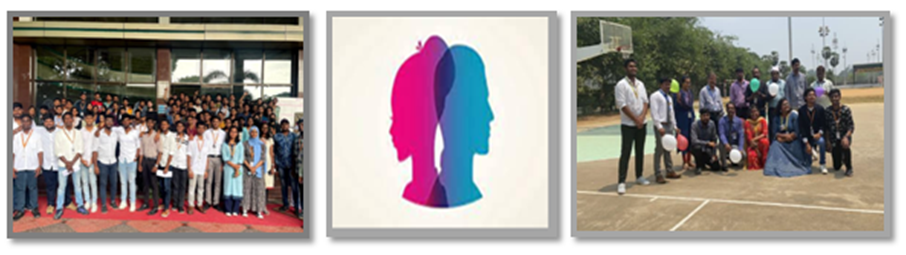
Equality in Opportunity
B.S. Abdur Rahman Crescent Institute of Science and Technology, establishes a comprehensive gender equality framework aimed at recognizing gender parity as a fundamental right and a driver of sustainable development and productivity, with institute-wide applicability to admissions, staffing, leadership representation, academic tracking, and campus facilities and support services for women and all genders. Its core principles emphasize equality and non-discrimination across UG/PG/PhD programs, with gender options including Male, Female, and Trans genders, and a strategic objective to empower women through education, balanced staffing, leadership representation, and targeted support.
ADMISSIONS :
In admissions and representation, the policy prohibits gender-based discrimination, provides special provisions to encourage participation by female candidates, and mandates female representation on governance bodies (initially two female members, expanding to four with at least two women).
HUMAN RESOURCES:
Staffing and career progression emphasize gender parity in staffing and equal promotion opportunities, with women explicitly integrated into senior leadership and governance.
EDUCATION :
Academic tracking includes a mechanism to monitor female candidates from admission to graduation detailing academics and cocurriculars, and female-focused admissions assistance for traditionally male-dominated streams.
WELFARE BENEFITS:
Welfare and leave policies offer financial and academic accommodations, such as an additional Rs. 1,000 monthly stipend for female candidates in JRF/SRF, maternity and paternity leaves, an extension of PhD duration by up to two years for female candidates (total eight years), and up to 240 days of child care leave for female researchers, alongside general measures to support female participation.
FACILITIES:
Facilities and safety provisions include separate women’s toilets and secure women’s hostel accommodations with round-the-clock security.
Identifying the gaps and recommends enhancements, including establishing data collection and accountability metrics, clarifying the scope of transgender inclusion, detailing conflict resolution procedures with clear timelines, developing a robust implementation plan with responsibilities and resources, instituting monitoring and evaluation through audits and external reviews, and incorporating intersectionality to address the needs of other marginalized groups. The anticipated impact is positive, projecting improved gender equality, better educational outcomes for women, stronger governance diversity, a safer campus, and improved recruitment and retention of female staff and students, while risk factors such as resistance to policy changes and potential biases must be monitored. Key actionable items include publishing a formal policy with governance roles and timelines, implementing a centralized data system for gender metrics, formalizing grievance procedures with clear timelines, sustaining and funding Women Empowerment Cells, and clarifying leave entitlements and PhD extensions with transparent eligibility and processes.
A. ENHANCING GENDER DIVERSITY AT CRESCENT
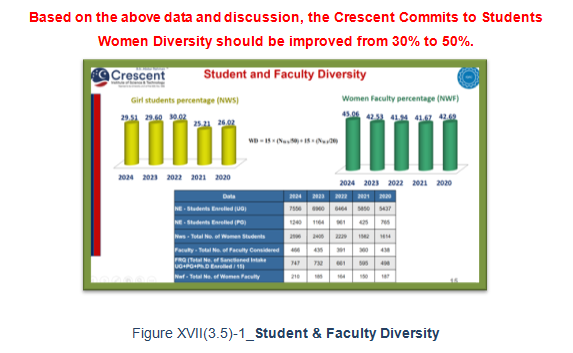
According to the provided NIRF Gender Ratio document, the percentage of female students at Crescent is between 29.51% and 30.02% from 2020 to 2024, while the percentage of women faculty is between 41.67% and 45.06% during the same period2. The NIRF data also provides the total number of women students (Nws) and women faculty (Nwf) from 2020 to 2024. This data could be used to evaluate and track gender diversity within the institution.
The collected data is important for demonstrating universities’ commitment to gender equality through various initiatives and policies. Universities can actively support disadvantaged women students, ensure women’s access to higher education, promote gender balance in leadership, and support women’s success at the university. By implementing and monitoring these measures, universities contribute to creating a more equitable and inclusive environment, aligning with the goals of SDG 5.
Based on the above data and discussion, the Crescent Commits to Students Women Diversity should be improved from 30% to 50%.
The institute demonstrates a multi-faceted commitment to SDG 5 through education, health and well-being, empowerment, and community engagement.
Core programs include empowerment and mental health support, menstrual health initiatives, maternal health education, recognition of women achievers, financial support for education, and creative expression to challenge gender norms.
Overall impact areas: women’s education access, health and well-being, economic empowerment via scholarships, and societal attitude shifts toward gender equality.
Detailed Program Overview (Key Activities and Initiatives)
MOOVALUR RAMAMIRTHAM AMMAIYAR SCHOLARSHIP
Promoting Gender Equality through Education
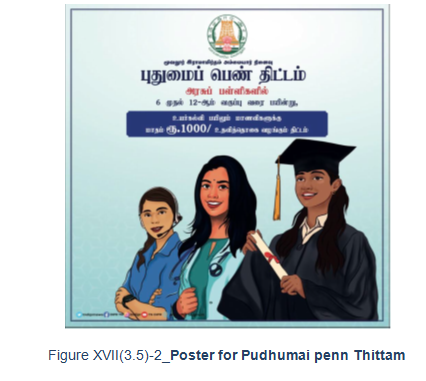
The Moovalur Ramamirtham Ammaiyar Scholarship program directly contributes to Sustainable Development Goal (SDG) 5, which seeks to achieve **gender equality** and empower all women and girls. By targeting female students from economically disadvantaged backgrounds, particularly those from government schools in Tamil Nadu, the program aims to break the barriers that limit girls’ access to higher education. This initiative not only provides financial support but also tackles the socio-cultural barriers that often prevent girls from pursuing higher education, such as early marriage, gender-based discrimination, and lack of familial support.

B. Increasing Female Enrollment and Retention
SDG 5 emphasizes the importance of increasing female participation in education, a goal that aligns with the core objectives of the Moovalur Ramamirtham Ammaiyar Scholarship. By providing financial assistance to girls pursuing undergraduate and postgraduate studies, the scholarship fosters gender parity in higher education, increasing female enrollment and retention rates. The program’s focus on education as a tool for empowerment ensures that girls are not only enrolling in school but also staying in school, completing their studies, and acquiring skills that will enhance their personal and professional lives.
Access to higher education is a key driver of socio-economic empowerment for women. The scholarship program contributes to SDG 5 by offering long-term benefits to female students, such as career development opportunities, mentorship, and internship placements. These resources empower young women to become self-sufficient and break the cycle of poverty within their families. In the broader context, by fostering women’s economic participation and leadership, the program helps to transform communities and create a more equitable society where gender is not a barrier to success.
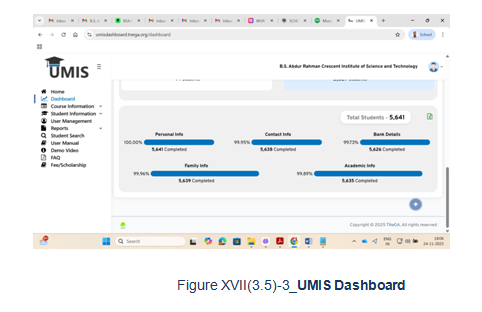
The Moovalur Ramamirtham Ammaiyar Scholarship program embodies a holistic approach to gender equality by integrating data-driven solutions, community involvement, and policy alignment with Tamil Nadu’s government initiatives. By tracking and supporting female students through the University Management Information System (UMIS), the program ensures that students’ academic and financial needs are met transparently and efficiently. The scholarship’s governance model, with a dedicated Outreach & Guidance Wing and Selection Committees, ensures that gender considerations are embedded at every stage of the program, strengthening its ability to contribute meaningfully to SDG 5 and beyond. Through this approach, Crescent Institute plays a pivotal role in advancing gender equality and fostering an inclusive educational environment.
C. EDUCATIONAL ACTIVITIES FOR GIRL STUDENTS @ CRESCENT
The EmpowerHer project, aimed at advancing Women’s Wellness And Psychological Health, hosted an impactful workshop on March 14, 2024, at Crescent Campus. Led by Dr. Saranya, a Wellness Psychologist, the session focused on equipping female Rotaractors and students with the essential tools for managing mental and physical health. By emphasizing the interconnectedness of these two aspects, the event directly aligned with SDG 3: Good Health and Well-Being, which aims to ensure healthy lives and promote well-being for all individuals. The workshop provided a valuable opportunity for women to explore the importance of self-care and emotional resilience, ensuring that participants walked away with actionable strategies for maintaining a balanced and healthy lifestyle.
The workshop’s success can be attributed to the collaborative efforts of RTR. Vidhula Saravanan, the Project Chairperson, and the dedication of the EmpowerHer team. More than 45 participants benefited from the session, engaging in discussions and interactive activities that promoted community-building and shared learning. The initiative demonstrated a clear commitment to the SDGs, particularly SDG 3: Good Health and Well-Being, SDG 5: Gender Equality, and SDG 4: Quality Education. Through this workshop, EmpowerHer not only contributed to the physical and mental well-being of the participants but also empowered them with the knowledge needed to advocate for their own health, both in their personal and professional lives. The community aspect of the workshop allowed women to feel supported, encouraging them to take proactive steps towards their well-being.
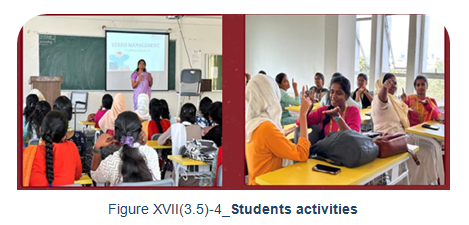
The event addressed the unique psychological challenges faced by women, such as balancing personal, academic, and professional responsibilities, and the stress that often accompanies these pressures. Emphasizing SDG 5: Gender Equality, the workshop fostered an environment where participants could openly discuss mental health barriers and learn practical strategies for overcoming them. This was not just about individual well-being, but also about promoting gender equality by empowering women to break free from the mental health stigma often associated with gender-specific struggles.
The Institute has the potential to make an even greater impact through continued engagement and structured follow-up. Several recommendations have been made to enhance the initiative, including developing a comprehensive curriculum with clear learning outcomes and assessment metrics. This would enable organizers to measure the long-term effects of the workshops and provide tailored support. Additionally, introducing a peer-mentoring system could offer ongoing community support, helping participants sustain the benefits of the workshop and continue to share their experiences. By collecting anonymized pre- and post-surveys, the project could also assess the effectiveness of the program, ensuring continuous improvement and alignment with the evolving needs of women. With these enhancements, EmpowerHer can continue to empower women and foster a more inclusive and supportive environment for mental and physical well-being.
ONE-DAY LEGAL AWARENESS PROGRAM ON “BREAKING BARRIERS: UNDERSTANDING GENDER EQUITY AND GIRLS’ RIGHTS”
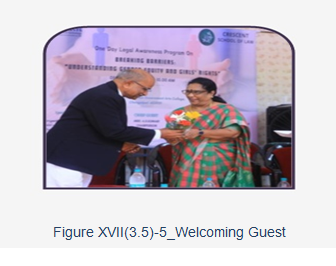
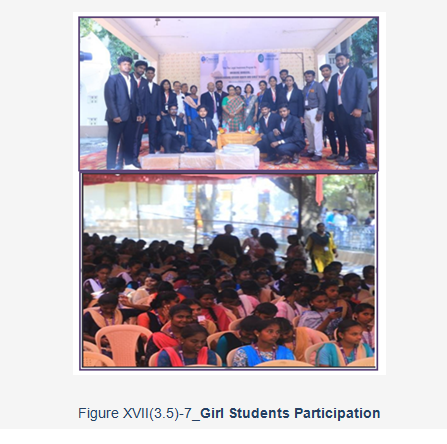
B.S. Abdur Rahman Crescent Institute of Science and Technology’s Crescent Legal Aid Committee recently spearheaded a meaningful outreach activity titled “Breaking Barriers: Understanding Gender Equity and Girls’ Rights”, which was held on October 8, 2024 at Rajeswari Vedachalam Government Arts and Science College, Chengalpattu. The one-day legal awareness program was designed to empower students and the broader college community with essential knowledge on gender equity and girls’ rights, addressing issues facing women’s rights in India. The event featured a ceremonial inauguration and distinguished sessions that connected gender equity with everyday realities.
A notable highlight was the handing over of five sanitary napkin vending and disposal machines, emphasizing women’s health, hygiene, and dignity within educational institutions. Sessions included insights on gender equity through Tamil literature, discussions on domestic violence laws, helplines, and support mechanisms for issues such as stalking and forced marriages. The event was a collaborative effort involving Crescent School of Law’s Legal Aid Committee, faculty coordinators, and student coordinators, under the guidance of the Dean of Crescent School of Law, Dr. C. Chockalingam.
Event Highlights
• Ceremonial Start:
The event began with the “Tamil Thai Vazhthu” and a lamp-lighting ceremony, symbolizing the formal inauguration. The Dean delivered the welcome address, emphasizing the importance of gender equity and quoting renowned social reformers for inspiration.
• Guest Felicitations and Presidential Address:
Mrs. A.S. Kumari, Chairperson of the Tamil Nadu State Women’s Commission, delivered the presidential address. She discussed gender equity laws, dowry prevention, sexual harassment, and the importance of self-respect, drawing insights from social reformer Thanthai Periyar.
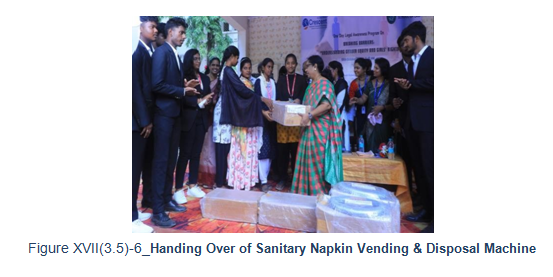
- A key focus of the event was the handing over of five sanitary napkin vending and disposal machine to Rajeswari Vedachalam Government Arts and Science College, Chengalpattu. This initiative, generously sponsored by both faculty and student coordinators, underscored the program’s commitment to promoting women’s health and hygiene in educational institutions.
- The machine was officially handed over by the Dean, alongside faculty and studentorganizers, symbolizing proactive steps toward addressing menstrual health challenges faced by young women. The initiative not only provides necessary hygiene resources but also contributes to the ongoing efforts to normalize conversations around menstrual health, which is essential for achieving gender equity.
Key Sessions
1.Session by Mr. P.B. Prince Gajendra Babu:
Addressing gender equity, Mr. Babu utilized Tamil literature to underscore cultural values related to gender equity and highlighted the fundamental rights of women.
2.Session by Mrs. Poongodi Prakash:
Mrs. Prakash discussed domestic violence laws, helpline services, and provided information on support mechanisms for issues like stalking and forced marriages
PARTNERSHIPS WITH NGOs OR SOCIAL ENTERPRISES FOR SUSTAINABLE SUPPLY CHANNELS AND COST-EFFECTIVENESS.
BSACIST is actively engaged in community outreach through initiatives such as:
- Sanitary Pad Drives: Distributed over 320 sanitary pads in Coimbatore and Chennai under Project 3232.
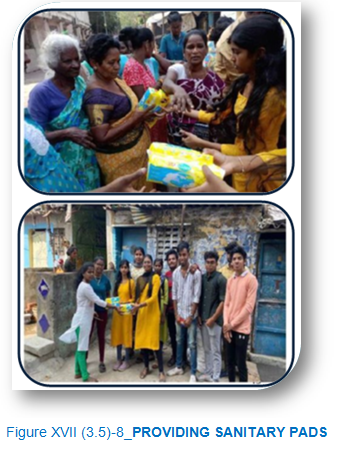
These activities demonstrated BSACIST’s commitment to translating legal knowledge into actionable, community-facing initiatives that promote safety, empowerment, and informed civic participation. This initiative aimed to empower students with knowledge on gender equity and girls’ rights, addressing pressing issues surrounding women’s rights in India.
D. INTERNATIONAL WOMEN’S DAY CELEBRATION
The International Women’s Day Celebration 2024 was held on March 11, 2024, at 11:00 AM in the Convention Centre at B.S. Abdur Rahman Crescent Institute of Science and Technology is an annual event that highlights the achievements of women through the Women Achievers’ Award Ceremony. This celebration serves as a platform to recognize and honor the remarkable accomplishments of women leaders within and beyond the campus. By acknowledging the outstanding work of women, the event aligns with the global commitment to gender equality and women’s empowerment, reinforcing the goals of SDG 5: Achieving gender equality and empowering all women and girls.
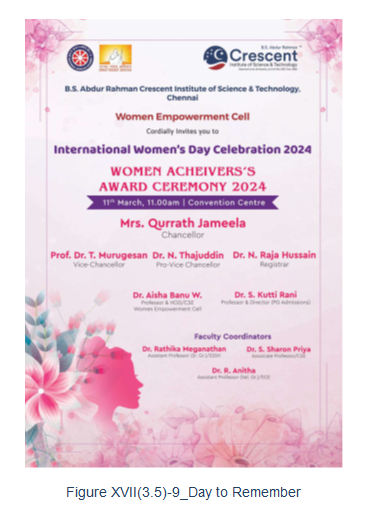
The event’s purpose is to celebrate the accomplishments of women and acknowledge their significant contributions in various fields. The ceremony aims to honor women who have achieved excellence, thereby motivating other women to break barriers and reach their potential. By focusing on recognizing women’s achievements, the event contributes to SDG 5 by fostering a culture of equality, respect, and opportunity for women in all sectors of society.
The distinguished guests at the event include Mrs. Qurrath Jameela (Chancellor), Prof. Dr. T. Murugesan (Vice-Chancellor), Dr. N. Thajuddin (Pro-Vice Chancellor), Dr. N. Raja Hussain (Registrar), and other notable faculty members such as Dr. Aisha Banu W. (Professor & HOD/CSE and Women Empowerment Cell), Dr. S. Kutti Rani (Professor & Director/PG Admissions), among others. These leaders emphasize the institution’s commitment to promoting gender equality in higher education and supporting women’s advancement within academia and beyond.
PUBLISH ANNUAL IMPACT REPORTS DETAILING AWARDEES’ PROJECTS AND SUBSEQUENT OUTCOMES.
The Women Achievers’ Award Ceremony plays a pivotal role in celebrating the success of women who have broken barriers and excelled in various domains. The event raises awareness across the campus about the importance of empowering women and highlights the role of female leaders as positive role models. It fosters an environment where students and faculty alike are inspired by these achievers and motivated to pursue their aspirations regardless of societal limitations. The visibility of such role models encourages others to engage in conversations about gender equality and aspire to make similar impactful contributions in their communities.
By fostering a supportive environment for female students and staff, the cell works to reduce gender-based discrimination, provide leadership opportunities, and encourage women to excel in traditionally male-dominated fields. This event is a reflection of the institution’s ongoing commitment to ensuring that women’s voices are heard and valued, reinforcing the importance of gender parity in all aspects of life.
HUES OF JUSTICE
ONLINE ART COMPETITION PROMOTING GENDER EQUALITY AND SOCIAL CHANGE
On November 25, 2024, the “Hues of Justice” online art competition brought together a diverse group of participants who used their creative talents to advocate for gender equality and challenge societal norms. The competition invited artists to express bold messages surrounding critical issues such as gender equality, domestic violence, and empowerment through their artwork. Themes such as “Breaking Cultural Norms,” “A Violence-Free World,” and “Empowering Women” encouraged participants to engage deeply with pressing social injustices. With 12 participants contributing their perspectives, the competition not only showcased their creativity but also became a platform for raising awareness about gender sensitivity and the urgency for change. The submissions were displayed in a digital gallery, and the winners were celebrated on December 3, 2024, creating a space for open dialogue and reflection on these important issues.
This initiative aligned closely with Sustainable Development Goal 5: Gender Equality, which aims to achieve gender equality and empower all women and girls. Through artistic expression, the competition highlighted the significance of challenging cultural norms and dismantling the barriers that perpetuate gender-based violence and inequality. The artworks served as powerful tools for education and advocacy, engaging the wider community in conversations about how societal norms can be reshaped to promote equality and respect for all genders. By fostering this dialogue, “Hues of Justice” encouraged participants and viewers alike to rethink their perspectives on gender roles and to take a stand for a more inclusive and just society.

The impact of the project, is recommended to create a physical exhibition or expand the digital gallery, allowing more people to engage with the artwork and the messages it carries. Additionally, collecting participant feedback through surveys would help measure shifts in attitudes toward gender equality and domestic violence, as well as the intention to advocate for societal change. Collaborating with campus clubs, art departments, and local communities would further broaden the scope of the initiative, allowing for a larger, more diverse audience to be exposed to the powerful messages of the competition. With these recommendations, “Hues of Justice” can continue to promote gender equality, challenge stereotypes, and inspire societal transformation through the powerful medium of art.
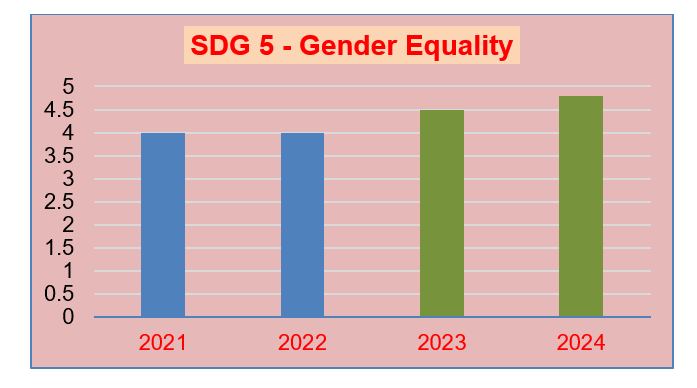
Rubrics for the SDG 5: Gender Equality
| 4 to 5 | There is significant progress in effective implementation compared to the previous year |
| 3 to 4 | The necessary processes/activities (Support to students based on income, assistance to local start-ups) have been implemented |
| 2 to 3 | There is an explicit plan to address the ‘Gender Equality’ and necessitated processes have been initiated |
| 1 to 2 | There is an understanding and willingness to contribute effectively for achieving the UN targets of SDG 1 |
| 0 to 1 | There is no/partial willingness and plan to contribute for achieving the UN targets of SDG 1 No Poverty |
SDG ACCORD REPORT 2025
B.S. Abdur Rahman Crescent Institute of Science and Technology (BSACIST), this positions the institute not only as a learner but as a contributor to national and regional SDG policy dialogues. The 2024 entry on relationships with regional NGOs and government for SDG policy underscores an ongoing posture of engagement with policy ecosystems, aligning institutional activity with policy development, monitoring, and adaptive management. This alignment suggests BSACIST can translate its SDG work into formal policy input, scenario modelling, and accountability mechanisms that inform broader regional development trajectories.
The 2025 SDG Accord report highlights that most signatories are moving toward embedding sustainability at an organizational level, with many reporting up-to-date sustainability policies endorsed by senior leadership. For BSACIST, the implication is to articulate a clear, leadership-backed sustainability policy or action plan that directly references SDGs most relevant to the institute’s mission and operations. Given the 2024 emphasis on engaging with government and regional NGOs, BSACIST could position its policy inputs as anchored in the connected governance and partnerships depicted in the report, ensuring that policy submissions, stakeholder consultations, and adaptive management are institutionally codified rather than ad hoc activities.
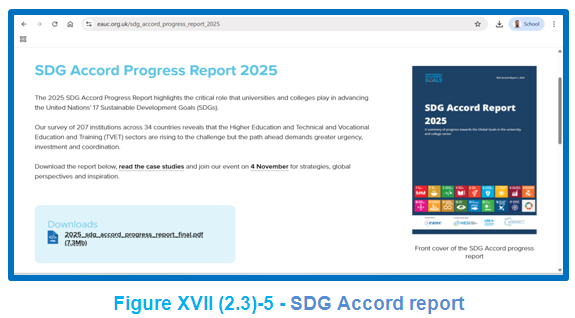
The SDG Accord Progress Report 2025 frames universities and colleges as pivotal agents for implementing the United Nations Sustainable Development Goals through whole-institution approaches. The thematic focus on Learning and Teaching reveals that while progress is ongoing, Learning and Teaching remains the least mature operational area for many signatories. BSACIST should view this as a guide to invest in curriculum integration of SDGs, faculty development, and assessment practices that explicitly test sustainability knowledge. The report notes significant barriers such as limited time for staff development and inadequate integration of sustainability into curricula. BSACIST can address these barriers by allocating dedicated funding and time for professional development, integrating SDG-related outcomes into degree programs, and creating standardized assessments that measure students’ sustainability competencies.
The progress report emphasizes the value of evidence-based case studies and peer learning. BSACIST can contribute through documenting and sharing successful Learning and Teaching innovations—for example, climate pedagogy initiatives, service-learning projects, and interdisciplinary modules that map to SDG4 (Quality Education), SDG 6 (Clean Water and Sanitation), SDG 7 (Affordable and Clean Energy) and SDG17 (Partnerships for the Goals). By contributing BSACIST-specific case studies to the SDG Accord platform, the institute would participate in a global knowledge network, enabling replication and contextual adaptation across similar universities and colleges in the region.
The results section of the report highlights top SDGs influenced by signatories and the priority SDGs for the upcoming year. In the last year, SDG4, SDG13, and SDG 6 (Clean Water and Sanitation), SDG 7 (Affordable and Clean Energy) were prominent, with SDG17 as a top priority for partnerships. For BSACIST, this pattern suggests focusing efforts on education quality, climate action initiatives, and strengthening collaborative frameworks with industry, government bodies, and civil society. Establishing formal partnerships and joint programmes with regional NGOs and the government can advance SDG implementation while creating opportunities for funding, capacity-building, and scalable impacts.
The report documents the internal and external support needs identified by signatories, with budget, dedicated staff capacity, and funding from external sources highlighted as top needs. BSACIST should prepare a resource plan that secures funding streams for SDG-aligned activities, including staff training, climate-related research, and curriculum transformation. Engaging government and sector partners can help unlock external support, align institutional priorities with national development plans, and provide procurement or grant-based pathways to sustain SDG initiatives over multiple years.
Finally, the BSACIST context benefits from the report’s emphasis on evaluating new partnerships and governance improvements. The Accord notes that sustainability work benefits from cross-departmental collaboration and a shared, mission-driven culture. BSACIST can leverage its 2024 policy-involvement experience to foster cross-disciplinary governance structures, establish an SDG steering committee, and implement a transparent reporting framework that communicates progress to internal and external stakeholders. By aligning these governance practices with the SDG Accord methodology, the institute can demonstrate measurable progress toward embedding the SDGs into education, research, operations, and community engagement.
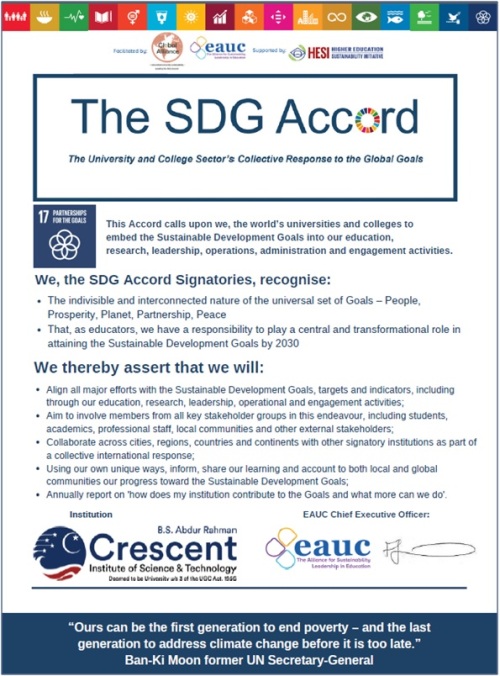
Figure XVII(3.5)-8_SDG ACCORD REPORT 2025