
A. “Empowering through Cross-Sector Collaboration”
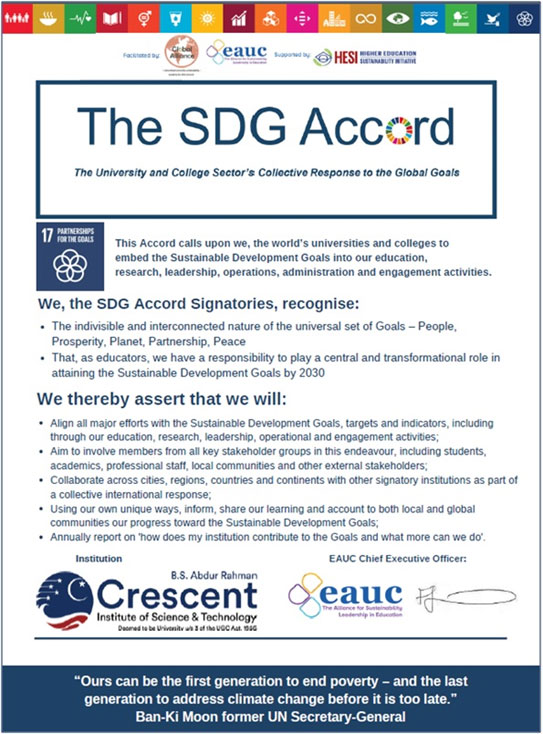
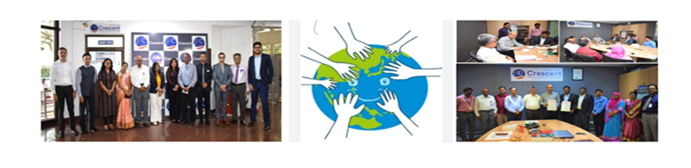
In 2024, B.S. Abdur Rahman Crescent Institute of Science and Technology (BSACIST) positioned itself as a proactive catalyst for the Sustainable Development Goals (SDGs) by fostering robust cross-sector dialogue. The institution embraced a multi-stakeholder approach, engaging government bodies, regional NGOs, industry partners, and academic peers to ensure that SDG ambitions translate into concrete actions. This orientation reflects a strategic shift from internal campus initiatives to expansive, collaborative platforms that connect science, policy, and practice.
The Keystone Event – SMaGEES 2024
The centerpiece of BSACIST’s cross-sector engagement was the SMaGEES – Smart Materials for Green Energy & Environmental Sustainability conference. This two-day international gathering convened government representatives, NGO leaders, and industry practitioners alongside researchers and students to identify policy gaps, test ideas, and co-create actionable recommendations. The event exemplified a collaborative learning methodology: modeling potential futures, monitoring impacts, and refining interventions through shared learning, thereby turning SDG aspirations into tangible policy questions, research agendas, and joint projects.
Knowledge Products and Policy Impact
SMaGEES 2024 yielded tangible outputs designed to influence SDG strategy beyond academia. The conference produced policy briefs, research summaries, and best-practice guidelines that were disseminated to regional NGOs and government agencies. These knowledge products serve as evidence of BSACIST’s contribution to SDG policy knowledge and reinforce the institute’s credibility as a policy-informing actor. By translating conference discussions into accessible, action-oriented documents, BSACIST helps bridge the gap between research and real-world impact.
Institutionalizing Cross-Sector SDG Dialogue
To sustain the momentum, BSACIST envisions formal mechanisms that institutionalize cross-sector SDG collaboration. A proposed cross-sector SDG task force would coordinate ongoing dialogue with government and NGOs, ensuring that insights from events like SMaGEES are translated into policy inputs, funding opportunities, and coordinated action across sectors. This structure would support continuous learning, provide a channel for feedback, and align institutional activities with national and regional SDG priorities.
Broader SDG-Driven Initiatives
Beyond SMaGEES, BSACIST’s 2024 portfolio included energy-awareness outreach, industry-facing Green Energy workshops, and World Water Day activities, all designed to reinforce SDG progress. Notable initiatives included energy-awareness sessions for alumni, which extended sustainability norms into professional environments; green energy workshops for industry that connected academic expertise with industry practice; and water conservation campaigns that highlighted governance, resilience, and practical sustainability. Collectively, these activities demonstrate BSACIST’s commitment to applying SDG principles across diverse contexts.
NSS and Community Engagement
The institute’s SDG agenda was further enriched by community and student engagement programs, including NSS-led campaigns like Green India Clean India. These efforts emphasized water conservation, energy efficiency, and environmental stewardship at the community level, reinforcing the idea that sustainable development starts with informed and engaged citizens. By linking campus initiatives to rural and urban communities, BSACIST showcased how education institutions can catalyze lasting social and environmental benefits.
Looking Ahead
As BSACIST advances its SDG agenda, the establishment of formal cross-sector mechanisms and the expansion of knowledge-sharing in policy-relevant formats will be critical. The integration of research, policy dialogue, and practical action creates a robust blueprint for sustainable development that other institutions can emulate. With continued emphasis on collaboration, adaptive management, and scalable impact, BSACIST aims to accelerate SDG progress not only within the campus but across regional ecosystems, reinforcing its role as a leadership hub where science, policy, and practice converge for a sustainable future.
ENGAGING ALUMNI FOR A GREENER FUTURE: ENERGY AWARENESS OUTREACH DURING REUNIONS (20th July 2024)
The Crescent Energy Club’s energy awareness outreach at alumni reunions demonstrates the institute’s commitment to sustainability and SDG-driven impact beyond campus. By engaging alumni in practical sessions on energy-saving practices, star-rated appliances, green procurement, and standby-power reduction, the program transforms former students into ambassadors of clean and efficient energy use in their workplaces. This approach extends campus-based initiatives to diverse industries, enabling real-world adoption of sustainable energy behaviors and fostering cross-sector collaboration through ongoing partnerships with faculty and industry.
Aligned with SDGs 7, 9, 12, 13, and 17, the initiative envisions a Green Alumni Champions Network, workplace energy audit support, and an annual Energy Sustainability Award to recognize alumni-led sustainability contributions. The program collects feedback to strengthen Crescent–Alumni collaborations and broadens outreach to future reunions, including anniversary batches. Through these efforts, the institute promotes a carbon-conscious culture, amplifying impact on national energy sustainability and reinforcing the university’s role as a catalyst for sustainable development across sectors.
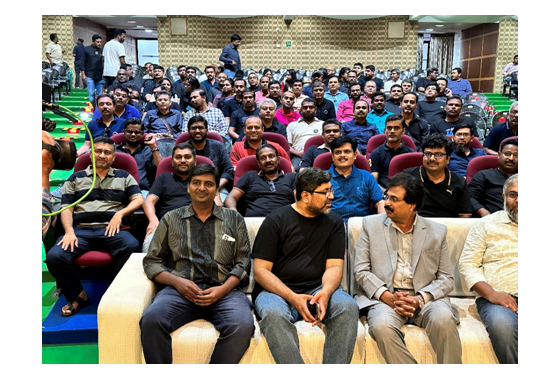
Engaged attendees at the alumni reunion, listening to insights on energy awareness and sustainable practices
CRESCENT ENERGY CLUB HOSTS GREEN ENERGY AWARENESS WORKSHOP FOR INDUSTRY 2024 (19TH NOVEMBER 2024)
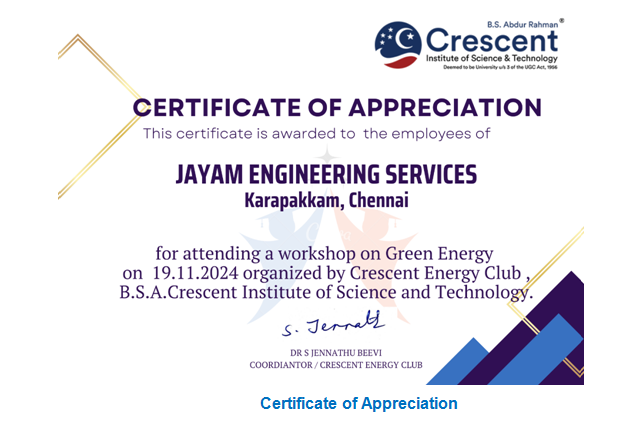
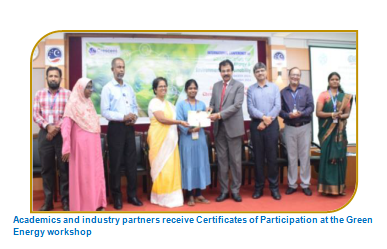
The Crescent Energy Club at B.S. Abdur Rahman Crescent Institute of Science & Technology organized a Green Energy Awareness Workshop for Industry on 19 November 2024, bringing together employees from Jayam Engineering Services and Mega Solar Solutions. The workshop aimed to foster sustainability and accelerate the adoption of green energy practices within industrial operations by providing practical knowledge on energy efficiency, clean energy adoption, and renewable energy solutions. Delivered by faculty experts and Crescent Energy Club members, the sessions highlighted cost-effective solar implementations, workplace energy-saving strategies, and real-world case studies, while encouraging interactive discussions to address organization-specific sustainability challenges.
Aligned with SDGs 7, 12, and 13, the event strengthened academia–industry collaboration and recognized proactive partner contributions with Certificates of Appreciation. The engagement marked a meaningful step in extending Crescent’s sustainability mission into the industrial sector, with plans for further outreach to support energy transitions across organizations. The workshop’s outcomes point to enhanced awareness, practical adoption of energy-efficient technologies, and a growing network of industry partners committed to greener, more resilient operations.
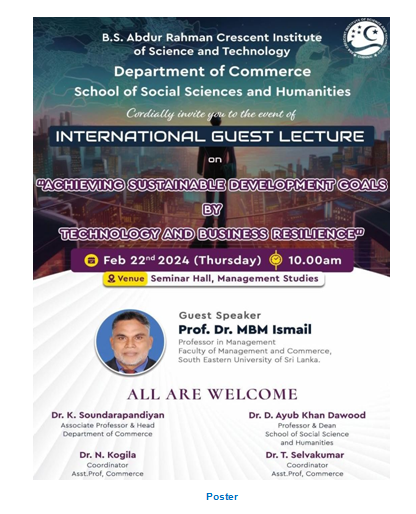
The International Guest Lecture on Sustainable Development Goals (SDGs), organized by the Department of Commerce at B.S. Abdur Rahman Crescent Institute of Science and Technology on 22 February 2024, featured Prof. Dr. MBM Ismail as the guest speaker. The session explored how technology and resilient business models can drive progress toward the SDGs, starting with a concise overview of the 2030 agenda and emphasizing the pivotal role of innovation in this journey. Prof. Ismail highlighted strategies for implementing technology-driven SDG solutions across businesses, governments, and civil society, underscoring the interconnectedness of digital tools, circular economy concepts, and robust governance in achieving sustainable outcomes.
The program targeted first- and second-year B.Com (Hons) and BBA students, pairing theoretical insights with practical implications for SDG implementation. Key themes included sustainable industry practices, supply chain transparency, risk mitigation, and the societal and environmental benefits of technology-enabled solutions. Student testimonials reflected heightened awareness and motivation to apply these insights in their future careers, reinforcing the institute’s commitment to aligning academic learning with real-world SDG action. The talk concluded with acknowledgment from Dr. N. Kogila and left attendees with actionable guidance on integrating technology, resilience, and sustainability to advance the SDGs.
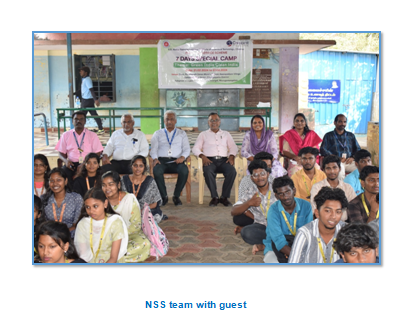
SPECIAL CAMP – GREEN INDIA CLEAN INDIA: COMMUNITY SERVICE AND WATER CONSERVATION DRIVE BY NSS, FEB 21–27, 2024
The NSS Special Camp 2023-24, themed Green India Clean India, brought together about 120 volunteers from B.S. Abdur Rahman Crescent Institute of Science and Technology for a week of community service February 21–27, 2024. Focusing on the adopted villages of Keerapakkam, Arungal, and Murugamangalam, the camp combined service with leadership development and a deep dive into rural sustainability. Activities ranged from village surveys, a blood donation camp, stress management and reading challenges, to self-defense demonstrations, health and hygiene awareness, water conservation drives, and sports outreach. Inaugurated by senior institute officials and local dignitaries, the program fostered teamwork, civic responsibility, and practical experience in rural dynamics, equipping students with skills to effect social transformation both on campus and in their communities.
Water conservation emerged as a central theme in the Day 5–6 activities, with volunteers conducting resource surveys, identifying leakage points, and coordinating with residents to implement high-impact practices such as rainwater harvesting, greywater reuse, and water-saving devices. Educational sessions underscored the importance of protecting groundwater and waterways, while demonstrations and collaborative planning with Keerapakkam, Arungal, and Murugamangalam promoted sustainable water management beyond the camp’s duration. The NSS Special Camp thus not only advanced local conservation efforts but also reinforced a lasting spirit of volunteerism and active citizenship, aligning with broader goals of sustainable development and community resilience.
GUEST LECTURE ON “WATER FOR PEACE – WORLD WATER DAY CELEBRATION” (21ST MARCH 2024)
On 21 March 2024, as part of World Water Day celebrations, the Institution of Engineers (India), Kancheepuram Local Centre, organized a guest lecture titled “Water for Peace – World Water Day Celebration” in collaboration with the Department of Civil Engineering, School of Infrastructure, B.S. Abdur Rahman Crescent Institute of Science & Technology. Dr. Sekhar Raghavan, popularly known as the Rain Man and Director of the Rain Centre in Adyar, Chennai, delivered the talk, highlighting the urgent need for rainwater harvesting and sustainable water storage. The event, attended by around 70 students from IV and VI semester B.Tech Civil Engineering, underscored how effective rainwater governance can bridge gaps between water-rich and water-scarce regions, while reinforcing the vital role of rainwater management in ensuring long-term water security for communities.
The lecture emphasized practical RWH system maintenance, including regular cleaning of filters, pruning of overhanging branches, and vigilant inspection of roof-top piping to prevent leaks and sediment deposition. Dr. Sekhar’s insights drew connections to UG courses such as Stormwater and Flood Management, Hydrology, and Water Resources Engineering, demonstrating how theory translates into field-ready skills. The session also reinforced professional engagement with IE(I), encouraging students to explore project proposals for funding and to advocate for responsible water use as a civic and engineering imperative. The initiative underscored World Water Day’s theme of water as a shared resource and a catalyst for peace, resilience, and sustainable development.
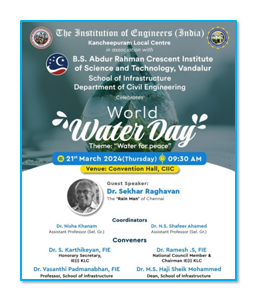
Invitation
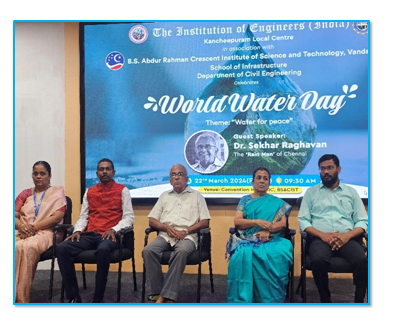
Dignitaries and Professors on the dias Chief Guest : Dr Sekhar Raghavan, Rainman of Chennai
INTERNATIONAL CONFERENCE ON “SMART MATERIALS FOR GREEN ENERGY & ENVIRONMENTAL SUSTAINABILITY (SMAGEES 2024) (Date 11th-12th December 2024)
In 2024, BSACIST positioned itself as a proactive facilitator of cross-sector dialogue on the Sustainable Development Goals (SDGs) by orchestrating multi-stakeholder engagements with government bodies, regional NGOs, industry partners, and academic peers. The centerpiece was the SMaGEES – Smart Materials for Green Energy & Environmental Sustainability conference, which brought together government representatives, NGO leaders, and industry practitioners to identify policy gaps, test ideas, and co-create recommendations. This approach embodies a collaborative learning methodology that models potential futures, monitors impacts, and refines interventions through shared learning, translating SDG ambitions into concrete policy questions, research agendas, and actionable projects bridging science, policy, and practice.
The SMaGEES 2024 conference culminated in tangible knowledge products and policy-oriented outputs, including policy briefs, research summaries, and best-practice guidelines—disseminated to regional NGOs and government agencies to inform SDG strategy. To sustain this cross-sector dialogue, BSACIST envisions formal mechanisms such as a cross-sector SDG task force to institutionalize collaboration with government and NGOs, ensuring dialogue translates into policy inputs, funding opportunities, and coordinated action. With participation from hundreds of researchers and students and a documented track record of joint events and outputs, BSACIST reinforces its role as a credible policy-informing actor and a catalyst for sustainable development across sectors.
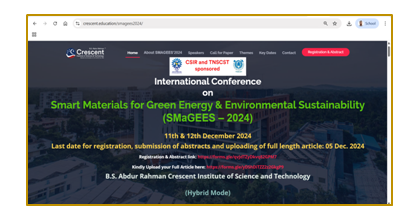
SMaGEES – 2024
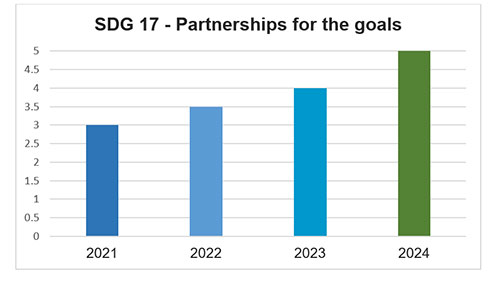
SDG17: Partnerships for the goals
| 4 to 5 | There is significant progress in effective implementation compared to the previous year |
| 3 to 4 | The necessary processes/activities (Relationships with regional NGOs and government for SDG policy, Publication of SDG reports, Education for the SDGs) have been implemented |
| 2 to 3 | There is an explicit plan to address the ‘Partnerships for the goals’ and necessitated processes have been initiated |
| 1 to 2 | There is an understanding and willingness to contribute effectively for achieving the UN targets of SDG 17 |
| 0 to 1 | There is no/partial willingness and plan to contribute for achieving the UN targets of SDG 17 Partnerships for the goals |