Internal Quality Assurance Cell

SSDG 14 – LIFE BELOW WATER
PART – I

“Aquatic Ecosystems”

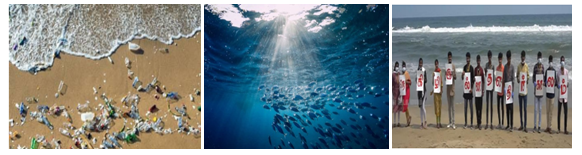
BSACIST is deeply aligned with Sustainable Development Goal 14, emphasizing the conservation and sustainable use of oceans, seas, and marine resources. The institute prioritizes healthy aquatic ecosystems by safeguarding water quality across the campus. It conducts regular and rigorous testing of water sources, including RO water from multiple blocks, ensuring compliance with IS 10500:2012 for drinking water. This ongoing monitoring reflects a commitment to safe, reliable water for consumption and a broader understanding of water quality’s impact on marine life and biodiversity. In addition to testing, BSACIST supports initiatives that promote aquatic health and engages students and staff in sustainability education and participation. By centering SDG 14 through diligent water management and a culture of environmental stewardship, the institute aims to inspire other educational institutions to protect aquatic ecosystems for a sustainable future.

A. MAINTAIN ECOSYSTEMS AND THEIR BIODIVERSITY

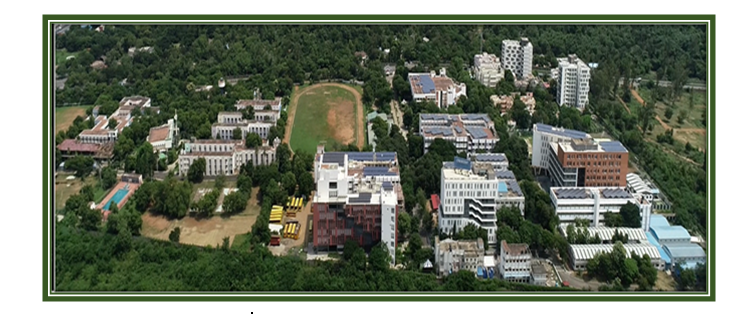
B.S. Abdur Rahman Crescent Institute of Science and Technology is committed to ensure that the built infrastructure of the institute has sustainability as a core principle, both in construction and maintenance management of the campus. Estate office aspires to follow a range of sustainable design features and practices implemented to build and maintain the institute as a complete green and sustainable campus continuously.

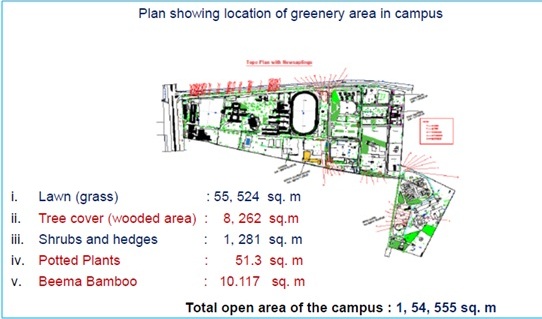
Figure XVII (3.13) -1 : Green Areas – 19 Acres (37.86% of the Total Campus)

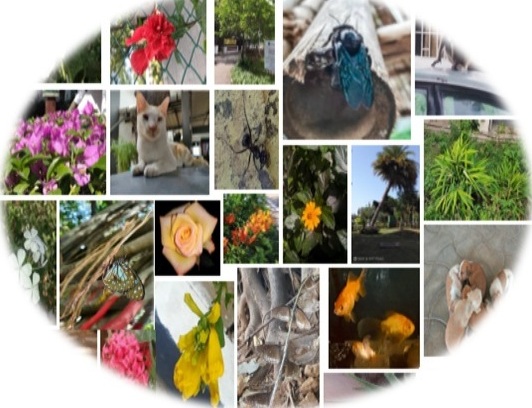
Biodiversity in the Campus through Flora & Fauna

Pro-VC and Registrar of BSACIST planted trees

B. BSACIST’s COMMITMENT TO MAINTAINING WATER QUALITY ON CAMPUS
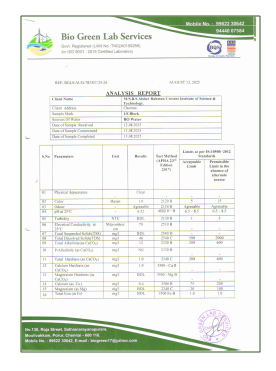
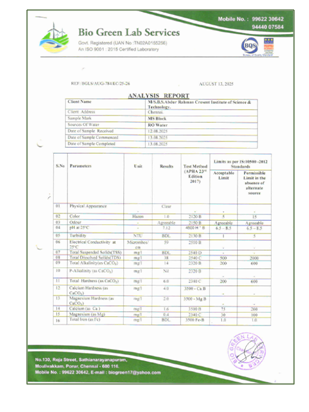
BSACIST’s proactive approach to water quality management includes regular testing, adherence to safety standards, and immediate corrective actions when necessary. This commitment not only ensures the health and safety of students and staff but also reflects the institute’s broader dedication to environmental sustainability and responsible resource management. By prioritizing water quality, BSACIST sets a benchmark for other educational institutions, fostering a culture of health, safety, and environmental stewardship on campus. The RO Plant Report comprises multiple water quality analyses conducted by Bio Green Lab Services (Govt Registered, UAN TN02A0155256, ISO 9001:2015) for M/S B.S. Abdur Rahman Crescent Institute of Science & Technology, covering RO water samples from Ladies Hostel, Life Sciences Block, Men’s Hostel, Library, Campus plants, and STP/Treated water contexts. Results include physical, chemical, and microbiological parameters aligned to IS 10500:2012 (drinking water) standards and APHA methods. Several samples comply, while some show deviations requiring attention, particularly in turbidity, total dissolved solids, alkalinity, hardness fractions, and certain contaminants (chloride, sulfate, silica, oil/grease, COD/BOD in treated outlet).

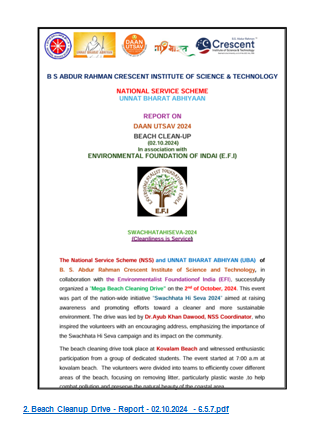
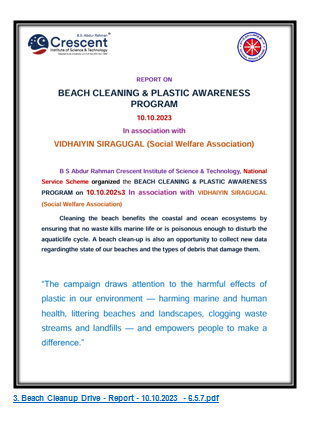
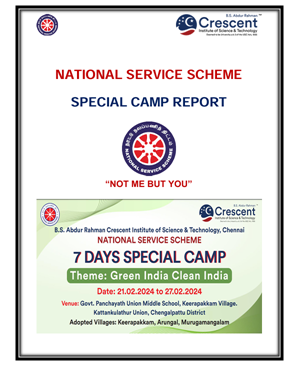
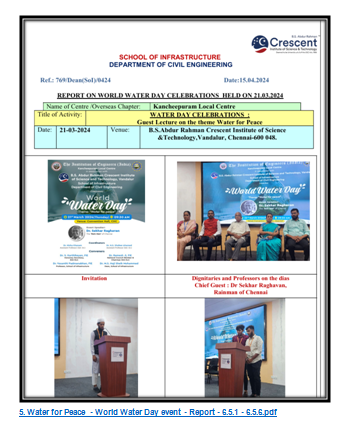
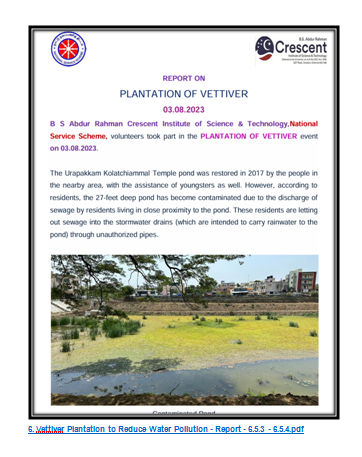
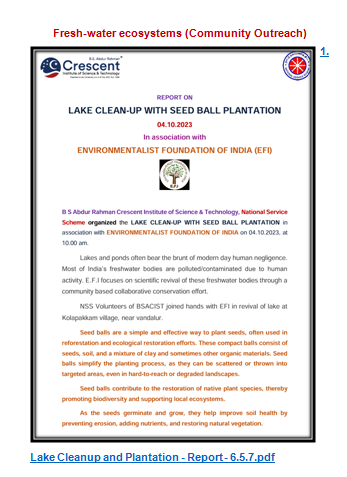
Fresh-water ecosystems (Community Outreach)
PART – II: Progress Measurement
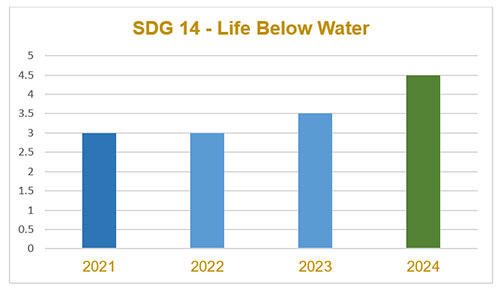
SDG 14: Life Below Water
4 to 5There is significant progress in effective implementation compared to the previous year
3 to 4The necessary processes/activities (Supporting aquatic ecosystems through education and action, Water sensitive waste disposal, Maintaining a local ecosystem) have been implemented
2 to 3There is an explicit plan to address the ‘Life Below Water’ and necessitated processes have been initiated
1 to 2There is an understanding and willingness to contribute effectively for achieving the UN targets of SDG 14
0 to 1There is no/partial willingness and plan to contribute for achieving the UN targets of SDG 14 Life Below Water

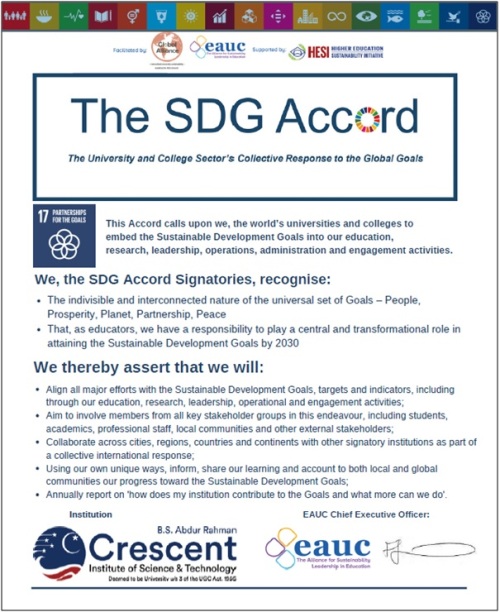
PART – III: SDG Accord
Chat with a Student Enquire Now