
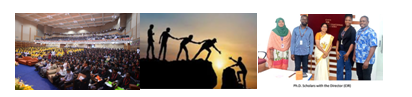
Inclusive Opportunity and Transformative Education
The B.S. Abdur Rahman Crescent Institute of Science and Technology (BSACIST) is dedicated to promoting education for all, with a strong emphasis on reducing inequalities in alignment with the Sustainable Development Goals (SDGs). The institution believes that addressing inequality is essential for creating an inclusive environment where every individual can thrive.
A. Commitment to Reducing Economic Inequality
BSACIST’s Memorandum of Understanding highlights several key objectives aimed at ensuring educational opportunities are accessible to all, regardless of ethnicity, religion, disability, immigration status, or gender. The distinct clauses in their Memorandum support this vision by outlining a framework for equitable education, which includes:
- Promotion of Education for Backward Communities: The institution prioritizes educational outreach to backward communities, including Muslims and other groups facing social and economic challenges, thereby contributing to the eradication of ignorance, superstition, and illiteracy.
- Research and Knowledge Dissemination: By advancing research and facilitating the dissemination of scientific, technical, and cultural knowledge, BSACIST plays a pivotal role in enhancing community awareness and educational attainment.
- Establishment of Inclusive Educational Institutions: The institution is committed to establishing and maintaining schools and training centers that provide education to the public at large, ensuring that no individual is excluded based on caste, creed, sex, or religion.
- Financial Support for Education: BSACIST actively provides scholarships, donations, stipends, and other forms of aid to deserving students from economically disadvantaged backgrounds, promoting equal access to education.
- Support for All Levels of Education: They focus on facilitating access to education from primary to higher secondary levels, ensuring modern teaching methods are employed to foster an awareness of societal issues among students.
- Open Admission Policy: The institution enshrines an open admission policy, welcoming all citizens of India into its educational fold regardless of their background, which supports diversity and inclusivity in the academic environment.
- Community Resources: By establishing libraries and digital resources, BSACIST aims to enhance public access to information, further supporting lifelong learning opportunities for everyone.
Through these initiatives, BSACIST exemplifies its commitment to fostering an equitable educational landscape, signifying that equality is foundational to sustainability. By actively addressing economic inequality and ensuring comprehensive access to education, the institution is not merely fulfilling statutory requirements but is also championing the transformative power of education that respects and uplifts every individual.
Promoting First Generation Students
BSACIST demonstrates a strong commitment to expanding access to higher education and supporting student success. In 2023-24, 2,640 students joined the First Year UG Programme, with 1,980 of these entrants identified as First-Generation students. This evidence-based effort underscores the institute’s focus on inclusive education and social mobility. By actively encouraging First-Generation students to pursue higher studies, BSACIST aims to uplift individuals and, in turn, contribute to a more educated society through high academic standards, targeted support, and opportunities that empower learners to transform their communities.
Number of students starting a degree in 2023-24 (First year ALL UG students) | 2640 |
Number of first-generation students starting a degree in 2023-24 | 1980 |
B. Disability Support Services
BSACIST provides a range of facilities designed to support differently-abled students and faculty, ensuring they have equal access to education and resources. The available support services include:
- Physical Facilities: Infrastructure designed to accommodate individuals with disabilities.
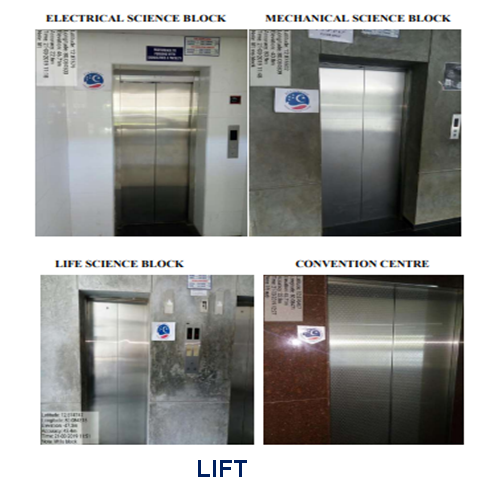
- Provision for Lifts: Ensuring vertical mobility within the campus.
- Ramps and Rails: Facilitating easy access to buildings and facilities.
- Braille Software/Facilities: Enhancing accessibility for visually impaired individuals.
- Rest Rooms: Equipped for the convenience of differently-abled users.
- Scribes for Examinations: Providing assistance during assessments.
- Special Skill Development Programs: Tailored training initiatives to empower differently-abled students.

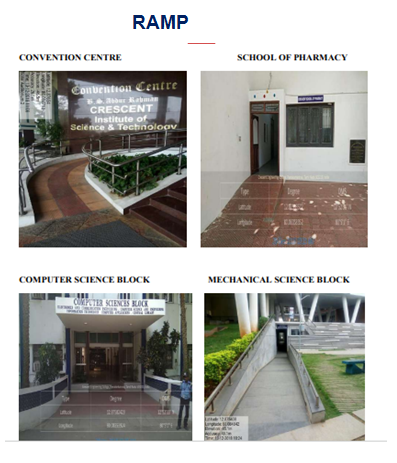
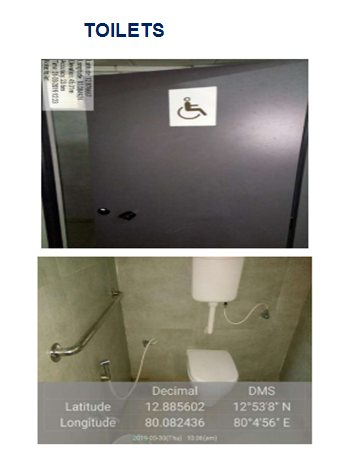
These resources reflect BSACIST’s commitment to inclusivity, allowing all students to pursue their educational goals without The B.S. Abdur Rahman Crescent Institute of Science and Technology (BSACIST) is dedicated to promoting education for all, with a strong emphasis on reducing inequalities in alignment with the Sustainable Development Goals (SDGs). The institution believes that addressing inequality is essential for creating an inclusive environment where every individual can thrive.
C.Measures Against Discrimination
In addition to supporting differently-abled individuals, BSACIST actively works to combat discrimination through several dedicated committees and initiatives:
- Anti-Ragging Cell:
- Established to prevent ragging and ensure a safe educational environment.
- Complies with Supreme Court guidelines, including the formation of a committee comprising faculty, students, and public servants.
- Implements awareness campaigns and maintains a zero-tolerance policy towards ragging.
| HEI ANTI-RAGGING COMMITTEE (ARC) | |||
| Type | Person Name | Designation | |
| HEI-ARC | Dr. N.Raja Hussain | Registrar, Convenor, ARC | registrar@crescent.education |
| HEI-ARC | Dr. Karthikeyan Ramalingam | Dean (Student Affairs), Co-Convenor, ARC | dean_student@crescent.education |
| HEI-ARC | Dr. Mohamed Ismail | Dean (Academic Affairs), Member ARC | dean_acad@crescent.education |
| HEI-ARC | Dr. S. Kaja Mohideen | Sr. Professor & COE, Member ARC | kajamohideen@crescent.education |
| HEI-ARC | Dr. Kuttirani | First Year Coordinator, Member ARC | skrani@crescent.education |
| HEI-ARC | Dr. A.K.Kaliluthin | Dy. Director (Campus Development), Member ARC | kalil@crescent.education |
| HEI-ARC | Mr. Mohamed Ali | Security Officer, Member ARC | securityofficer@crescent.education |
| HEI-ARC | Dr. Chockalingam C | Dean, Law, Member ARC | deanlaw@crescent.education |
| HEI-ARC | Dr. P.K.Jawahar | Professor/ECE & Director (CSD), Member ARC | director.cers@crescent.education |
| HEI ANTI-RAGGING SQUAD (ARS) | |||
| Type | Person Name | Designation | |
| HEI-ARS | Dr. M.Mohammed Sheikh Sirajudeen | Assoc. Prof | msheiksiraj@crescent.education |
| HEI-ARS | Dr. S.Jennathu Beevi | Assoc. Prof | jennathu.beevi@crescent.education |
| HEI-ARS | Dr. Indra Gandhi | Asst. Prof. (Sel.Gr.) | indra@crescent.education |
| HEI-ARS | Dr. M.S.Murshitha Shajahan | Assoc. Prof | murshitha@crescent.education |
| HEI-ARS | Ms. Arputha Rathna | Assoc. Prof | xarathina@crescent.education |
| HEI-ARS | Dr. P.Latchoumy | Assoc. Prof | latchoumy@crescent.education |
| HEI-ARS | Dr. Syed Masood | Assoc. Prof & Head | ms.masood@crescent.education |
| HEI-ARS | Dr. M.Abdur Rahman | Asst. Prof. (Sr. Gr.) | abdurrahman@crescent.education |
| HEI-ARS | Mr. M.Magesh | Asst. Prof. (Sr. Gr.) | magesh.m@crescent.education |
| HEI-ARS | Dr. C.Dinesh Kumar | Asst. Prof. (Sr. Gr.) | dineshauto@crescent.education |
| HEI-ARS | Dr. P. Gajalakshmi | Professor | gajalakshmi@crescent.education |
| HEI-ARS | Mr. Basanta Kumar Behra | Asst. Prof. (Sr.Gr) | bkbehera@crescent.education |
| HEI-ARS | Dr. C.D.Nandakumar | Assoc. Prof | cdnandakumar@crescent.education |
| HEI-ARS | Mr. S.Rajini | Asst. Prof. (Sr. Gr.) | rajini@crescent.education |
| HEI-ARS | Mr. M V.Duraish Kumar | Asst. Prof | duraishkumar.vf@crescent.education |
| HEI-ARS | Dr. A.Sulochana | Asst. Prof | sulochana@crescent.education |
| HEI-ARS | Dr. S.M.Shaheedha | Assoc. Prof | shaheedha@crescent.education |
| HEI-ARS | Ms. S.Diwari | Professor | Diwari@crescent.education |
| HEI-ARS | Dr. J.Hemalatha | Asst. Prof | hemalathaj@crescent.education |
| HEI-ARS | Dr. P.Ashok Kumar | Assoc. Prof | ashokkumar.sls@crescent.education |
| HEI-ARS | Mr. Shaji | Asst. Prof | shaji@crescent.education |
| HEI-ARS | Dr. Khalid Waheed | Asst. Prof | kwfalahi@crescent.education |
| HEI-ARS | Dr. T.Pattabiraman | Asst. Librarian | Pattabhiraman@crescent.education |
| HEI WARDENS | |||
| Type | Person Name | Designation | |
| HEI-WARDENS | Dr. K.Yogeswari | Professor & Warden TBAK women hostel, Member ARC | yogeswari@crescent.education |
| HEI-WARDENS | Dr. M.Asha Jhonsi | Assoc. Prof & Deputy Warden (Women) | asha@crescent.education |
| HEI-WARDENS | Mr. V.M.Niaz Ahamed | Asst. Prof & Executive Hostel (Men) | niazahamed.ca@crescent.education |
| DISTRICT OFFICIALS | |||
| Type | Person Name | Designation | |
| DISTRICT-OFFICIALS | Tahsildar, Chengalpattu | Tahsildar, Chengalpattu, Member ARC | tahcpt.tnkpm@nic.in |
| POLICE AUTHORITIES | |||
| Type | Person Name | Designation | |
| POLICE | Inspector of Police, Guduvanchery | Inspector of Police, Guduvanchery | cptsboffice@gmail.com |
| POLICE | Sub Inspector of Police, Otteri Police Station | Sub Inspector of Police, Member ARC | cop@vsnl.net |
2.Anti-Discrimination Cell:
- Provides a mechanism for reporting caste discrimination, ensuring confidentiality and prompt action against offenders.
- Comprises committees focused on OBC, Minority, and SC/ST issues, promoting representation and support for marginalized groups.
Prevention Caste Based Discrimination
Prevention Caste Based Discrimination
In case of incident of caste discrimination faced by any student, he/she may contact office of Dean student affairs immediately or mail at dean_student@crescent.education
Committee To Prevent Caste Based Discrimination
- Karthikeyan Ramalingam, Dean Student Affairs – dean_student@crescent.education
- Dr Vasanthi P., Dean School of Infrastructure – dean.infrastructure@crescent.education
- Dr MVV Prasad, Dean Pharmacy
- Dr P K Jawahar, HoD EIE
- Mr Abdur Rahman, Asst Professor Mech
- Ms Anitha, Asst Prof EIE
- Mr Ravinder, Asst Prof Maths
Mechanism to report Caste Discrimination
Any student, faculty or staff members who feels aggrieved due to caste discrimination in any form can approach the above mentioned committee immediately in person or e mail the grievances.
A time bound immediate action shall be taken on the grievance.
Identity of complainant shall be kept confidential.
Appropriate action will be initiated against the defaulter.
OBC Committee Members
1. | Dr. D.Sharmila Shankar – Professor / Dept. of CSE | Convenor |
2. | Dr. Haja Nazeer Ahmed – Asso. Prof. / Dept. of Pharmacy | Member |
3. | Dr. A.Bernick Raj – Asst. Prof.(Sel. Gr.) / Dept. of Maths | Member |
4. | Dr. S.Pakkir Mohideen – Assoc. Prof. / Dept. of MCA | Member |
5. | Dr. E.Priyanka – Asst. Prof. / Dept. of Law | Member |
Minority Committee Members
1. | Dr.I. B. Shameem Banu – Professor / Dept. Physics | Convenor |
2. | Dr. Y. Ismail – Asso. Prof. / Dept. of Pharmacy | Member |
3. | Dr. Khalid Waheed – Asst. Prof. / Dept. of Islamic Studies | Member |
4. | Dr.P. D. Jeyakumar – Assoc. Prof. / Dept. of Mechanical | Member |
5. | Dr.Rathika Meganathan – Asst. Prof. / Dept. of SSS & H | Member |
SC/ST Committee Members
1. | Dr. S. Panboli – Assoc. Prof. / Dept. of MBA | Convenor |
2. | Dr. N. Prakash – Assoc. Prof. / Dept. of IT | Member |
3. | Dr. Vasimalai – Asst. Prof. (Sr. Gr.) / Dept. of Chemistry | Member |
4. | Dr. C. Srinivasan – Asst. Prof. / Dept. of Commerce | Member |
5. | Ar. Rajkumar J – Assoc. Prof. / Dept. of Arch | Member |
3. Internal Complaints Committee (ICC):
- Adheres to UGC regulations for preventing and addressing sexual harassment in educational institutions.
- Ensures a safe and respectful environment for all students and staff.
Internal Complaints Committee (ICC) – Members
As per the guidelines provided as per UGC (Prevention, Prohibition and Redressal of Sexual Harassment of Women Employees and students in Higher Educational Institutions) Regulations, 2015 Internal Complaint Committee of B.S.Abdur Rahman Crescent Institute of Science & Technology has been constituted as under :-
| Sl.No. | Name of the faculty | Designation | |
| 1 | Dr. Latha Tamilselvan, Prof. & Director (MIS) / Department of Information Technology | Chairperson |  |
| 2 | Dr. C. Tharini, Prof. & Dean (SECS) / Department of Electronics & Communication Engg. | Vice-chairperson |  |
| 3 | Dr. S.Kuttirani, Prof. & Director (PG) Admissions / Department of Chemistry | Member |  |
| 4 | Dr. Ayub Khan Dawood, Prof. & Dean / Department of Commerce | Member |  |
| 5 | Dr. S. Rasool Mohideen, Professor / Department of Mechanical Engg. | Member |  |
| 6 | Dr. C.Chokalingam, Prof. & Dean / Crescent School of Law | Member |  |
| 7 | Ms. Nallini Olivannan, Advocate, Mail id : nallinioli@gmail.com, Mobile : 9940050056 Profile | External Member |  |
Through these initiatives, BSACIST demonstrates its commitment to creating an equitable and supportive educational environment. By addressing both disability support and discrimination, the institution aligns its policies with the principles of SDG 10, striving to reduce inequalities and foster a culture of inclusivity. This holistic approach not only enhances the educational experience for all but also empowers individuals to reach their full potential, ensuring that no one is left behind.
D. Empowering Women and Promoting Gender Equality: A Commitment at BSACIST
The Gender Equality Policy at the BSACIST emphasizes the importance of empowering women and girls through education, equal opportunities, and support systems. It ensures non-discrimination in admissions, promotes female representation in leadership, and provides various measures for women’s safety and empowerment, including dedicated cells for grievances and support for academic and personal needs.
Women and girls represent half of the world’s population. Gender equality is considered basically as a fundamental human right and is very essential to achieve peaceful societies, with full human potential and sustainable development. Moreover, it has been shown that empowering women spurs productivity and economic growth as well to the Institute.
It is of paramount importance to end the multiple forms of gender violence and secure equal access to quality education and health, economic resources and participation in political life for both women and girls and men and boys. It is also essential to achieve equal opportunities in access to employment and to positions of leadership and decisionmaking at all levels.
No Discrimination
The Institute does not show any kind of discrimination among the students. In the application of admissions for UG, PG or PhD, the gender column shows three options to choose from – Male, Female and Trans genders. All the students are treated equally within the Institute. Being a Muslim minority institution, the Institute believes in the concept of educating a woman is equal to educating a family and for that purpose special privileges are provided to the female candidates during the admission process to ensure their active participation in studies.
Women Empowerment
Empowering a woman through education is something the Institute always try to achieve. For that purpose, several women empowerment strategies are founded by the Institute. As part of women empowerment, fifty percentage of the staff are female members and fifty percentage of the students are female. All the staff members are given equal opportunity at every stage of their career, be it promotion, incentives etc. The Institute always thinks one step ahead for the empowerment of the female members. In the senior administrative bodies, women members are given importance. In the Board of Management two members are from the faculty members of the Institute and later the same has been increased to four members, out of which two members should be female members. The same has been made mandatory. BoM, being one of the highest governing Council wants to empower the female members.
Academic Tracking Mechanism
Starting from admission till the graduation process, tracking mechanism for female candidates is employed by the Institute for assessing the progress of female students. There are more than 8000 students in the campus and for each and every individual student, History card is kept as a record which consists of all the details of the students including their personal details, performance of students in CAT 1, CAT 2, End Semester Examinations, their scholastic activities, co curricular activities etc. All the details are kept as a record for assessing the performance of the students.
Women support
Some branches like Mechanical Engineering and others, the admissions taken by the female candidates will be very less. So in such a situation, the Institute provides additional support to the female candidates who wish to join these streams without any hesitation.
Women related Cells and Committee
In the case of women candidates, there are several bodies created for their safety. A Women Empowerment Cell is established with the motive of empowering the students as well as the staff. Then an Internal Complaints Committee is established so that the female staff or students if they have any grievances, the same will be addressed. Several subordinate bodies like Anti Sexual Cell, Grievances Cell is also established by the Institute for the women and female students. The Dean, Research has taken a lot of specific measures when it comes to women empowerment.
Measures taken in relation to women empowerment
- If a female student is qualified for JRF or SRF, she will be getting an additional amount of Rs.1,000/- per month in addition to the amount received as stipend.
- Maternity leaves are provided by the Institute to the students, PhD scholars, supporting staff, faculty members etc.
- There is also a provision of paternity leave if the male wants to support his family or have to take care of the children.
- If a student enrols in PhD course, the minimum time limit for completing the course is six years, but in case of female candidates an additional time of two years is granted which makes it to eight years. So the Institute provides eight years for the female candidates to complete PhD course.
- Child care leave up to two hundred and forty days are provided to the female research scholars.
- Additional support is also provided to the female members to compete with the other gender.
- Separate toilets adequate in number are provided for women in the campus.
- A safe and secure accommodation with 24 x 7 security is available in the ladies hostel for women within the campus
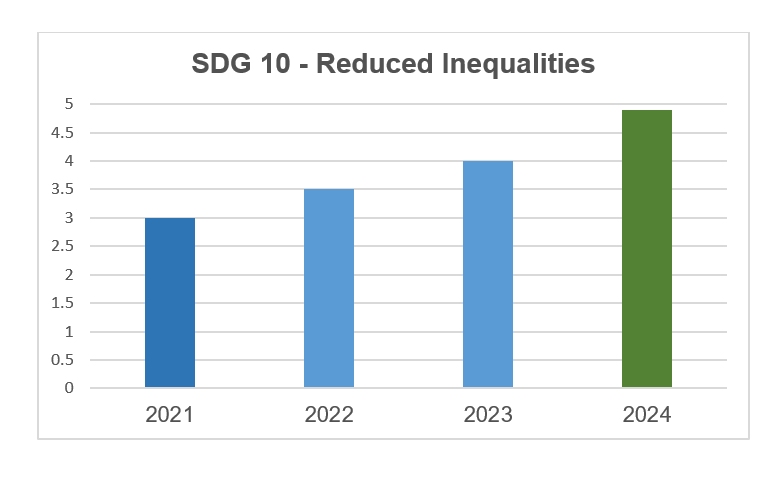
SDG 10: Reduced Inequalities
| 4 to 5 | There is significant progress in effective implementation compared to the previous year |
| 3 to 4 | The necessary processes/activities (First-generation students, International students from developing countries, Students and employees with disabilities, Measures against discrimination) have been implemented |
| 2 to 3 | There is an explicit plan to address the ‘Reduced Inequalities’ and necessitated processes have been initiated |
| 1 to 2 | There is an understanding and willingness to contribute effectively for achieving the UN targets of SDG 10 |
| 0 to 1 | There is no/partial willingness and plan to contribute for achieving the UN targets of SDG 10 Reduced Inequalities |
SDG ACCORD REPORT 2025
B.S. Abdur Rahman Crescent Institute of Science and Technology (BSACIST), this positions the institute not only as a learner but as a contributor to national and regional SDG policy dialogues. The 2024 entry on relationships with regional NGOs and government for SDG policy underscores an ongoing posture of engagement with policy ecosystems, aligning institutional activity with policy development, monitoring, and adaptive management. This alignment suggests BSACIST can translate its SDG work into formal policy input, scenario modelling, and accountability mechanisms
that inform broader regional development trajectories.
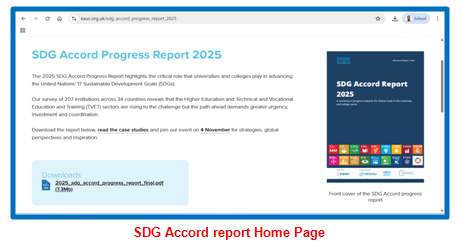
The 2025 SDG Accord report highlights that most signatories are moving toward embedding sustainability at an organizational level, with many reporting up-to-date sustainability policies endorsed by senior leadership. For BSACIST, the implication is to articulate a clear, leadership-backed sustainability policy or action plan that directly references SDGs most relevant to the institute’s mission and operations. Given the 2024 emphasis on engaging with government and regional NGOs, BSACIST could position its policy inputs as anchored in the connected governance and partnerships depicted in the report, ensuring that policy submissions, stakeholder consultations, and adaptive management are institutionally codified rather than ad hoc activities.