A.NGO COLLABORATION IVOLUNTEER FOR SDG’S IN CANCER CARE AND EDUCATION
This student volunteering programs and non-governmental organizations (NGOs) to advance Sustainable Development Goals (SDGs) related to cancer prevention, treatment, and education in 2024. Guided by a framework of structured partnerships, impact measurement, and accountability, the initiative aligns activities with SDG 3 (Good Health and Well-being), SDG 4 (Quality Education), and SDG 17 (Partnerships for the Goals).
NGO Partner–Initiative Context
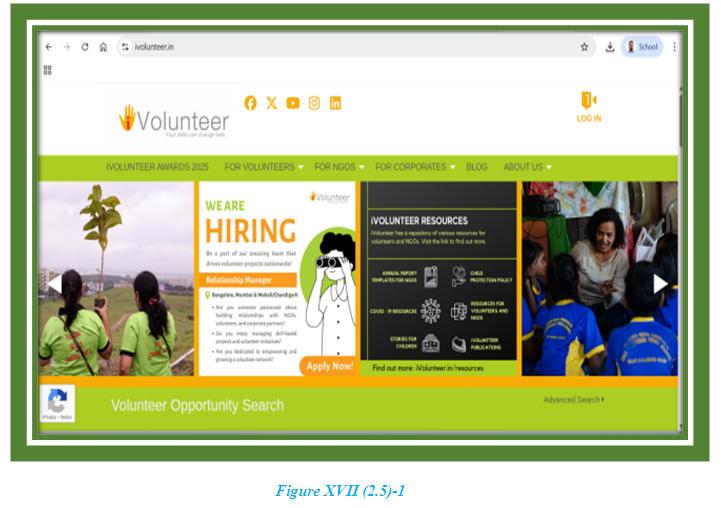
Student volunteering programs engage NGOs such as Ivolunteer ( https://www.ivolunteer.in/ ) to extend the reach of cancer prevention and care efforts. By leveraging NGO networks, the initiative can expand screening campaigns, raise health literacy, and support palliative care where gaps exist. The program draws on regional insights, population needs, and identified gaps to inform targeted collaboration plans, ensuring NGO partnerships address real-world barriers and deliver measurable improvements in cancer outcomes.
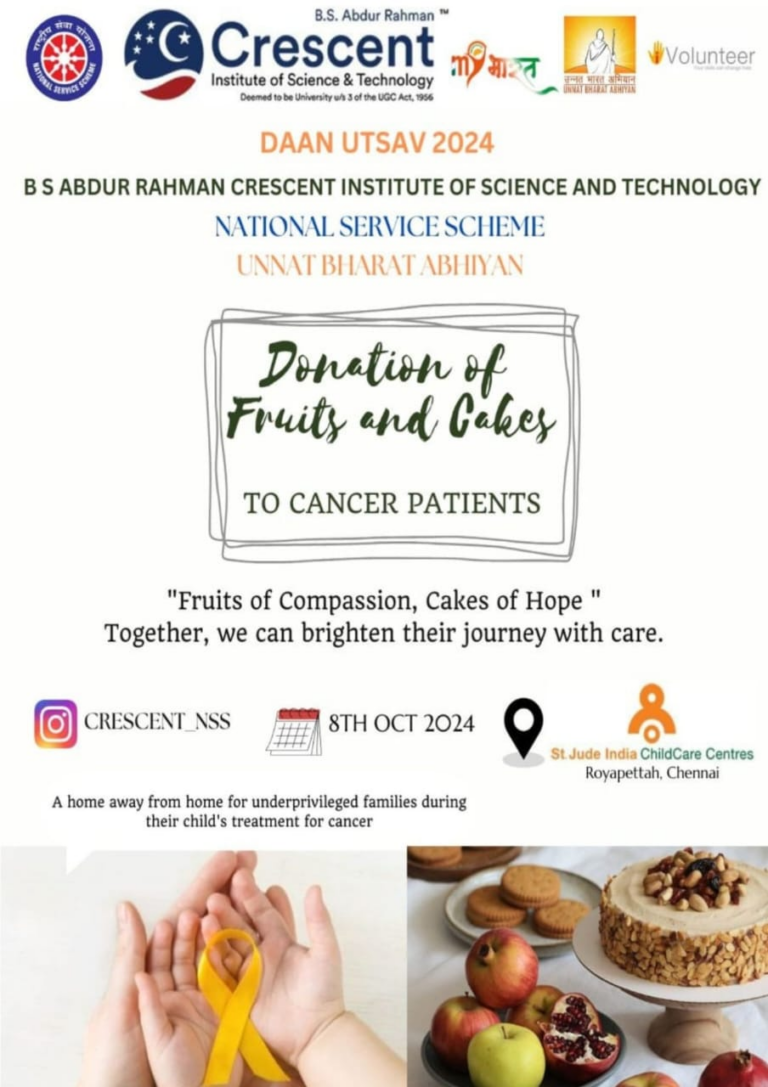
As part of Daan Utsav 2024, the National Service Scheme (NSS) and Unnat Bharat Abhiyan (UBA) at B.S. Abdur Rahman Crescent Institute of Science and Technology organized a visit to HOME FOR CANCER CHILDREN on October 8, 2024. St. Jude India ChildCare Centres (St. Jude’s), Royapettah, Chennai, identified by Ivolunteer, served as a bridge between BSACIST and Home for Cancer Children. St. Jude’s provides a “home away from home” for children undergoing cancer treatment and supports families relocating from rural and semi-urban areas to metropolitan centers due to limited local treatment options.
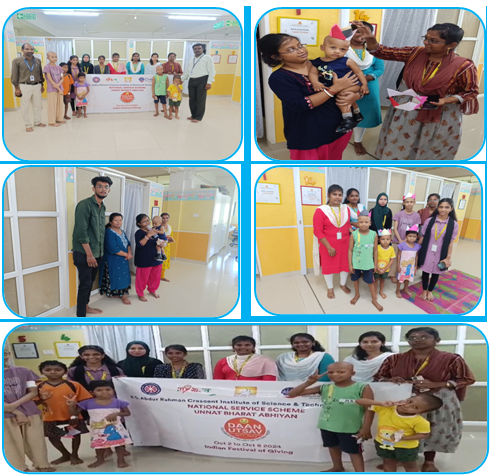
Figure 17.2.5 – Daan Utsav 2024 Celebrations
Event highlights
Participation: NSS programme officers and student volunteers attended.
Mission: To ensure that every child battling cancer receives essential medical care, emotional support, and social services.
Activity: On October 8, 2024, NSS and UBA organized a donation event, providing fresh fruits (apples and pomegranates) and cakes to the children, accompanied by an hour of engagement to spread joy and enhance well-being.
The collaboration demonstrates the value of student volunteers in delivering direct support to pediatric cancer patients and strengthening linkages between BSACIST, NGOs, and community-based care. By formalizing partnership processes, documenting outcomes, and expanding volunteer initiatives, the program can scale its impact on education, awareness, and humane care for children undergoing cancer treatment.
Figure 17.2.5 – NSS programme officers and student volunteers
B.NGO Collaboration for SDGs in Seed Collection and Sustainable Agriculture
Introduction
The student volunteering programs for collaborating with non-governmental organizations (NGOs) to advance Sustainable Development Goals (SDGs) through seed collection initiatives in 2024. Grounded in a framework of structured partnerships, impact measurement, and accountability, the approach leverages student volunteering programs, research collaborations, and the development of educational resources. The effort aligns with SDG 2 (Zero Hunger), SDG 15 (Life on Land), and SDG 17 (Partnerships for the Goals), with additional relevance to SDG 4 (Quality Education) through capacity-building and knowledge sharing.
Figure 17.2.5 – NGO Collaboration for SDGs in Seed Collection and Sustainable Agriculture
Context and Rationale
The seed collection initiative serves as a foundational activity for biodiversity conservation, farmer empowerment, and resilient agricultural systems. By coordinating with NGOs and community seed banks, the program can safeguard heirloom and regionally adapted seeds, support sustainable farming practices, and enhance food security. The collaboration emphasizes practical action, local engagement, and knowledge exchange to strengthen agro-biodiversity and climate resilience.
DAAN UTSAV 2024 CASE STUDY
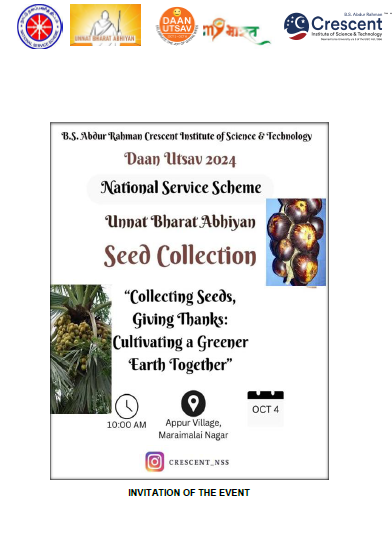
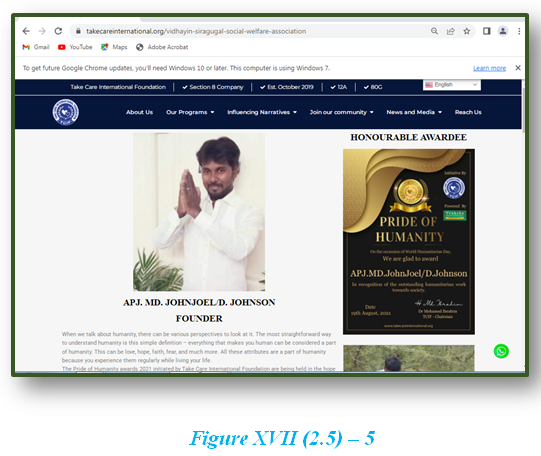
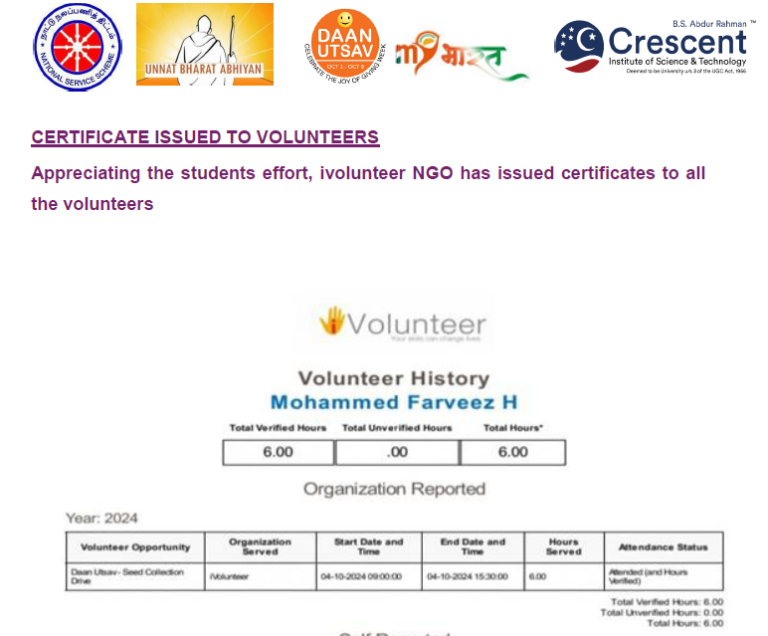
As part of Daan Utsav 2024, the National Service Scheme (NSS) and Unnat Bharat Abhiyan (UBA) at B.S. Abdur Rahman Crescent Institute of Science & Technology (BSACIST) organized an impactful seed collection drive focused on Palmyra seeds. In collaboration with Vidhayin Siragugal (https://takecareinternational.org/vidhayin-siragugal-social-welfare-association) , a reputed NGO, the event promoted environmental conservation and community green initiatives. The drive took place on October 4, 2024, at Appur Village in Maraimalai Nagar, with NSS student volunteers contributing their time and effort toward a positive environmental impact.
Figure 17.2.5 – NGO the event promoted environmental conservation and community green initiatives
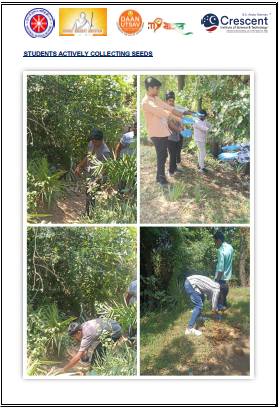
The activity began at 10:00 AM, with volunteers collecting Palmyra seeds near local water bodies, chosen as germination-friendly sites to ensure seed viability for future planting. Nearly 500 Palmyra seeds were collected, reflecting the dedication of student volunteers. An educational session by a representative from VidhayinSiragugal highlighted the Palmyra tree’s ecological and cultural value, including its resilience, water conservation properties, and economic importance to rural communities. Participants learned about traditional uses, including medicine, fruit nutrition, and production of natural sweeteners like jaggery.
Impact and Knowledge Exchange
Volunteers gained insights into the environmental and cultural significance of Palmyra trees, reinforcing the broader implications of seed collection beyond numbers. The session encouraged attendees to recognize the role of native species in climate resilience, groundwater conservation, and biodiversity, and to share this knowledge with local communities to foster sustainable practices.
Outcomes and Next Steps
Key outcomes include the collection of approximately 500 Palmyra seeds, heightened awareness of Palmyra’s ecological value, and a strengthened culture of environmental responsibility among participants. The seeds collected will contribute to green cover, groundwater conservation, and long-term biodiversity goals. Future steps may include follow-up planting days, seed distribution to partner farmers, and integrating seed collection activities into longer-term NGO partnerships for ongoing impact.
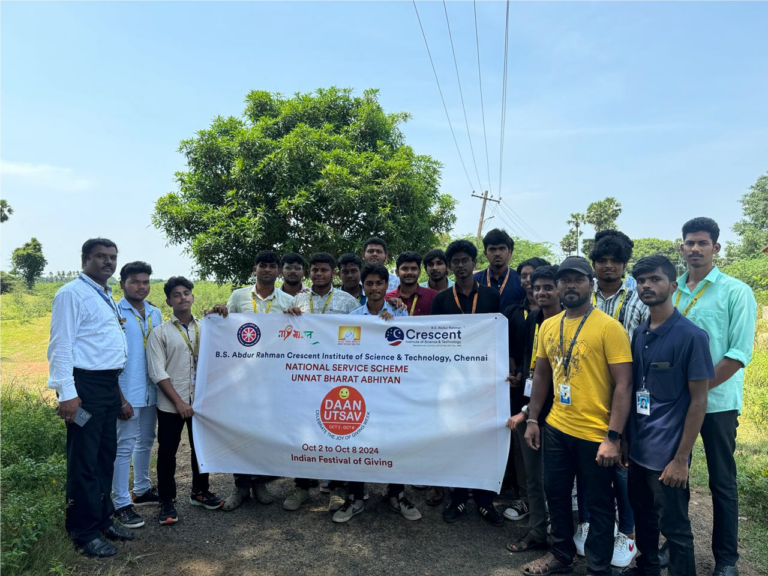
Figure 17.2.5 – Unnat Bharat Abhiyan (UBA)
NSS student Volunteers along with Dr.C. Srinivasan and Representative of VidhaiyinSiragugal at Appura Village, Maraimalai Nagar
Figure 17.2.5 – NSS student Volunteers along with Dr.C. Srinivasan
Figure 17.2.5 – Volunteers along with certificate
C.BSACIST– NGO Collaboration for SDGs (2024): Policy Engagement, Adaptive Governance, and Knowledge Exchange
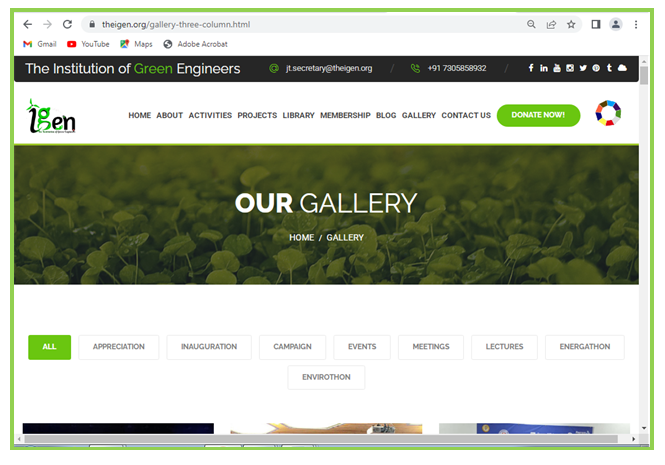
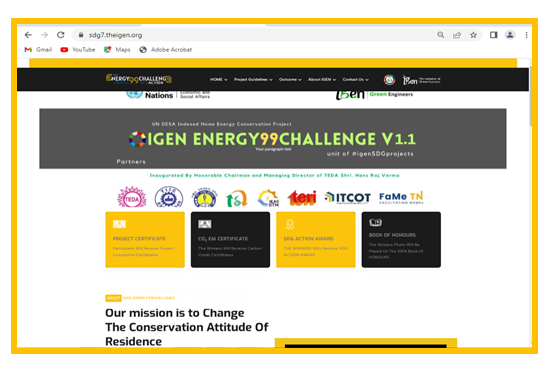
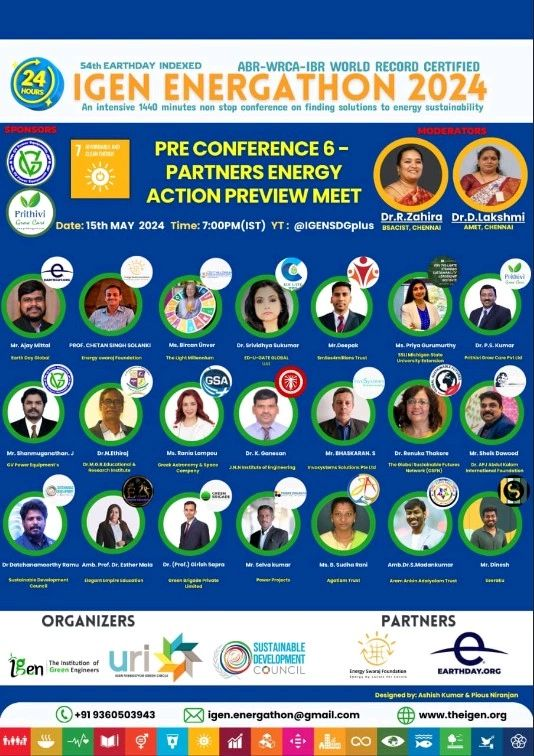
BSACIST demonstrates a policy-oriented stance by engaging with regional NGOs and government on SDG matters in 2024. The institute’s participation as a resource person and panellist in energy and sustainability dialogues (as seen in the IGEN Energyathon and related events) signals a proactive role in shaping issues, challenges, and potential policy responses rather than a purely academic exercise.
Figure 17.2.5 – Igen Energyathon
Poster for legal awareness program
The involvement spans multiple stakeholders, including government bodies, regional NGOs, industry partners, and academic peers. By contributing expertise through panels and knowledge-sharing sessions, BSACIST helps identify problems, shape policy agendas, and foster adaptive management. This collaborative mode reflects a governance approach where diverse voices inform SDG policy design and monitoring, enabling more context-relevant and implementable strategies.
BSACIST’s visibility in energy and sustainability forums indicates engagement in scenario planning activities, where different SDG-related interventions are explored to understand potential outcomes. This modelling supports evidence-based policy development, helping policymakers anticipate trade-offs and prioritize interventions that yield sustainable development gains.
Monitoring and reporting on interventions is central to adaptive management. Through conferences, expert panels, and documented contributions, BSACIST contributes to transparency around SDG initiatives, enabling stakeholders to track progress, learn from results, and adjust actions accordingly. The institute’s public-facing materials and event outputs function as accountability artifacts that demonstrate ongoing stakeholder engagement.
Enabling adaptive management means BSACIST supports iterative policy processes that respond to new data and changing conditions. The institute’s engagement in energy events and knowledge exchanges provides a feedback loop for policy refinement, ensuring SDG strategies stay relevant to regional energy challenges and evolving technology landscapes. This adaptive stance strengthens resilience and alignment with national development priorities.
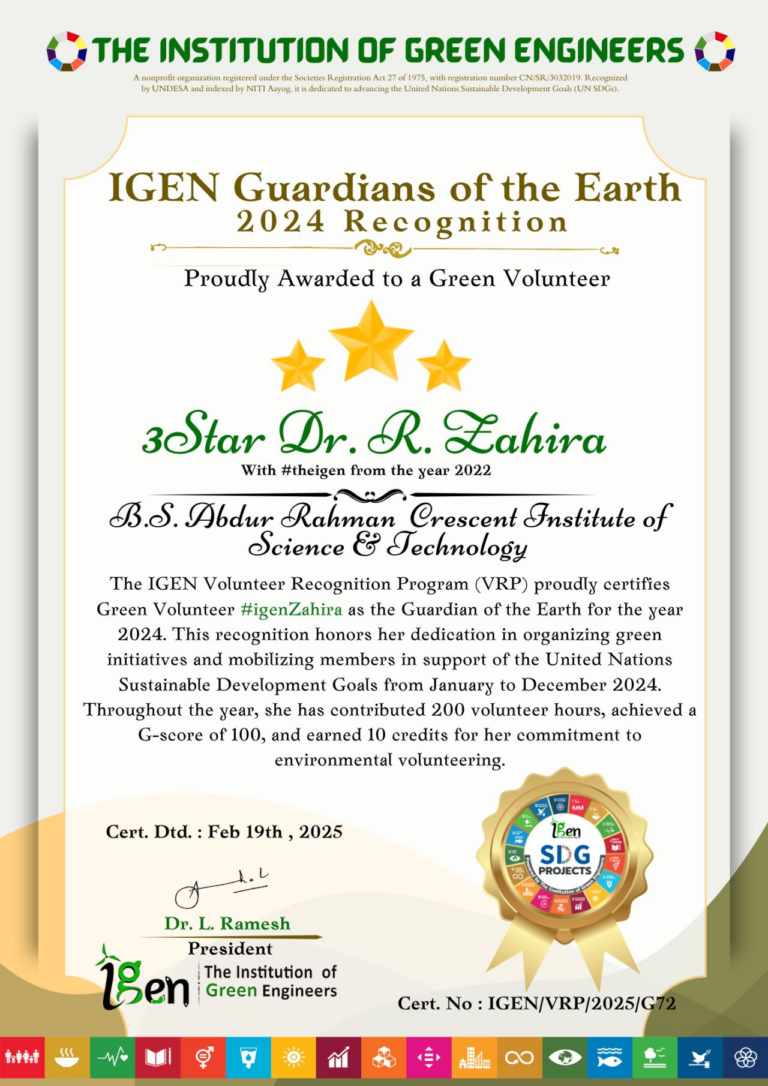
BSACIST faculty member Dr. R. Zahira as a resource person and panellist in energy-oriented advocacy forums. This visible participation translates into concrete evidence of policy-relevant activity: sharing expertise, informing decisions, and contributing to the public discourse on SDG-related policies. Such practice helps legitimize the institute’s role in national and regional SDG governance and enhances its credibility with partners and policymakers.
Poster for IGEN Guardians of the earth Certificate
Poster for IGen Energyathon action preview meeting