Sustainability Literacy & Knowledge Assessment at B.S. Abdur Rahman Crescent Institute of Science and Technology
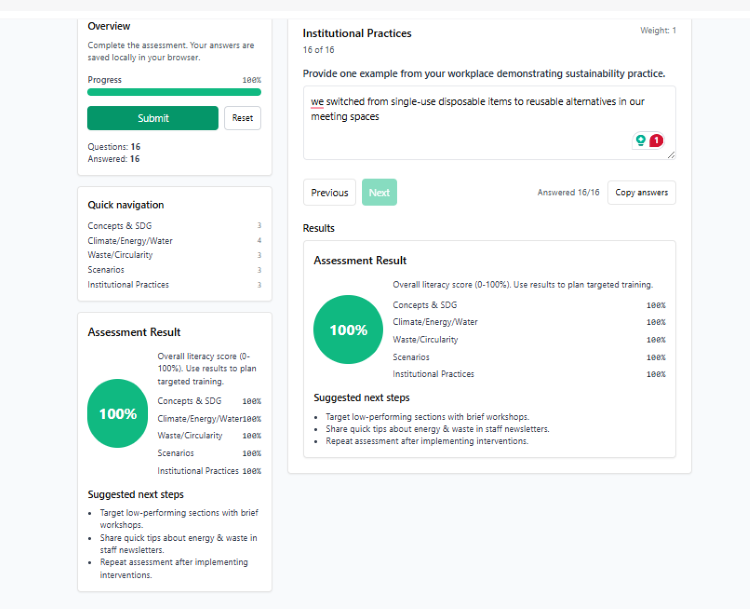
B.S. Abdur Rahman Crescent Institute of Science and Technology has an assessment tool to evaluate sustainability literacy and knowledge of all staff (Academic and Professional). The institution uses a Sustainability Literacy & Knowledge Questionnaire that is designed to capture both understanding and practical application of sustainability concepts in campus and workplace settings.
The questionnaire helps staff translate sustainability knowledge into day-to-day decisions. It covers core ideas such as sustainability and SDG understanding, along with the ability to apply concepts through scenario-based questions and evidence-based responses. This ensures the assessment is not limited to awareness, but also measures how well individuals can act responsibly when faced with real constraints.
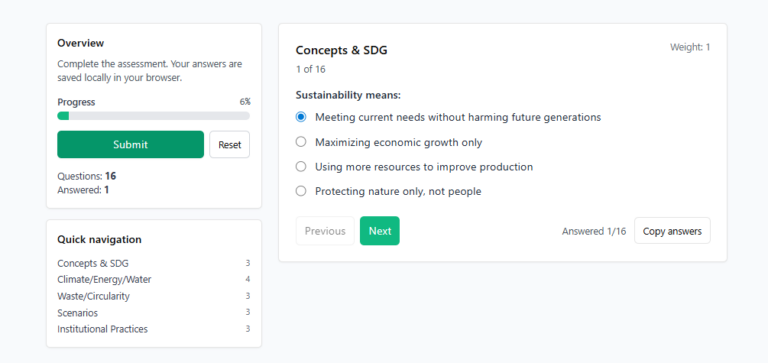
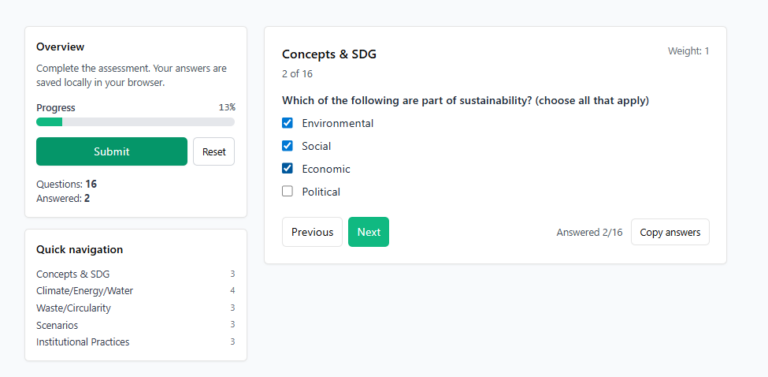
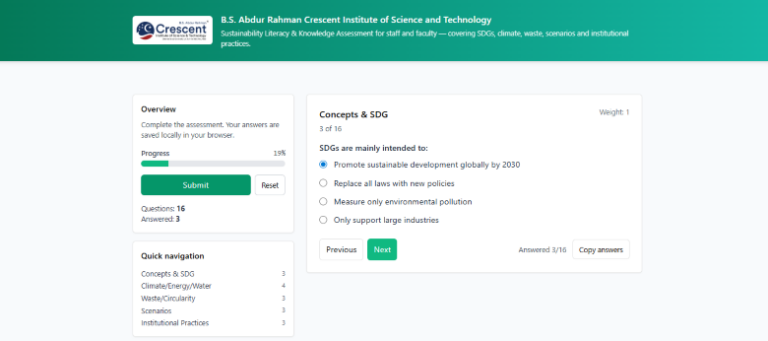
For foundational knowledge, Section 1 assesses sustainability concepts and SDG linkages using MCQs (e.g., understanding sustainability meaning and identifying environmental/social/economic dimensions). This section establishes a baseline of conceptual clarity and ensures that assessment results reflect whether participants understand what sustainability and SDGs are intended to achieve.
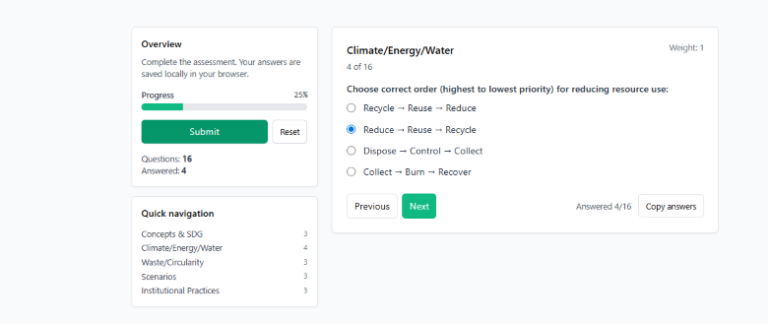
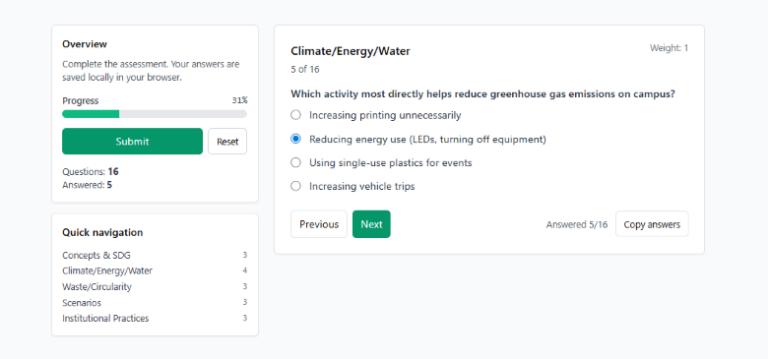
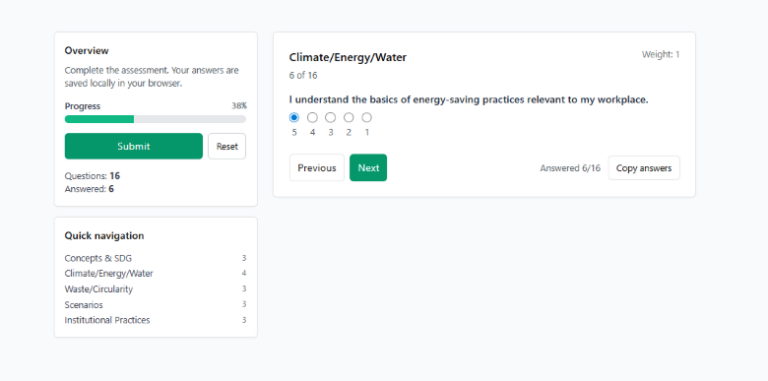
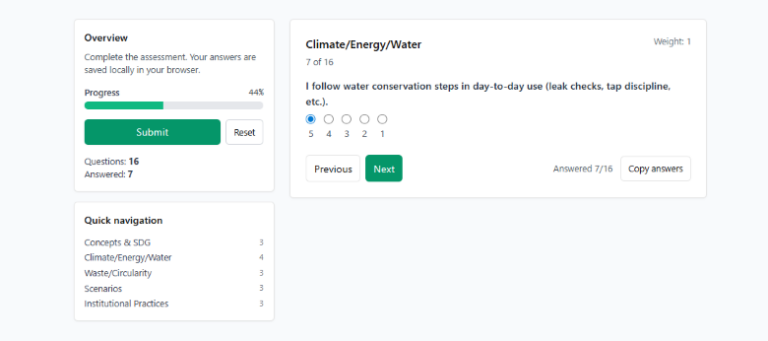
To evaluate practical climate and resource knowledge, Section 2 includes MCQs and Likert items covering climate, energy, and water. It tests understanding of greenhouse gas emissions drivers, energy-saving practices, water conservation methods, and wastewater recycling—along with whether staff actively follow and encourage such practices.
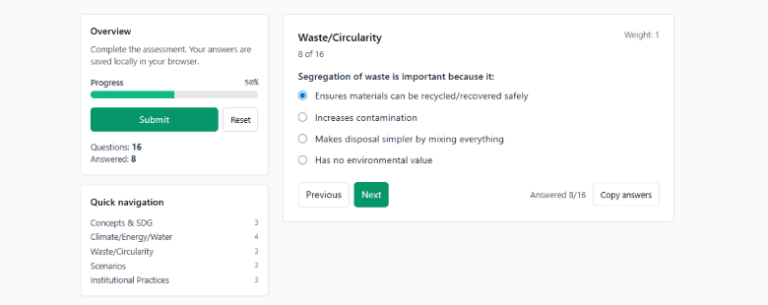
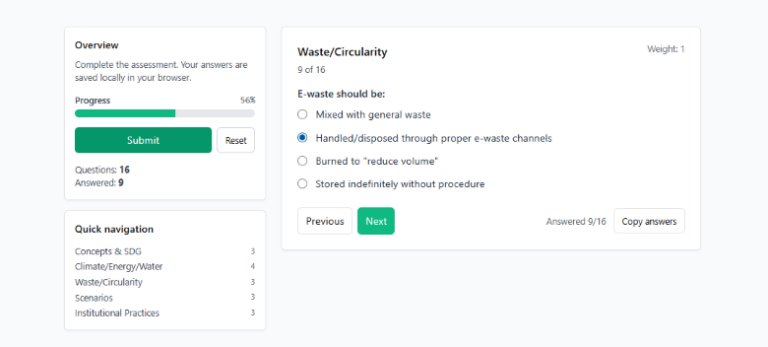
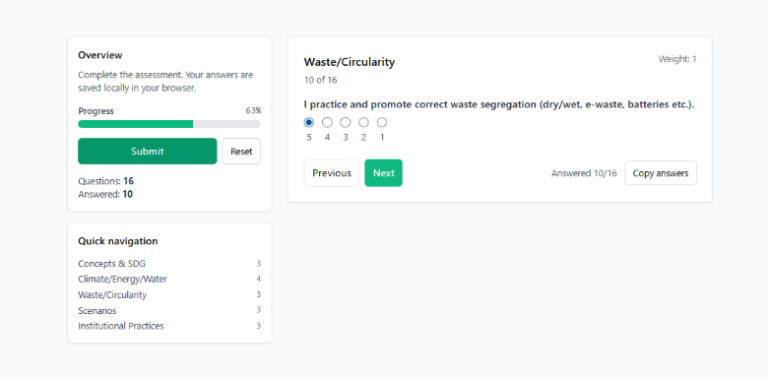
The questionnaire further assesses sustainability competence related to operations and environmental protection through Section 3. This includes waste segregation importance, safe handling basics for chemicals/materials, e-waste management, and principles supporting a circular economy—supported by Likert questions about whether staff practice and promote correct sustainability behaviors.
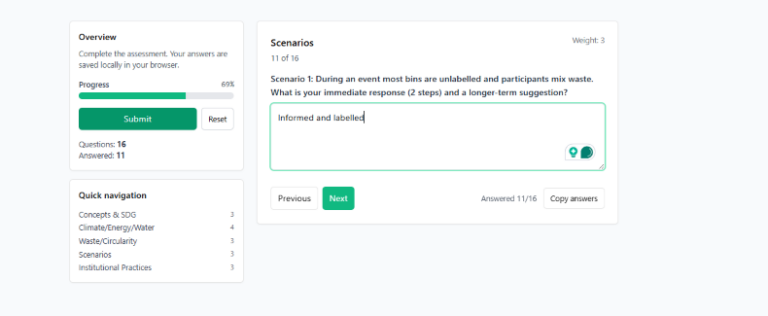
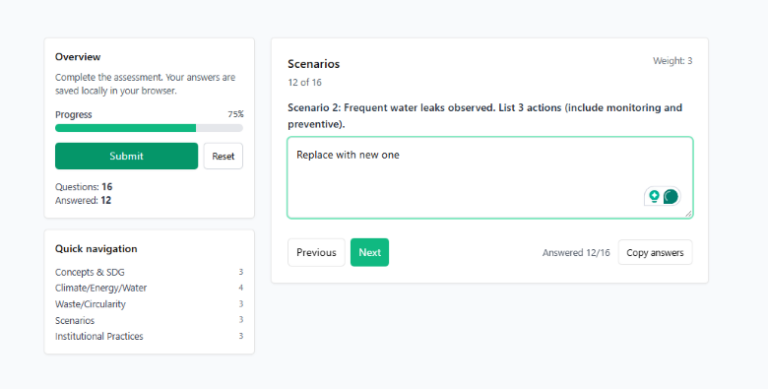
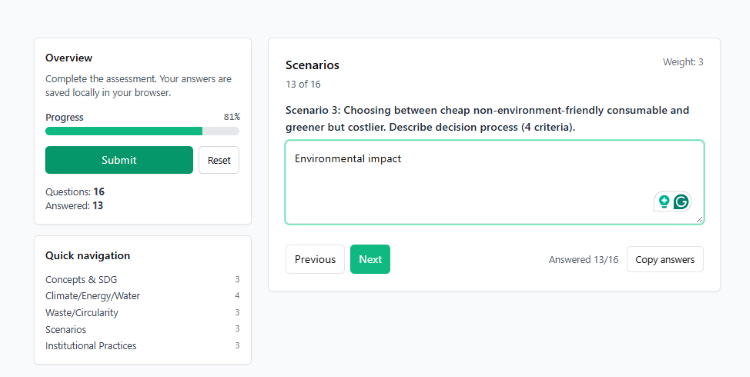
Staff decision-making capability is strengthened through Section 4: Scenario-Based Knowledge, where respondents address campus and workplace situations. Examples include responding to unlabelled mixed waste during events, taking actions to manage water leaks and high consumption, and applying a decision process for selecting consumables with sustainability criteria (with required minimum criteria and reasoning).
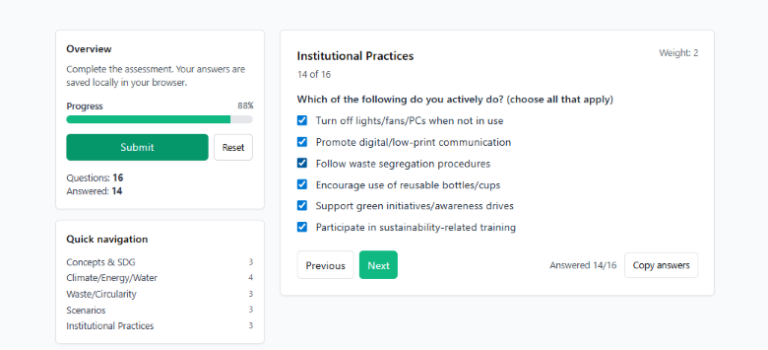
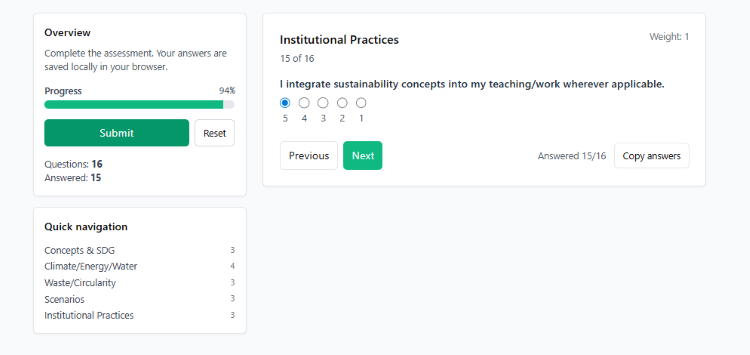
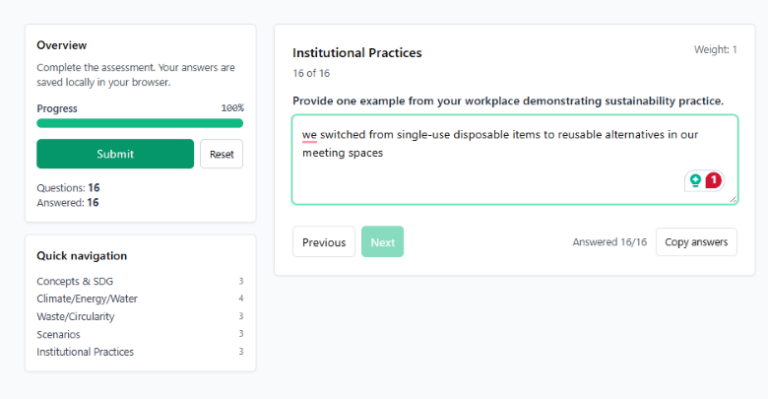
Finally, Section 5: Institutional Practices & Evidence captures measurable impact through evidence prompts and Likert items related to behaviors such as turning off equipment when not in use, following waste segregation procedures, integrating sustainability into teaching/work, and mentoring colleagues/students. The questionnaire uses a standardized scoring guide (total set to 100) and assigns proficiency levels (Level 1 to Level 4), enabling BS Abdur Rahman Crescent Institute of Science and Technology to identify learning gaps, guide education strategy, and demonstrate sustainability progress with consistent, comparable results.
B.S. Abdur Rahman Crescent Institute of Science and Technology employs a comprehensive assessment tool, the Sustainability Literacy & Knowledge Questionnaire, to evaluate the sustainability literacy and knowledge of all staff, including academic and professional members, ensuring a structured approach to understanding, improving, and demonstrating sustainability competencies across key areas such as foundational concepts and SDGs, climate, energy, and water management, waste handling and circular economy principles, scenario-based decision-making, and institutional practices with evidence-based responses; culminating in a standardized scoring system out of 100 with proficiency levels from 1 to 4, enabling the institution to identify knowledge gaps, inform targeted education strategies, track progress through repeated assessments, and demonstrate measurable impact on sustainability behaviors and institutional goals.