

Crescent Sustainability Initiatives
Affordable and Clean Energy (SDG 7)
A. Statement of Policy
Issue: 04; Revised on 2023
| Policy Created on | July 2009 |
| 1st Revision amended on | IQAC Meeting held on 27th October 2017 |
| 2nd Revision amended on | IQAC Meeting held on 31st March 2021 |
| 3rd Revision amended on | IQAC Meeting held on 16th June 2023 |
Responsible Executive : Director (IQAC)
Responsible Office : Internal Quality Assurance Cell, Estate Office, and SDG Cell
Contacts : Registrar, Director (IQAC)
7.1 STATEMENT OF POLICY
The B.S. Abdur Rahman Crescent Institute of Science and Technology is committed to ensuring that all renovations and new constructions on campus adhere to stringent energy efficiency standards. This policy aims to:
- Ensure universal access to affordable, reliable, modern energy services.
- Increase substantially the share of renewable energy in the global energy mix.
- Double the global rate of improvement in energy efficiency
- Enhance international cooperation to facilitate access to clean energy research and technology.
- Expand infrastructure and upgrade technology to supply modern and sustainable energy services, particularly in developing countries.
7.2 REASON FOR THIS POLICY
This policy is established to promote energy-efficient practices in renovating existing infrastructures and constructing new buildings. By adhering to energy efficiency standards, the Institute aims to reduce greenhouse gas emissions, lower operational costs, and contribute to the global efforts to combat climate change, which aligns with SDG 7 – Affordable and Clean Energy.
7.3 RESPONSIBILITIES
7.3.1 Policy Principles
The Institute shall implement the following principles to ensure compliance with energy efficiency standards:
- All renovations and new constructions must achieve recognised building rating systems such as EDGE, IGBC, and LEED.
- Sustainable design features, including using renewable energy sources, shall be integrated into all projects.
- An efficient waste management plan shall be established to minimize waste and promote recycling.
- Rainwater harvesting systems shall be implemented in all new buildings.
- Energy conservation shall be prioritized through the installation of energy-efficient appliances and equipment.
- Regular audits of energy consumption shall be conducted to identify areas for improvement.
- Use of low VOC (Volatile Organic Compounds) materials in construction and renovation to minimize harmful emissions.
- Adoption of eco-friendly housekeeping practices using biodegradable chemicals.
- Implementation of high reflective roofing materials and green roofs to reduce heat island effects.
- Encourage water-efficient landscaping and high-efficiency irrigation technology in new construction projects.
- Support R&D activities towards energy-efficient renovation and building.
- Enhance national/international cooperation to facilitate access to green building technology.
7.3.2 Dissemination of Policy
- Awareness programs shall be conducted regularly for all stakeholders regarding energy-efficient practices.
- This policy shall be publicly accessible on the Institute’s website and updated as necessary.
7.3.3 Enforcement of Policy
- The Director (Planning and Development) and their team are responsible for monitoring compliance with this policy.
- Compliance shall be communicated to architects, design engineers, and construction workers involved in projects.


B. Promotion and Implementation of Energy-Efficient Renovation and Building Policy
The B.S. Abdur Rahman Crescent Institute of Science and Technology (BSACIST) has established a comprehensive policy to ensure that all renovations and new constructions on campus adhere to stringent energy efficiency standards. This commitment is encapsulated in the Policy for Energy-Efficient Renovation and Building, which outlines the institute’s dedication to sustainable practices and aligns with global efforts to combat climate change.
Existence of Policy
The policy’s existence is clearly articulated in the Policy for Upgrading Buildings document, which emphasises the institute’s commitment to energy efficiency in all construction and renovation projects. The policy mandates that all new buildings and renovations comply with recognised energy efficiency standards, such as EDGE, IGBC, and LEED. This ensures that the institute meets regulatory requirements and sets a benchmark for sustainable development in the educational sector.
Evidence Provided
Evidence of the policy’s implementation is demonstrated through various initiatives and projects undertaken by BSACIST. The institute has successfully installed multiple rooftop solar photovoltaic power plants with a total capacity of 650 kWp, significantly contributing to its energy requirements while reducing dependence on conventional energy sources. Additionally, the establishment of solar water heating systems with a capacity of 39,500 litres and solar street lighting projects further exemplifies the practical application of the policy. These initiatives enhance energy efficiency and serve as a model for other institutions aiming to achieve similar sustainability goals.
Moreover, comprehensive simulation studies conducted for various buildings indicate potential energy consumption reductions of up to 10.5%, showcasing the effectiveness of the implemented energy-efficient technologies. Integrating advanced materials, such as AAC (Autoclaved Aerated Concrete) blocks and high-performance glass, further supports the institute’s commitment to reducing energy consumption.
Public Accessibility of Evidence
The evidence supporting the policy’s implementation is publicly accessible, as the policy document is available on the institute’s website. This transparency ensures that stakeholders, including students, faculty, and the community, are informed about the institute’s energy efficiency and sustainability commitment. Furthermore, regular awareness programs and workshops are conducted to engage the community and promote energy-efficient practices, reinforcing the institute’s role as a leader in sustainable development.
Policy Review Period
The policy has undergone revisions to remain relevant and effective, with the most recent review occurring in 2023. This continuous improvement process reflects the institute’s proactive approach to adapting to new challenges and advancements in energy efficiency technologies. The policy’s history indicates a commitment to evolving practices, with previous revisions made in 2017 and 2021, ensuring that the institute stays at the forefront of sustainable building practices.
Summary
In summary, BSACIST’s policy for upgrading buildings to higher energy efficiency standards is a robust framework that promotes sustainable practices and provides tangible evidence of its implementation. The institute’s commitment to energy-efficient renovations and new constructions is evident through its various projects, public accessibility of policy documents, and regular reviews, ensuring alignment with contemporary sustainability goals. By fostering a culture of sustainability and innovation, BSACIST sets a precedent for educational institutions and contributes significantly to global efforts in combating climate change. Integrating innovative technologies and comprehensive energy management strategies further solidifies the institute’s role as a leader in sustainable practices within higher education.
Table VII – 1: Promotion / Implementation/ Evidence of Policy of Energy Efficient & Divestment Policy
| Upgrade buildings to higher energy efficiency. | https://crescent.education/iqac-csi-sdg7-722-2023-24/ |
| Carbon reduction and emission reduction process | https://crescent.education/iqac-csi-sdg7-723-2023-24/ |
| Plan to Reduce Energy Consumption | https://crescent.education/iqac-csi-sdg7-724-2023-24/ |
| Energy waste identification | https://crescent.education/iqac-csi-sdg7-725-2023-24/ |
| Local community outreach | https://crescent.education/iqac-csi-sdg7-741-2023-24/ |
| Renewable Energy Pledge | https://crescent.education/iqac-csi-sdg7-742-2023-24/ |
| Energy efficiency services for the industry | https://crescent.education/iqac-csi-sdg7-743-2023-24/ |
| Policy – Clean Energy Technology | https://crescent.education/iqac-csi-sdg7-744-2023-24/ |
| Low–carbon innovation | https://crescent.education/iqac-csi-sdg7-745-2023-24/ |
LED LIGHTS
LED light fixtures are being extensively used for all new interior renovation works in the campus. So far, 159.79kW capacities of LED lights are fixed which provide around 100% energy saving compared to conventional lighting.
SL NO | BUILDING | QTY | TOTAL WATTS |
1 | ACADEMIC BLOCK | 3916 | 68609 |
2 | AUDITORIUM | 255 | 9787 |
3 | MENS HOSTEL | 1712 | 27085 |
4 | WOMENS HOSTEL | 752 | 9455 |
5 | NEW STAFF QUARTERS | 408 | 5635 |
6 | CAMPUS STREET LIGHT | 286 | 8570 |
7 | MEDICAL | 35 | 589 |
8 | ESTATE OFFICE | 47 | 910 |
9 | MAIN CANTEEN | 45 | 1042 |
10 | VC OFFICE | 100 | 620 |
11 | VC VILLA | 71 | 971 |
12 | GUEST HOUSE | 37 | 680 |
13 | DRIVERS CABIN | 8 | 120 |
14 | OLD STAFF QUARTERS | 78 | 1505 |
15 | SPORTS LIGHTING | 64 | 12800 |
16 | HR OFFICE | 27 | 500 |
17 | FOOD WASTE MANAGEMENT PLANT | 26 | 640 |
18 | SOLAR STREET LIGHT | 10 | 250 |
19 | PURCHASE OFFICE (EO) | 2 | 30 |
20 | CIIC BLOCK | 328 | 5479 |
21 | CIIC 2ND FLOOR STUDIO | 13 | 225 |
22 | CANTEENS | 119 | 1984 |
23 | OUTDOOR LIGHTING | 103 | 2306 |
| TOTAL | 8442 | 1,59,792 |
Table 7.2.2 (i) – LED Fixtures in the Campus
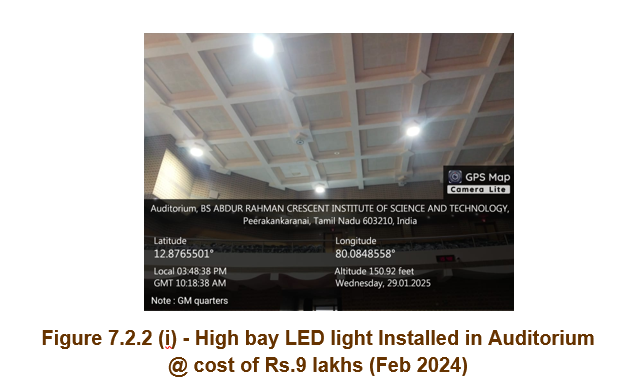
Passive Infrared Motion Sensor Lights
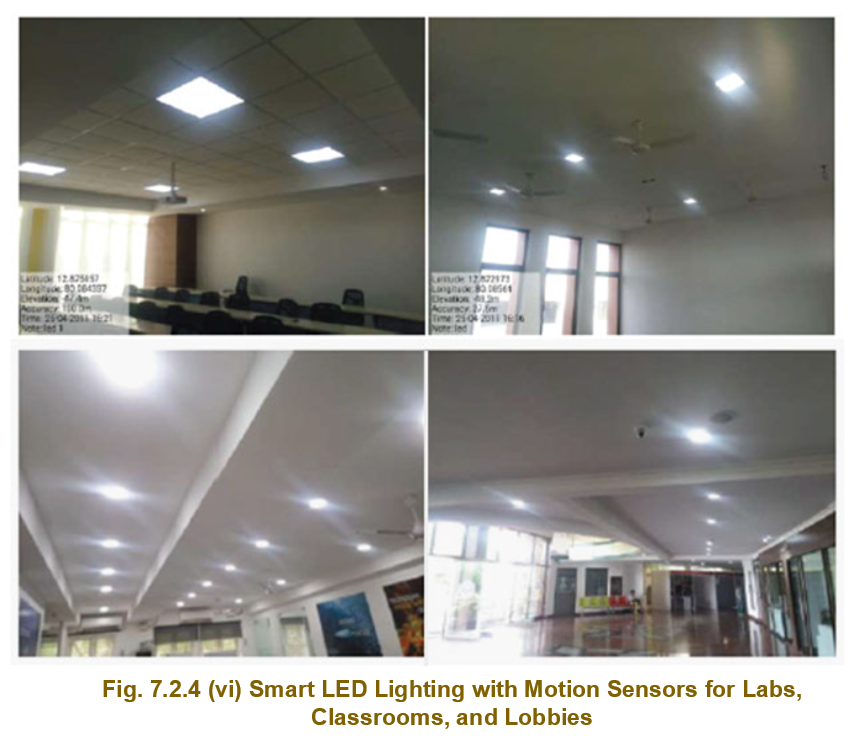
Motion Sensor lights are provided in computer science lab, staff cabins and toilets for energy savings.
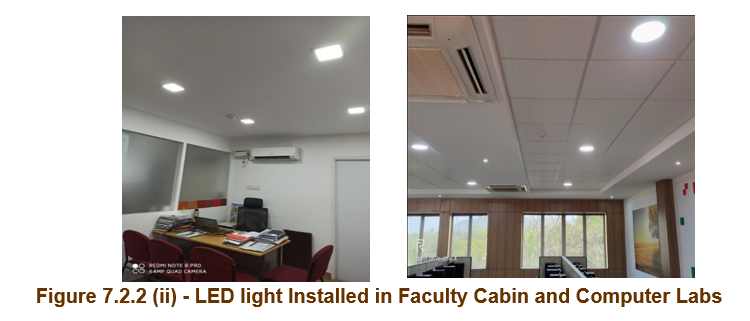
B. BEE 5-Star Rated Air Conditioners
With an emphasis to energy conservation, all split AC units purchased since the year 2012 are of BEE star energy rating. The star rated AC units are free from ozone depleting CFC.
Old non-inverter split AC units and window AC units are gradually being replaced with centralized VRF AC systems and inverter-type AC units. The VRF and inverter-type AC units save space, cost, and electricity.
| MODEL | QTY | TON |
| 1.0 TON Split Inverter | 17 | 17 |
| 1.5 Ton Split 5* | 29 | 44 |
| 2.0 Ton Split 5* | 71 | 142 |
| TOTAL | 117 | 203 |
Table 7.2.2 (ii) – BEE 5-Star Rated Air Conditioners details
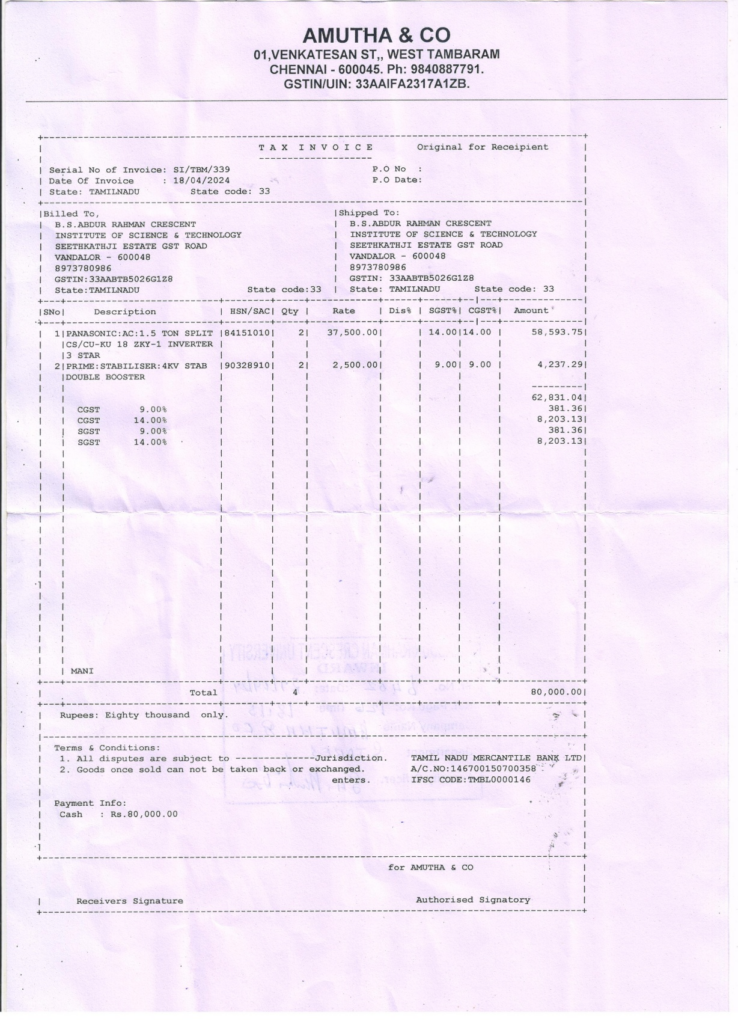
Figure 7.2.2 (iii) – Sample Invoice copy for the procurement of Inverter AC Units
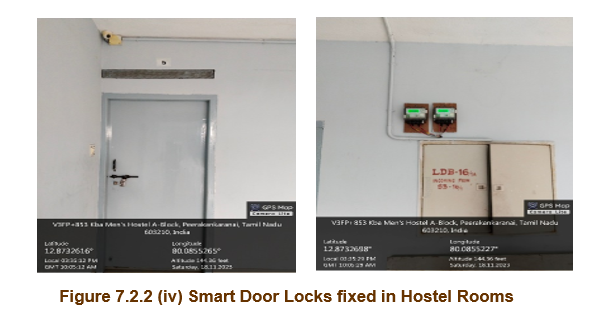
C. Enhancing Energy Efficiency with Smart Door Locks
B.S. Abdur Rahman Crescent Institute of Science and Technology (BSACIST) has implemented energy-sparing solutions through the installation of smart door locks in its facilities, such as the KBA Men’s Hostel. These state-of-the-art locking systems not only enhance security but also contribute to energy efficiency by controlling access to communal spaces based on real-time occupancy. The integration of smart technology allows for automatic locking and unlocking, reducing the frequency of door handling and minimizing energy loss associated with heating or cooling open areas. By ensuring that doors remain closed when not in use, these smart locks help maintain optimal indoor climates, furthering BSACIST’s commitment to sustainable practices. This innovative approach reflects the institution’s dedication to creating a more energy-conscious campus environment while prioritizing the safety and comfort of its residents.
D. Energy Efficiency Design Strategies
Comprehensive simulation studies have been pivotal in modelling the energy-consuming systems of the building, leading to an impressive reduction in overall energy consumption of about 25%. These studies informed a series of strategic design decisions aimed at optimizing energy efficiency across various dimensions.

- Window to Wall Ratio:The building features an optimal design for its window-to-wall ratio, ensuring that windows are strategically placed to maximize natural light while minimizing heat gain. This balance is crucial in creating a comfortable indoor environment and reducing reliance on artificial lighting.
- Natural Lighting Utilization:The design effectively harnesses natural light, ensuring that over 75% of each apartment is well-lit during the day. This thoughtful approach minimizes the need for artificial lighting, thereby conserving energy.
- External Shading Devices:To further enhance energy efficiency, external shading devices have been incorporated into the design. These devices play a critical role in reducing solar radiation exposure, thereby contributing to a more stable indoor temperature and decreasing the demand for cooling.
- High-Performance Building Envelope:The building incorporates a high-performance envelope using AAC (Autoclaved Aerated Concrete) blocks. This choice significantly reduces heat ingress, which helps in lowering the overall energy requirements for heating and cooling.
- Efficient Lighting Systems:The implementation of efficient lighting systems is essential for reducing overall energy consumption. By utilizing modern, energy-saving bulbs, the building ensures adequate illumination while minimizing electricity usage.
- Solar Hot Water System:The provision of a solar hot water system integrates renewable energy into the building’s operational strategy. This system significantly reduces the dependency on conventional energy sources for heating water, aligning with sustainability goals.
- Adherence to BEE Standards:Lastly, the building meets minimum Bureau of Energy Efficiency (BEE) standards, targeting a rating of 4 or 5 stars. This commitment to energy efficiency is reflected in the choice of split units that are CFC-free, further enhancing the building’s sustainable profile.
Holistic Sustainability: Transforming Campus Energy Ecosystem
By integrating multiple approaches – solar power generation, energy-efficient technologies, smart infrastructure design, and collaborative student-driven projects – B.S. Abdur Rahman Crescent Institute of Science and Technology, has created a holistic framework for upgrading buildings to higher energy efficiency. The institute’s commitment goes beyond mere technological implementation, fostering a culture of sustainability and innovation. These strategic upgrades not only reduce operational costs and carbon footprint but also serve as a model for sustainable institutional development, demonstrating how existing infrastructure can be transformed into energy-efficient, environmentally responsible spaces.
E. Strategic Solar Infrastructure: BSACIST’s Comprehensive Energy Efficiency Approach
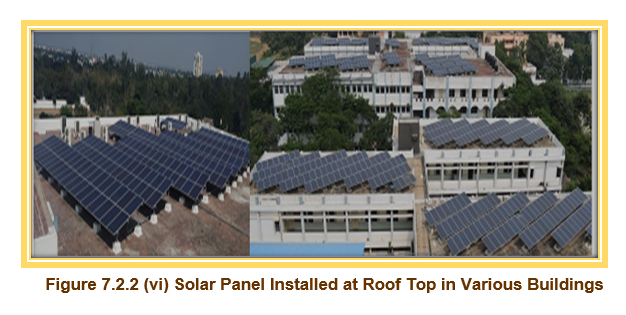
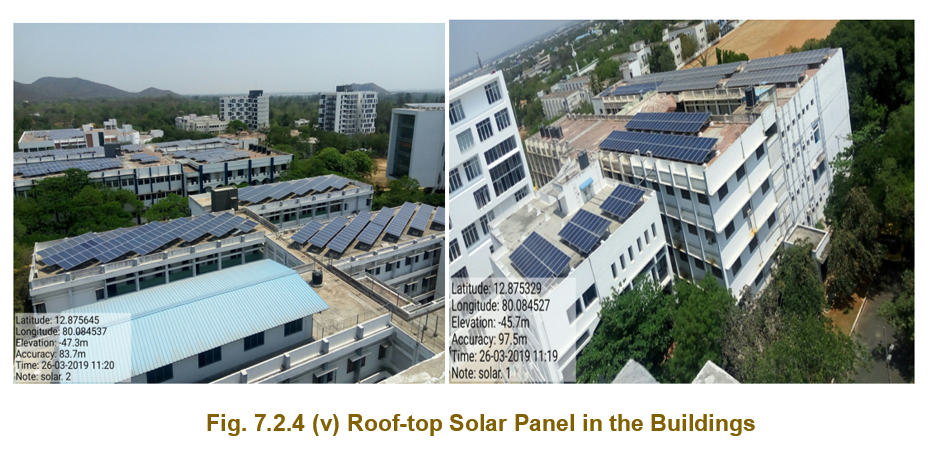
B.S. Abdur Rahman Crescent Institute of Science and Technology (BSACIST) has implemented a comprehensive strategy to upgrade existing buildings to higher energy efficiency through innovative renewable energy solutions. As part of its ‘Green Campus’ initiative, the institute has installed multiple rooftop solar photovoltaic power plants with a total capacity of 650 kWp, strategically positioned across various campus buildings. A new 125 kWp rooftop plant is currently being installed on the New Hostel Block, to operate alongside the existing 650 kWp system. Together, these installations bring the campus’s total solar capacity to 775 kWp, enhancing clean and green energy generation.
Quantifying Success: Solar Power Generation and Financial Savings
The solar power implementation has yielded significant energy efficiency improvements.
Plant | Units | Amount Saved |
150Kwp | 16,49,008 | 1,51,57,896 |
100kWp | 12,95,898 | 1,21,75,627 |
300kWp | 20,38,673 | 2,02,81,665 |
100kWp | 4,33,469 | 44,55,983 |
Total | 54,17,048 | 5,20,71,171 |
Table 7.2.2 (iii) Total Solar Power Generation – 650kWp
from 2014 to 31st December 2024
These solar installations now constitute 20% of the total electricity consumption since June 2014, representing a substantial upgrade in the campus’s energy efficiency infrastructure.
Innovative Energy Solutions: Beyond Solar Power Generation
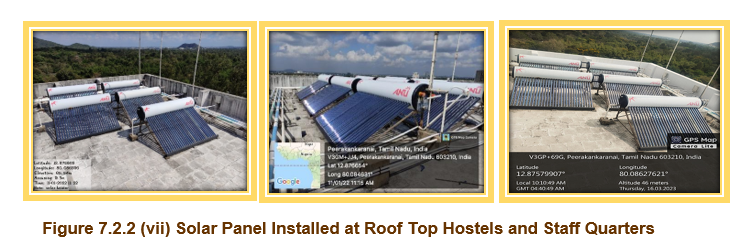
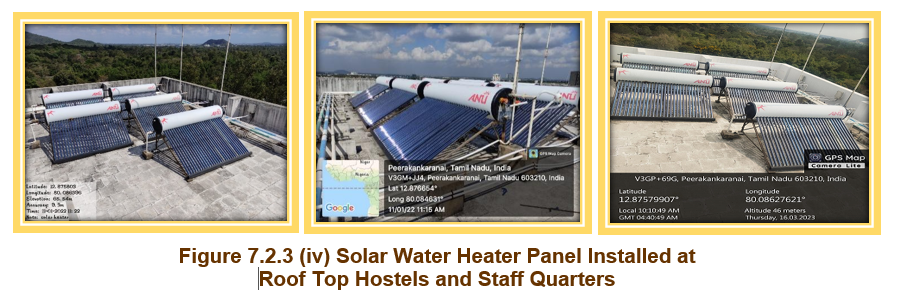
Beyond solar power, BSACIST has implemented complementary energy-efficient technologies to upgrade existing buildings. A notable example is the installation of solar water heating systems with a total capacity of 39,500 litres, equivalent to 365 electric geysers of 2kW capacity. These systems are strategically placed in Men’s Hostel blocks, Ladies Hostel, and New Staff Quarters, estimated to save approximately 24 lakhs in power consumption annually. The institute has also introduced innovative solutions like zero-export devices to manage surplus solar power generation and prevent potential damage to diesel generator sets.
Block | No. of tanks | Capacity in litres |
Men’s Hostel | ||
A Block | 20 | 5000 |
B Block | 6 | 3000 |
C Block | 6 | 3000 |
D Block | 8 | 4000 |
Main block | 20 | 5000 |
PG block | 12 | 3000 |
Ladies Hostel | ||
Main block | 10 | 5000 |
Annexure Block | ||
New Block Phase 1 | 17 | 5750 |
Staff Quarters | ||
New Staff Quarters | 23 | 5750 |
Total Capacity | 122 | 39,500Litres |
Table 7.2.2 (iv) Total capacity of water through Solar Heater
Smart Infrastructure: Collaborative Energy Management Strategies
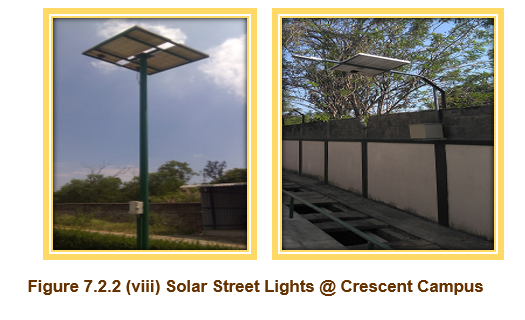
To further enhance energy efficiency, the institute has developed additional infrastructure improvements. Solar street lighting projects have been implemented along the road connecting staff quarters to the men’s hostel and the architecture block – a collaborative effort between third-year electrical engineering students and the estate electrical department. The zero-export device ensures that excess power generated by the solar power plant does not damage the diesel generator sets, while allowing the solar power to be shared across the campus grid during load shedding.
Achieving Carbon Neutrality at BSACIST:
An Integrated Approach to Sustainable Campus Operations
B. S. Abdur Rahman Crescent Institute of Science and Technology (BSACIST) has adopted a comprehensive carbon management program that markedly lowers its carbon footprint through innovative and sustainable practices. The institute’s annual total carbon emissions amount to 7,369 tons, with a per capita footprint of 1.05 tons—significantly below the national average of 1.58 tons per person. This reflects a 33.54% reduction relative to the national average, underscoring BSACIST’s commitment to environmental sustainability and carbon reduction.
According to the CO2 Baseline Database for the Indian Power Sector (Central Electricity Authority of India), grid electricity emits about 820g CO2 equivalents per kWh. In 2024, our solar power plant generation avoided approximately 4,000 tons of CO2 emissions by displacing fossil fuel-based electricity.
A. Green Infrastructure – Strategic carbon offsetting through Ecological Interventions:
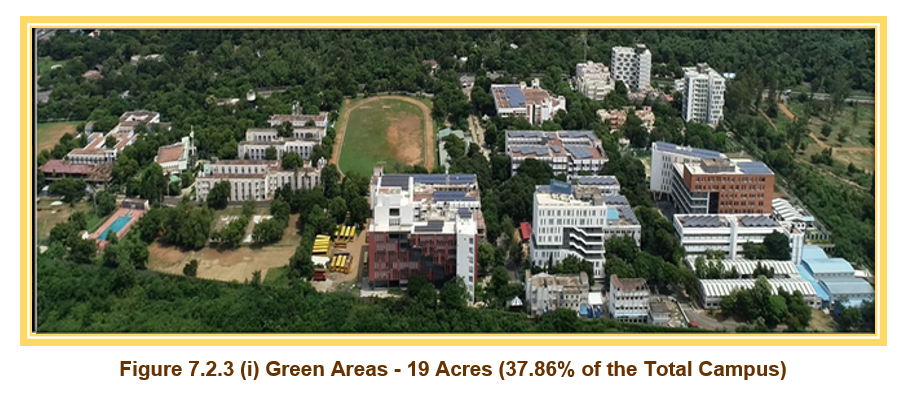
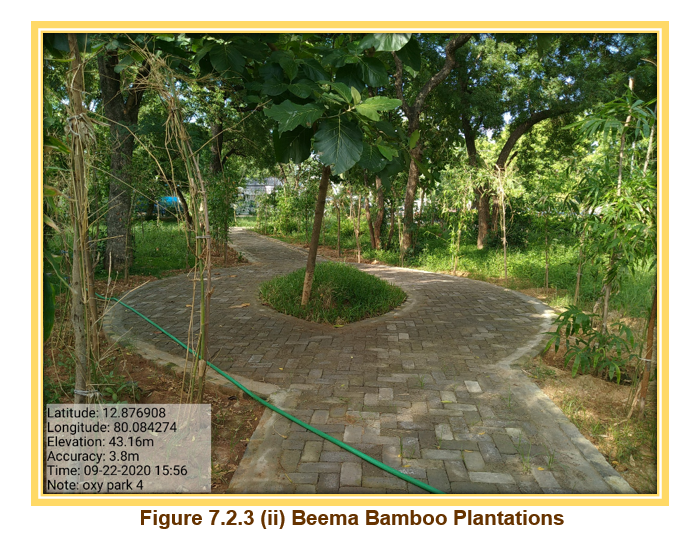
The carbon offsetting strategy at BSACIST is multifaceted, leveraging green spaces and renewable energy initiatives to mitigate carbon emissions. The campus spans 19 acres of green areas, including tree-covered zones, lawns, and Beema Bamboo plantations (2,250 plants), which collectively absorb about 900 tons of CO2 annually. This absorption accounts for roughly 10.13% of the campus’s total emissions, while green spaces cover about 37.86% of the campus area. Solar infrastructure plays a crucial role in this effort, with 650 kW peak (kWp) of solar photovoltaic capacity installed across campus buildings, offsetting approximately 474 tons of CO2 annually—equivalent to planting about 21,545 trees. A new 125 kWp rooftop plant is currently being installed on the New Hostel Block, to operate alongside the existing 650 kWp system. Together, these installations bring the campus’s total solar capacity to 775 kWp, enhancing clean and green energy generation.
B.Solar-Driven Holistic Emission Management: Integrated Technological and Operational Approaches
The institute’s carbon management approach extends beyond green spaces and solar energy. The comprehensive strategy includes multiple energy-efficient technologies and sustainable practices across various campus operations. Transportation emissions are carefully managed, with detailed tracking of petrol and diesel consumption. Electricity consumption, which accounts for the largest portion of carbon emissions (5,251,791 kg CO2), is being systematically reduced through energy-efficient technologies, including high-performance building envelopes, efficient lighting systems, and advanced HVAC technologies. The institute has also implemented water conservation measures and waste management strategies that contribute to overall carbon reduction.
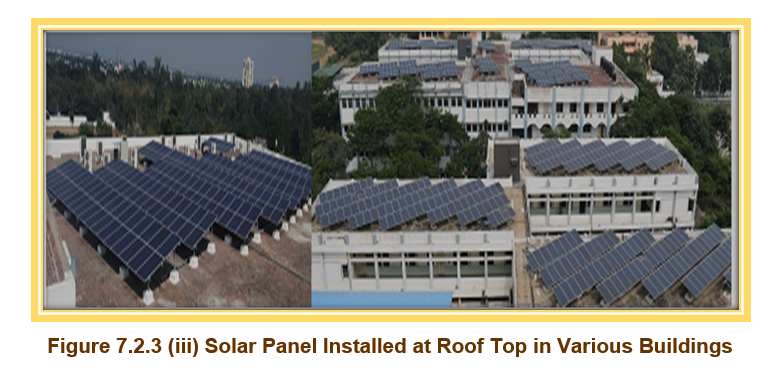
Innovative technologies and collaborative approaches further enhance BSACIST’s carbon management efforts. The implementation of zero-export devices for solar power management, solar water heating systems, and energy-efficient building designs demonstrate a holistic approach to sustainability. The solar water heating systems, with a total capacity of 39,500 litres, are estimated to save approximately 24 lakhs in power consumption annually. Additionally, student-driven projects, such as solar street lighting installations, showcase the institute’s commitment to engaging the academic community in sustainable practices.
C.Driving Sustainability: The Role of Eco-Friendly Vehicles in BSACIST’s Green Transportation Initiative
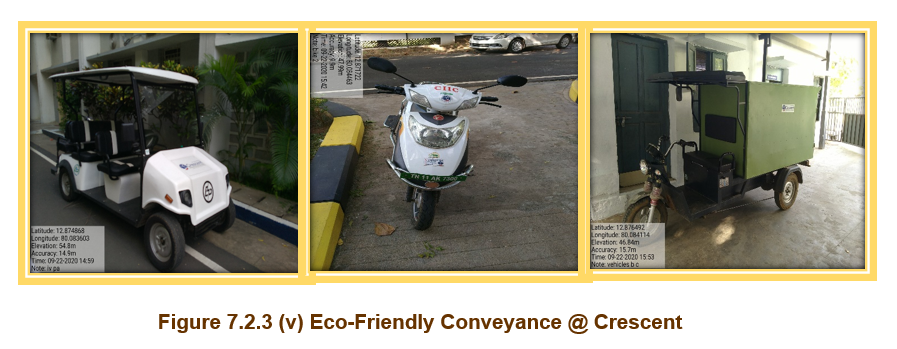
The integration of eco-friendly vehicles into the university’s transportation system highlights a practical application of BSACIST’s sustainability values, encouraging a shift toward cleaner mobility solutions while reducing overall campus emissions.
Pollution Free Environment | ||
1 | Battery Operated Golf cart(Buggy) | 7 Nos. |
2 | Electric Bike | 2 Nos. |
3 | Eco Friendly Load vehicle | 2 Nos. |
4 | Bi cycles | 55 Nos. |
5 | Tricycles | 3 Nos. |
Carbon foot print / Capita | ||||||
Activity Data | Type | unit | GHG | Emission factor | Quantity | CO2 emission /year |
Transportation | petrol | litres | KgCO2e | 2.196 | 1300 | 2855 |
diesel | litres | 2.65 | 381461 | 1010872 | ||
Electricity | kWh | KgCO2e | 1.2 | 4376492 | 5251791 | |
Paper consumption | kg | KgCO2e | 0.683 | 21900 | 14958 | |
Water consumption | water supply | cum | KgCO2e | 0.8 | 160611 | 128489 |
Solid waste | kg | KgCO2e | 3.7 | 259560 | 960372 | |
Total CO2 Emission Per Year | Kg | KgCO2e | 7369336 | |||
Over all carbon foot print / year | Ton | 7369 | ||||
Total population (avg) | 7000 | |||||
Carbon Foot Print per capita in Ton | 1.05 | |||||
National average per capita | 1.58 Ton/Capita/Year |
Actual CO2 emission | 1.05 Ton/Capita/Year |
% of CO2 emission – on National avg. | 66.63% |
% of CO2 reduced from National avg. | 33.37% |
CARBON OFFSETTING
Total Carbon Emission : 7369 tons/year | ||||
Classification of Green Areas | Area | Unit | CO2 (avg.) absorption rate t/year | Total CO2 absorption ton/year |
Area of Tree – ref Google Map | 2 | Acre | 160 | 336 |
Lawn & plant area | 14 | Acre | 15 | 211 |
Beema Bamboo | 2.5 | Acre | 80 | 200 |
Total green area in acre | 9 | Acre | ||
Total CO2 Absorption | 747 | |||
% of CO2 offset within the campus | 10.13% | |||
% of Green Area |
|
|
| 37.86% |
10 % of Carbon foot print is offset by the above environment – friendly measures in campus.
Calculation:
Carbon Offsetting
Total trees green area – 19 Acres
Total Co2 absorption ton/year – 747 tones
Over all carbon foot print/year (Co2 Emission) – 7369 tones
% of Co2 → offsetting within campus
(747 / 7369 X 100) – 10.13%
Bal: 90% to be offset by planting more trees or trading
% of Linear area (19/50 Acres – carbon foot print) – 38%
Carbon Footprint
Total Co2 Emission per year: Kg – 7369336
Over all carbon foot print / year = 7369336
———— – 7369 tones
1000
Total Population (Avg.) – 7000 (students)
Carbon foot print per Capita in Ton = 7369
——– – 1.05
7000
National Avg. per emission – 1.58 / ton / capita / year
Actual Co2 Emission – 1.05 / ton / capita / year
% of Co2 Emission on National Avg. 1.05
—— X 100 – 66.46%
1.58
% of Co2 reduced from National Avg. 100 – 66.46 – 33.54%
E. Visioning Net-Zero: The Roadmap to Transformative Environmental Stewardship
The institute’s carbon management strategy represents a forward-thinking approach to environmental stewardship. While the current initiatives offset 10% of carbon emissions within the campus, BSACIST has a clear plan to address the remaining 90% through continued tree planting, exploring carbon trading options, and implementing increasingly sophisticated sustainable technologies. The ultimate goal is to transform the campus into a net-zero energy environment that not only minimizes its carbon footprint but also serves as a model for sustainable institutional development. By consistently innovating and implementing cutting-edge green technologies, BSACIST demonstrates that comprehensive carbon management is not just an environmental necessity but an achievable and impactful institutional commitment.
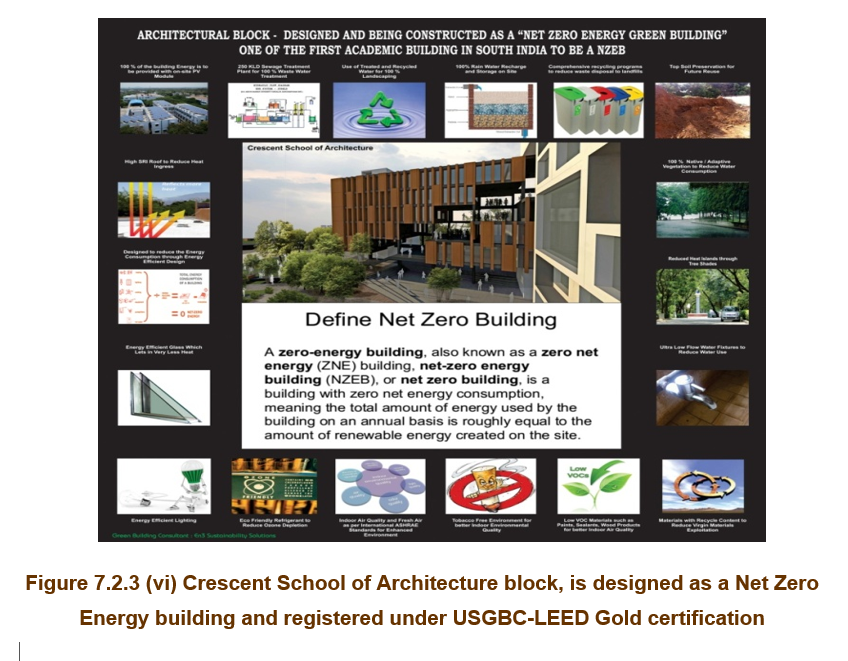
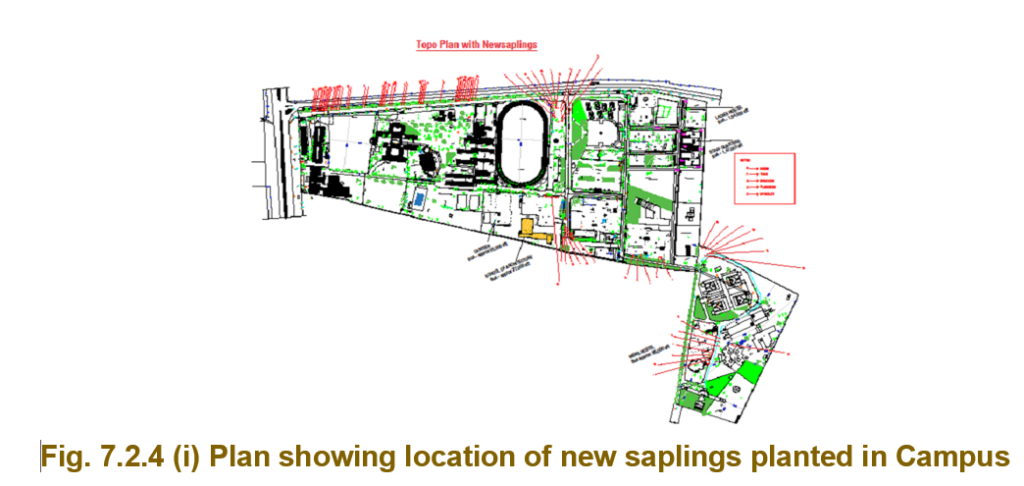
A. Fostering a Sustainable Campus: Environment and Community at BSACIST
BSACIST is committed to a vibrant, sustainable campus that balances ecological stewardship with a welcoming community. Our green spaces and landscapes provide not only aesthetic value but also essential ecosystem services, supporting biodiversity and offering serene areas for study and reflection. We are dedicated to preserving the campus ecosystem, ensuring that native habitats thrive alongside our facilities.
Public spaces for students and staff—such as cafes, lounges, and square gardens—promote social interaction and well-being while encouraging mindful practices. The campus prioritizes recycling and waste reduction, turning waste streams into opportunities for reuse and responsible disposal. Through sustainable consumption of water and energy, we seek to minimize resource use and maximize efficiency, keeping our footprint as light as possible.
Promoting low-carbon practices across the campus community is central to our approach. By encouraging everyday choices—reusing materials, conserving energy, and selecting environmentally friendly options—we foster a culture of sustainability. Our commitment to minimizing waste and pollution is reinforced by robust waste management strategies, from reduction and segregation to recycling and safe disposal.
B.Heat-Resistant Tiles and Solar-Reflective Design
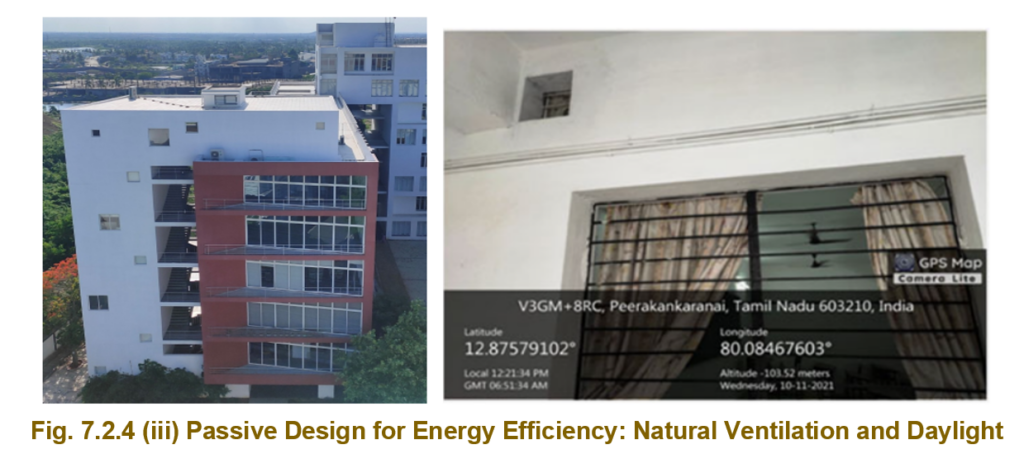
Innovation in building design is another pillar of our strategy. By enhancing daylighting and natural ventilation, we reduce reliance on artificial lighting and mechanical cooling, while improving indoor environmental quality. Together, these efforts create a healthier, more resilient campus that serves as a model for sustainable living and learning.
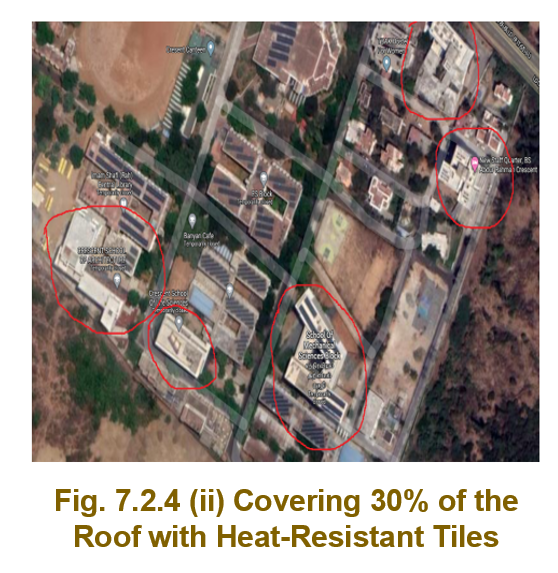
BSACIST has adopted a targeted roofing strategy that prioritizes both comfort and energy efficiency. By covering 30% of the roof with heat-resistant tiles and high SRI (Solar Reflective Index) materials—SRI value 97—the campus minimizes heat absorption, reduces cooling loads, and enhances indoor thermal comfort. The heat-resistant tiles reflect infrared radiation while maintaining durable performance in harsh weather, contributing to a cooler roof surface and lower ambient temperatures. The high SRI of 97 means the roof reflects a large portion of solar energy rather than absorbing it, which translates to reduced heat transfer into interior spaces and energy savings for air conditioning. This approach complements other sustainability efforts on campus, supporting a cooler, more comfortable environment for students and staff while lowering energy consumption and associated emissions
C. Regular Energy Audit Drives Substantial Campus Savings at BSACIST
A Regular Energy Audit is in place at B.S. Abdur Rahman Crescent Institute of Science and Technology provides a solid foundation for an efficiency program aimed at substantially reducing campus energy consumption. The audit identifies key savings opportunities with an annual potential of 487,014 kWh, corresponding to about Rs. 4,011,685 in cost savings. Proposed investments for implementing various energy conservation measures (ECMs) total Rs. 15,950,000, with an average payback period of 48 months. This structured approach prioritizes immediate savings while aligning with the institute’s commitment to sustainability and renewable energy.
D.Technological Innovations and Infrastructure Upgrades
The plan embraces advanced technologies and strategic upgrades. Key initiatives include:
- A new 125 kWp rooftop plant is currently being installed on the New Hostel Block, to operate alongside the existing 650 kWp system. Together, these installations bring the campus’s total solar capacity to 775 kWp, enhancing clean and green energy generation
- Implementing solar water heating with a 39,500-liter capacity
- Replacing older air conditioning units with BEE 5-star rated models (117 units)
- Deploying variable frequency drives for pumps, cooling towers, and air handling units to enable real-time energy management based on occupancy
- Using AAC/Aerocon blocks, high-performance glazing, and energy-efficient roof configurations to reduce heat gain and cooling demand
E. Comprehensive Monitoring and Adaptive Strategies
BSACIST emphasizes continuous monitoring and adaptive management. Annual energy audits identify opportunities, and detailed metering supports real-time data collection and resource optimization. Initiatives such as motion-sensor lighting in computer science labs, staff cabins, and restrooms, along with natural ventilation strategies in classrooms and work areas, drive meaningful energy savings. The use of low-VOC materials, biodegradable cleaning chemicals, and high-reflectivity roofing further enhances energy conservation.
Comprehensive Energy Efficiency Strategy at BSACIST: Transforming Campus Sustainability
B.S. Abdur Rahman Crescent Institute of Science and Technology (BSACIST) has developed a comprehensive energy efficiency plan that goes beyond traditional conservation. The approach places sustainability at the center of building design, renovation, and administration. By pursuing multiple building-rating certifications—EDGE, IGBC, and LEED—BSACIST ensures that both existing and new structures meet stringent energy-efficiency standards. The plan presents a holistic strategy that includes sustainable design features, efficient waste management, and cutting-edge technologies to minimize campus-wide energy use.
Research and Collaborative Sustainability Initiatives
The energy strategy extends into research and collaboration. BSACIST supports R&D in energy-efficient renovation and building technologies and actively pursues national and international partnerships to access green-building technologies. Student volunteer programs and technology-transfer activities engage local communities, government bodies, and NGOs, helping disseminate energy-efficient practices. The ultimate aim is to achieve net-zero energy on campus and to serve as a model for sustainable institutional development.
Future-Oriented Sustainability Vision
BSACIST’s energy efficiency strategy reflects a forward-looking commitment to environmental stewardship. By integrating advanced technologies, sustainable design, and collaborative research, the institute has built a holistic framework for reducing energy consumption. The plan addresses immediate conservation needs and establishes a benchmark for sustainable practices in higher education. Continued investment in these approaches reinforces BSACIST’s role as an environmentally responsible campus for current and future generations.
A.BSACIST Energy Management: External Audit-Driven Self-Assessment and Roadmap for a Resilient, Energy-Efficient Campus
B.S. Abdur Rahman Crescent Institute of Science and Technology, adopts a proactive, self-analytic approach to energy management, enhanced by an external Energy Audit. The institute commissioned an independent assessment to validate its energy landscape while preserving data ownership. The audit evaluated key systems—lighting, HVAC, motors, pumping, DG sets, and rooftop solar—along with utility bills and transformer loading, establishing a credible baseline and prioritized savings opportunities.
This external review catalyzes BSACIST’s ongoing energy performance improvements. It translates usage and peak-demand patterns into quantified ECMs with clear savings and payback, enabling phased investment and informed decision-making. By integrating the auditor’s findings with internal data and operations, BSACIST can verify savings, monitor progress with dedicated meters, and align initiatives with sustainability goals, including renewable energy integration and carbon reduction. This collaboration underscores the university’s leadership in responsible energy management and a path toward a more resilient, energy-efficient campus.
Actionable Measures for Energy Conservation
The energy efficiency plan encompasses a range of actionable measures, including the replacement of Fluorescent Tube Lamps (FTL) with energy-efficient LED lamps, which alone can save 19,200 kWh annually. Other significant initiatives include rectifying solar water heaters in the ladies’ hostel, upgrading existing air conditioning units to 5-star rated split ACs, and replacing conventional ceiling fans with energy-efficient Brushless DC electric motor fans. Each of these measures has been meticulously calculated to ensure substantial reductions in energy consumption while maintaining comfort and operational efficiency across the campus facilities.
ESM. No | Energy Saving Measures | Annual Savings | Investment | Payback | |
kWh | Rs. | Rs. | Months | ||
Short-Term Payback | |||||
1 | Replace FTL Lamps with LED and reduce power consumption | 9,600 | 97,920 | 60,000 | 7 |
2 | Improve Solar roof top panel generation efficiency | 1,76,012 | 14,08,096 | 10,00,000 | 9 |
Long-Term Payback | |||||
3 | Replace conventional ceiling fans with BLDC fans | 25,200 | 2,57,040 | 7,00,000 | 33 |
4 | Replace old Window AC with Energy Efficient 5 star rated split AC | 1,33,650 | 13,63,230 | 54,45,000 | 48 |
5 | Replace street light with solar power light and reduce power consumption | 657 | 6,701 | 30,000 | 54 |
6 | Explore roof top solar PV possibility to generate electrical energy | 2,18,400 | 17,47,200 | 84,00,000 | 58 |
Summary of Savings | |||||
Annual | Total Savings & Investment and Average Payback | 5,63,519 | 48,80,187 | 1,56,35,000 | 38 |
Total kWh Savings in Percentage | 11 | ||||
Total Cost Savings in Percentage | 10 | ||||
Total CO2 reduction in Tons | 410 | ||||
Enhancing Energy Management Through Monitoring
Additionally, the audit highlights the importance of monitoring and controlling energy usage through the installation of dedicated energy meters and a demand controller. These systems will provide real-time data on energy consumption, enabling the management to make informed decisions about energy usage patterns and identify further opportunities for savings. By actively managing demand and optimizing energy consumption, the institute can avoid penalties associated with exceeding contract demand, thereby enhancing overall financial efficiency.
Towards a Sustainable Future: A Commitment to Energy Efficiency
In conclusion, the energy efficiency plan at Crescent Institute is a comprehensive strategy that not only aims to reduce energy consumption but also fosters a culture of sustainability within the campus community. By implementing these measures, the institute is poised to make significant strides toward achieving its renewable energy goals while setting a benchmark for energy efficiency in educational institutions across the region. The commitment to continuous improvement and innovation in energy management will ultimately contribute to a greener and more sustainable future for the institute and its stakeholders.
The energy audit report for Crescent Institute of Science & Technology conducted by SLR Industrial Solutions provides a comprehensive analysis of energy consumption and identifies areas of energy waste. Here’s a synthesized summary based on the report, focusing on energy wastage identification
B. The Gist of the Audit Report is provided in the following sections.
1.Overall Energy Consumption:
- The total annual energy consumption is approximately 42,73,653 kWh/ Annum, with significant contributions from air conditioning (54%), fans (14%), and lighting (8%).
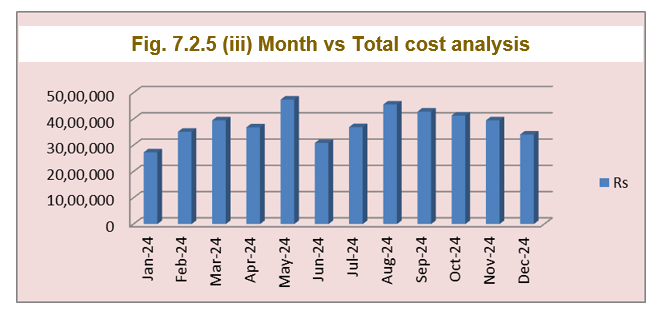
- The electricity bill amounts to Rs. 4,57,21,919 annually, indicating a high operational cost due to energy consumption.
Month Vs. Energy Consumption Analysis
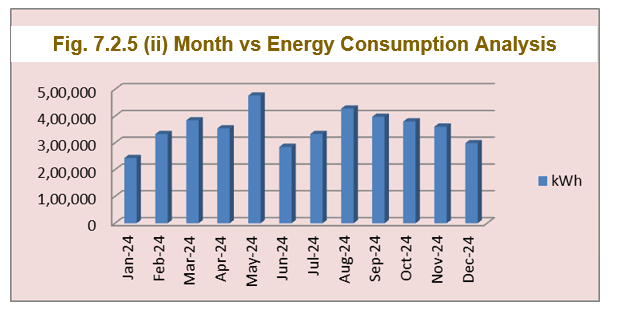
Power consumption is varied in months due to season variation.
Month vs. Total Cost Analysis
2.Key Areas of Energy Waste:
- Air Conditioning: The audit highlights that the air conditioning systems are a major source of energy consumption. Recommendations include maintaining set temperatures above 24°C and replacing old window AC units with energy-efficient 5-star rated split ACs.
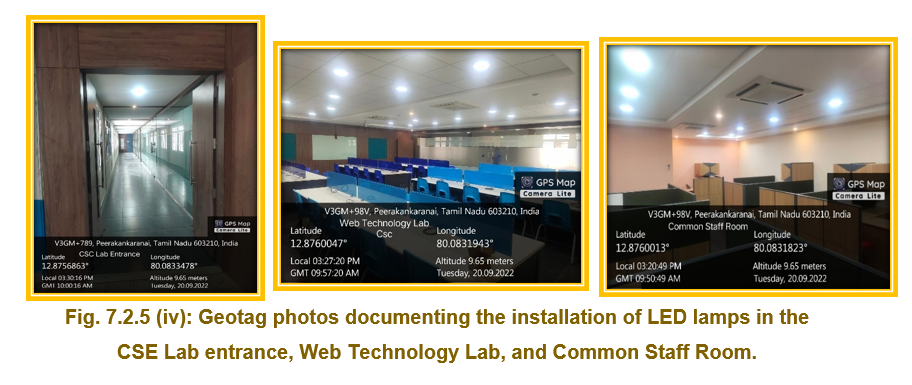
- Lighting: While 75% of lamps have been replaced with LED lights, there are still areas, such as the Men’s hostel and Canteen, where fluorescent tube lamps (FTLs) are in use. Replacing these with LEDs could save significant energy.
75% lamps are replaced with LED lamps to reduce energy consumption
SL NO | BUILDING | QTY | TOTAL WATTS | Operating Hours/day | kWh/day |
1 | AUDITORIUM | 206 | 4487 | 8 | 36 |
2 | SCIENCE BLOCK | 435 | 5684 | 12 | 68 |
3 | AERO BLOCK | 573 | 6964 | 12 | 84 |
4 | MAIN BLOCK | 382 | 6252 | 12 | 75 |
5 | MBA BLOCK | 123 | 2597 | 12 | 31 |
6 | FIRST YEAR BLOCK | 217 | 4305 | 12 | 52 |
7 | LIFE SCIENCE BLOCK | 108 | 2828 | 12 | 34 |
8 | NEW STAFF QUARTERS | 383 | 5135 | 12 | 62 |
9 | LADIES HOSTEL | 664 | 8359 | 12 | 100 |
10 | CAMPUS STREET LIGHT | 286 | 8570 | 12 | 103 |
11 | MEDICAL | 35 | 589 | 12 | 7 |
12 | PHARMACY | 143 | 2575 | 12 | 31 |
13 | GM OFFICE | 47 | 910 | 8 | 7 |
14 | MAIN CANTEEN | 45 | 1042 | 12 | 13 |
15 | VC OFFICE | 100 | 620 | 8 | 5 |
16 | VC VILLA | 51 | 571 | 12 | 7 |
17 | GUEST HOUSE | 37 | 680 | 12 | 8 |
18 | DRIVERS CABIN | 8 | 120 | 12 | 1 |
19 | OLD STAFF QUARTERS | 53 | 1005 | 12 | 12 |
20 | SPORTS LIGHTING | 64 | 12800 | 8 | 102 |
21 | HR OFFICE | 27 | 500 | 8 | 4 |
22 | PARANTS WAITING HALL | 12 | 166 | 8 | 1 |
24 | NEW ARCHITECTURE BLOCK | 614 | 10808 | 12 | 130 |
25 | CIVIL YARD CLASS ROOMS | 40 | 650 | 12 | 8 |
26 | CSB ROOM MENS HOSTEL | 47 | 780 | 12 | 9 |
27 | ROBOTICS LAB | 22 | 280 | 12 | 3 |
28 | RESEARCH SCHOLAR ROOM CHEMISTRY | 4 | 144 | 12 | 2 |
29 | FOOD WASTE MANAGEMENT PLANT | 26 | 640 | 12 | 8 |
30 | SOLAR STREET LIGHT | 10 | 250 | 12 | 3 |
31 | MENS HOSTEL | 1007 | 13219 | 12 | 159 |
32 | MBA PHASE 1 | 49 | 595 | 12 | 7 |
33 | MBA PHASE 2 | 170 | 3108 | 12 | 37 |
34 | COMPUTER SCIENCE LAB | 51 | 690 | 12 | 8 |
35 | PURCHASE OFFICE (EO) | 2 | 30 | 8 | 0 |
36 | CIIC BLOCK | 328 | 5479 | 12 | 66 |
37 | CIIC 2ND FLOOR STUDIO | 13 | 225 | 12 | 3 |
38 | DRAWING HALLS & LABS(MECH) | 60 | 709 | 12 | 9 |
39 | CANTEENS | 119 | 1984 | 12 | 24 |
40 | OUTDOOR LIGHTING | 63 | 1306 | 12 | 16 |
TOTAL | 6624 | 117,656 |
| 1,334 | |
- Pumps and Blowers: The existing pumps are noted to be old and inefficient. The report suggests replacing them with energy-efficient models to reduce power consumption. Similarly, the STP blowers are recommended for replacement with more efficient tri-lobe blowers.
3. Renewable Energy Utilization:
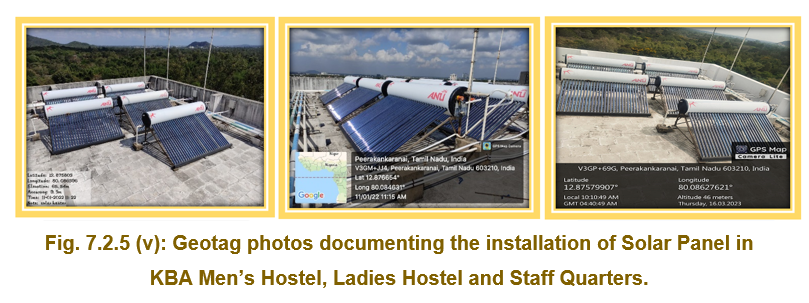
- The report indicates that the solar water heaters in the ladies’ hostel are not operational, leading to reliance on electric heaters. Rectifying these systems could reduce energy waste.
- The solar rooftop panels are underperforming due to some panels being non-functional. Addressing these issues could enhance energy generation and reduce dependency on grid electricity.
4. Demand Management:
- The report identifies that the maximum recorded demand has exceeded the contract demand, leading to demand penalties. Implementing a demand controller could help manage peak loads and avoid penalties.
5. Energy Conservation Measures (ECMs):
- The audit outlines several ECMs with potential savings:
- Replace FTLs with LEDs: Estimated savings of 19,200 kWh annually.
- Rectify solar water heaters: Potential savings of 20,930 kWh annually.
- Replace old ACs with energy-efficient models: Estimated savings of 45,000 kWh annually.
- Install demand controllers: Savings of 21,120 kWh annually.
- The audit outlines several ECMs with potential savings:
The energy audit report reveals significant opportunities for energy savings at B.S. Abdur Rahman Crescent Institute of Science & Technology. By focusing on the identified areas of high energy consumption, such as air conditioning, lighting, and inefficient pumps, and by implementing the recommended energy conservation measures, the institute can substantially reduce energy waste, lower operational costs, and enhance sustainability. Regular energy reviews and monitoring will be essential to track progress and ensure continued energy efficiency improvements.
A. Statement of Policy
Issue: 04; Revised on 2023
| Policy Created on | July 2009 |
| 1st Revision amended on | IQAC Meeting held on 27th October 2017 |
| 2nd Revision amended on | IQAC Meeting held on 31st March 2021 |
| 3rd Revision amended on | IQAC Meeting held on 16th June 2023 |
Responsible Executive : Director (IQAC)
Responsible Office : Internal Quality Assurance Cell, Estate Office, and SDG Cell
Contacts : Registrar, Director (IQAC)
7.1 STATEMENT OF POLICY
The B.S. Abdur Rahman Crescent Institute of Science and Technology is committed to divesting from carbon-intensive energy industries, particularly coal and oil, to promote sustainable energy practices and contribute to the global efforts to combat climate change. This policy aims to:
- Ensure universal access to affordable, reliable, and modern energy services.
- Increase substantially the share of renewable energy in the global energy mix.
- Double the global rate of improvement in energy efficiency.
- Enhance international cooperation to facilitate access to clean energy research and technology.
- Promote investment in energy infrastructure and clean energy technology.
7.2 REASON FOR THIS POLICY
This policy is established to minimize the Institute’s carbon footprint by reducing investments in fossil fuels and promoting renewable energy sources. By divesting from carbon-intensive industries, the Institute aligns with the United Nations’ Sustainable Development Goals, particularly SDG 7: Affordable and Clean Energy, and supports the transition to a sustainable energy future.
7.3 RESPONSIBILITIES
7.3.1 Policy Principles
The Institute shall implement the following principles to ensure effective divestment from carbon-intensive energy industries:
- Conduct a comprehensive review of current investments to identify carbon-intensive assets.
- Gradually divest from all investments in coal and oil industries within a specified timeframe.
- Reallocate funds towards renewable energy projects and sustainable technologies.
- Collaborate with financial institutions that prioritize sustainable investment practices.
- Promote transparency in investment decisions and publicly report on divestment progress.
- Engage with stakeholders, including students and faculty, to raise awareness about the importance of divestment from fossil fuels.
- Support research and development initiatives focused on clean energy technologies.
7.3.2 Dissemination of Policy
- This policy shall be publicly accessible on the Institute’s website to ensure transparency.
- Awareness programs shall be conducted regularly for all stakeholders regarding the importance of divestment from carbon-intensive industries.
- Updates on divestment progress shall be communicated through newsletters and reports.
7.3.3 Enforcement of Policy
- The Director (Finance) and their team are responsible for monitoring compliance with this policy and reporting on divestment progress.
- Any breach of this policy may result in a review of investment strategies and potential disciplinary actions as prescribed by the Institute’s code of conduct.
B. Promotion and Implementation of Energy-Efficient Renovation and Building Policy
The B.S. Abdur Rahman Crescent Institute of Science and Technology (BSACIST) has established a comprehensive policy to ensure that all renovations and new constructions on campus adhere to stringent energy efficiency standards. This commitment is encapsulated in the Policy for Energy-Efficient Renovation and Building, which outlines the institute’s dedication to sustainable practices and aligns with global efforts to combat climate change.
Existence of Policy
The policy’s existence is clearly articulated in the Policy for Upgrading Buildings document, which emphasises the institute’s commitment to energy efficiency in all construction and renovation projects. The policy mandates that all new buildings and renovations comply with recognised energy efficiency standards, such as EDGE, IGBC, and LEED. This ensures that the institute meets regulatory requirements and sets a benchmark for sustainable development in the educational sector.
Evidence Provided
Evidence of the policy’s implementation is demonstrated through various initiatives and projects undertaken by BSACIST. The institute has successfully installed multiple rooftop solar photovoltaic power plants with a total capacity of 650 kWp, significantly contributing to its energy requirements while reducing dependence on conventional energy sources. Additionally, the establishment of solar water heating systems with a capacity of 39,500 litres and solar street lighting projects further exemplifies the practical application of the policy. These initiatives enhance energy efficiency and serve as a model for other institutions aiming to achieve similar sustainability goals.
Moreover, comprehensive simulation studies conducted for various buildings indicate potential energy consumption reductions of up to 10.5%, showcasing the effectiveness of the implemented energy-efficient technologies. Integrating advanced materials, such as AAC (Autoclaved Aerated Concrete) blocks and high-performance glass, further supports the institute’s commitment to reducing energy consumption.
Public Accessibility of Evidence
The evidence supporting the policy’s implementation is publicly accessible, as the policy document is available on the institute’s website. This transparency ensures that stakeholders, including students, faculty, and the community, are informed about the institute’s energy efficiency and sustainability commitment. Furthermore, regular awareness programs and workshops are conducted to engage the community and promote energy-efficient practices, reinforcing the institute’s role as a leader in sustainable development.
Policy Review Period
The policy has undergone revisions to remain relevant and effective, with the most recent review occurring in 2023. This continuous improvement process reflects the institute’s proactive approach to adapting to new challenges and advancements in energy efficiency technologies. The policy’s history indicates a commitment to evolving practices, with previous revisions made in 2017 and 2021, ensuring that the institute stays at the forefront of sustainable building practices.
Summary
In summary, BSACIST’s policy for upgrading buildings to higher energy efficiency standards is a robust framework that promotes sustainable practices and provides tangible evidence of its implementation. The institute’s commitment to energy-efficient renovations and new constructions is evident through its various projects, public accessibility of policy documents, and regular reviews, ensuring alignment with contemporary sustainability goals. By fostering a culture of sustainability and innovation, BSACIST sets a precedent for educational institutions and contributes significantly to global efforts in combating climate change. Integrating innovative technologies and comprehensive energy management strategies further solidifies the institute’s role as a leader in sustainable practices within higher education.
Table VII – 1: Promotion / Implementation/ Evidence of Policy of Energy Efficient & Divestment Policy
| Upgrade buildings to higher energy efficiency. | https://crescent.education/iqac-csi-sdg7-722-2023-24/ |
| Carbon reduction and emission reduction process | https://crescent.education/iqac-csi-sdg7-723-2023-24/ |
| Plan to Reduce Energy Consumption | https://crescent.education/iqac-csi-sdg7-724-2023-24/ |
| Energy waste identification | https://crescent.education/iqac-csi-sdg7-725-2023-24/ |
| Local community outreach | https://crescent.education/iqac-csi-sdg7-741-2023-24/ |
| Renewable Energy Pledge | https://crescent.education/iqac-csi-sdg7-742-2023-24/ |
| Energy efficiency services for the industry | https://crescent.education/iqac-csi-sdg7-743-2023-24/ |
| Policy – Clean Energy Technology | https://crescent.education/iqac-csi-sdg7-744-2023-24/ |
| Low–carbon innovation | https://crescent.education/iqac-csi-sdg7-745-2023-24/ |
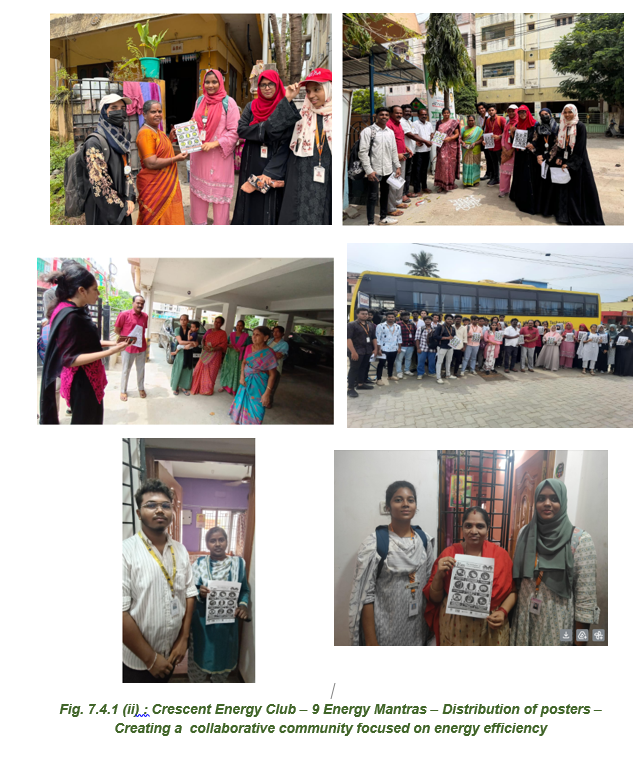
The Crescent Energy Club, in association with IGEN (The Institution of Green Engineers) an NGO, organized the ENERGY99 awareness program at Mannivakkam Village with the objective of promoting energy conservation and sustainable living. The initiative aimed to empower the local community by introducing the “9 Energy Mantras”, which provide simple and practical ways to reduce energy usage, lower electricity expenses, and contribute to environmental protection.
As part of the outreach, the team visited over 100 households, directly engaging with residents and educating them on energy-efficient practices. Through interactive discussions and demonstrations, villagers were encouraged to adopt small but impactful changes to support resource conservation and climate action.
This initiative helped strengthen community awareness on sustainability and highlighted the role of responsible energy use in achieving a greener future
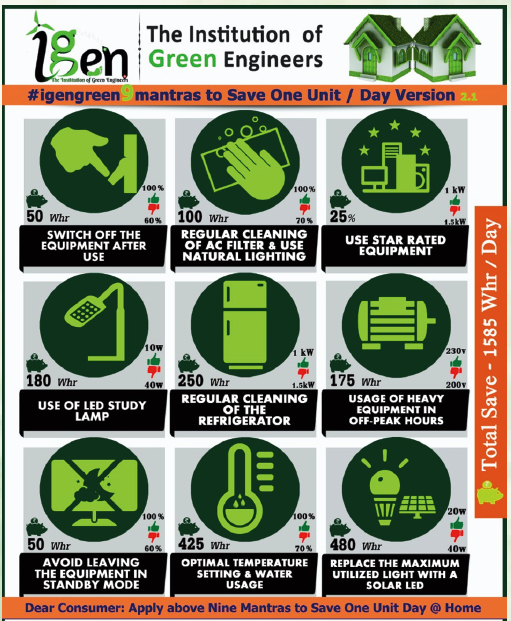
Fig. 7.4.1 (i) – Crescent Energy Club – 9 Energy Mantras designed to reduce energy consumption and lower electricity costs
The club’s outreach efforts extend beyond mere education; they actively involve community members in various activities. This interactive approach not only raises awareness but also builds a network of individuals committed to environmental conservation, demonstrating the club’s dedication to creating a collaborative community focused on energy efficiency.
Impact and Future Directions
The outcomes of these outreach programs are significant, as they lead to increased knowledge and awareness of clean energy practices among community members. The Crescent Energy Club’s initiatives have inspired many to adopt energy-efficient habits, contributing to a broader movement towards sustainability. Looking ahead, the club plans to continue its efforts by organizing more educational events and workshops, ensuring that the local community remains engaged and informed about the importance of energy efficiency and clean energy solutions. Through these ongoing initiatives, the Crescent Energy Club aims to create lasting change and promote a culture of sustainability within the community.
B.Campus-to-Community: Local Outreach for Energy Efficiency – ECOZEST 2.0 (25th September 2024)
The Ecozest 2.0 event aims to promote energy-conscious behavior and practical sustainability practices among the local community, with a broader emphasis on clean energy awareness and community empowerment.
The ECOZEST 2.0 initiative, organized under the Crescent Energy Club at BS Abdur Rahman Crescent Institute of Science & Technology, was designed to advance by fostering the local community outreach and promoting energy efficiency. The program, themed “Innovate – Inspire – Impact,” sought to transform energy efficiency concepts into tangible practices through a sequence of integrated activities that combine knowledge dissemination, applied learning, and community engagement. Central to the outreach strategy was the Seminar on the Role of Engineers in Climate Action, which situates energy transitions, efficiency improvements, and renewable energy adoption within the broader responsibilities of engineers as agents of sustainable development. This theoretical foundation was complemented by hands-on workshops and interactive sessions that translated conceptual understanding into practical competencies, enabling participants to explore resource efficiency, waste reduction, and sustainable design principles in a campus and community context.
The ECOZEST 2.0 emphasizes
SDG 7: Affordable and Clean Energy
Engineers plays a crucial role in shaping the future of energy systems. Through discussions and activities conducted in Ecozest 2.0, students gain insights into:
- Transitioning toward renewable and clean energy sources
- Improving energy efficiency through technological innovation
- Developing sustainable energy solutions for communities
This nurtures the next generation of engineers to contribute to a low-carbon future.
SDG 13: Climate Action
Climate change mitigation requires collective participation and technical expertise. By focusing on:
- Climate action seminars
- Tree-planting awareness
- Waste-to-resource initiatives
- Seed ball making workshop
Outreach activities were deliberately crafted to be participatory and interdisciplinary, leveraging competitions and creative workshops to embed energy-conscious behaviors. Activities such as seed ball making and upcycling campaigns were designed to illustrate the broader principles of material efficiency, circular economy, and energy-aware decision-making, linking micro-initiatives to macro-environmental benefits. These experiences reinforced the message that energy efficiency is not solely a technical concern but a social practice requiring engagement across diverse stakeholder groups. The event’s promotional materials consistently emphasized renewable energy awareness and sustainable practices, reinforcing the notion that energy efficiency is a shared engineering responsibility with meaningful implications for local communities.
Implementation and leadership were structured through clear governance and accountable delivery mechanisms. The Ecozest 2.0 program was organized by the Crescent Energy Club, with leadership roles spanning the Dean of Student Affairs, Chief Proctor, Faculty Coordinator, and Club President, ensuring organizational continuity, logistical coordination, and academic relevance. The involvement of a notable external member, Mr. Dinesh S.P (Founder of Seerakku/Mzoid), as chief guest, provided a real-world lens on energy and climate action, bridging academic discussions with industry perspectives and emphasizing pathways from theory to practice. This leadership configuration supported a programmatic flow from ideation to execution, with supervisory oversight ensuring alignment with institutional goals, student development objectives, and community impact aspirations.
In terms of impact, the ECOZEST 2.0 outreach connected SDG 7 (Affordable and Clean Energy) and SDG 13 (Climate Action) through curated content focused on energy transitions, energy efficiency, and sustainable engineering solutions. The event created opportunities for participants to internalize the link between engineering education and climate-resilient development, highlighting how technical competencies in energy systems, renewable integration, and efficiency optimization can translate into practical actions within campus operations and local communities. While the campus-centric nature of the activities fostered a controlled environment for experimentation and learning, the program’s design explicitly recognized the potential for scalable community outreach beyond the campus, suggesting pathways for knowledge transfer, student-led service projects, and partnerships with local organizations to magnify impact. The outreach activities thus served as a catalyst for cultivating energy-conscious mindsets, problem-solving creativity, and a sense of social responsibility among participants, with the anticipation that engaged students would translate their learning into concrete action in both campus and nearby communities.
The event identifies several cross-cutting links to broader sustainability objectives. By addressing energy transitions and efficiency, the initiative contributed to SDG 7’s targets related to access to affordable, reliable, sustainable, and modern energy services, while the climate-focused seminars and projects aligned with SDG 13 by promoting mitigation and adaptation awareness. The local community emphasis, though primarily campus-based, underscored the potential for extrapolating energy efficiency principles to neighborhood and municipal contexts through student-driven outreach, service learning, and collaborations with local partners. This alignment illustrates how higher education institutions can serve as incubators for practical, scalable energy solutions that benefit broader society.
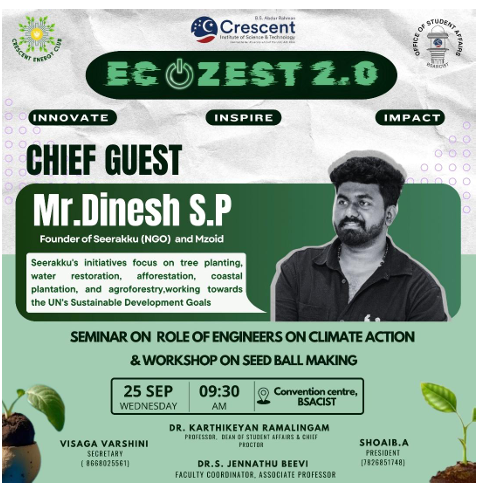
Fig. 7.4.1 (iii) : Poster – ECOZEST 2.0
ECOZEST 2.0 represents a deliberate and structured approach to local community outreach for energy efficiency within a university setting, employing a blend of theoretical exploration, experiential learning, and strategic partnerships to cultivate an energy-conscious culture. While the campus focus provides a ready environment for experimentation and learning, the initiative recognizes and articulates the potential for extending its benefits to local communities through scalable outreach, student-led projects, and collaborative engagements with external stakeholders. The program thereby advances SDG by translating engineering education into practical, community-oriented energy efficiency actions, while laying a foundation for enhanced measurement, accountability, and expansion in future iterations.
C. Community Outreach for Renewable Energy Adoption and Environmental Impact Reduction (SMaGEES 2024)
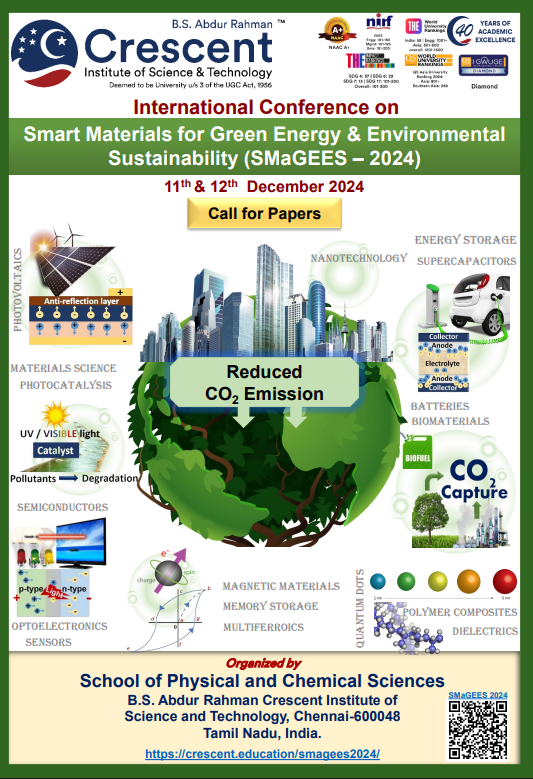
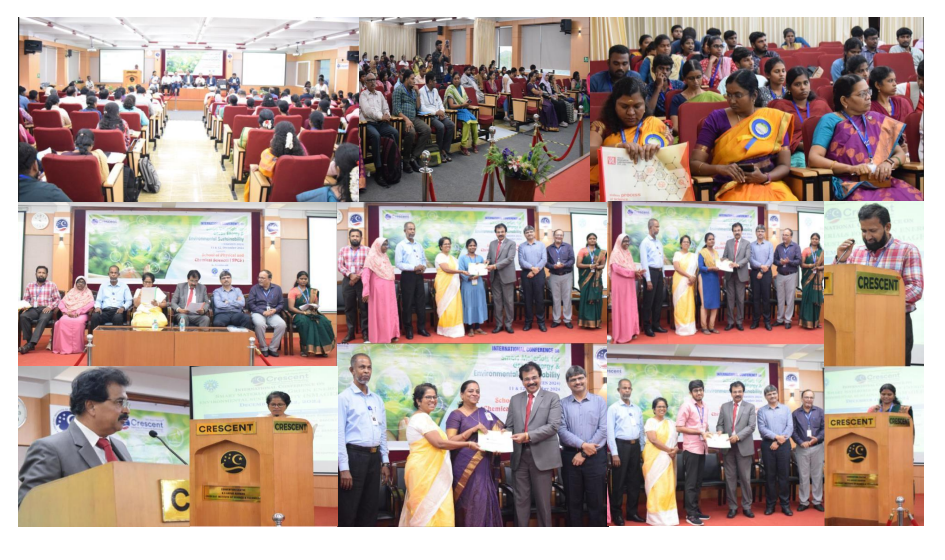
The SMaGEES 2024 an International conference, hosted by the B.S. Abdur Rahman Crescent Institute’s School of Physical and Chemical Sciences, demonstrates the pivotal role universities can play in bridging research and community action to accelerate renewable energy adoption and reduce environmental impacts. With ~300 participants from education community and industry community over two days, the event showcased advances in smart materials, energy storage, and sustainable technologies, emphasizing direct university outreach to local and regional communities. While the conference effectively disseminated knowledge and fostered networking, it also highlighted opportunities to strengthen the measurement of community impact, formalize partnerships, and document scalable demonstrations that translate campus-level innovations into neighborhood- and municipal-scale energy improvements.
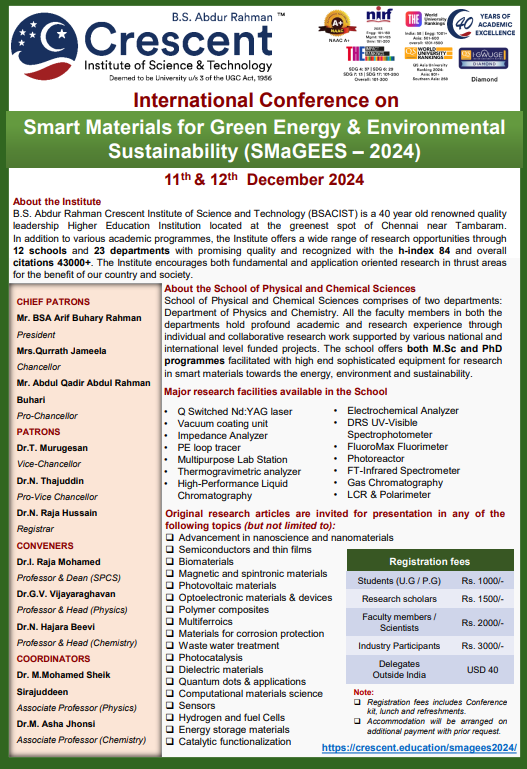
Purpose and scope:
To illuminate how universities can
(a) promote renewable energy adoption,
(b) reduce environmental footprints through community-oriented outreach, and
(c) operationalize findings from smart materials and green energy research into practical applications beyond campus.
Relevance to SDGs: Aligns with SDG 7 (Affordable and Clean Energy) and SDG 13 (Climate Action) by translating research into community benefits and building capacity for energy-efficient practices, renewable integration, and sustainable infrastructure within local contexts.
SMaGEES 2024, two-day gathering at BS Abdur Rahman Crescent Institute of Science and Technology, featuring keynote plenaries, technical talks, and demonstrations. The event underscored the need for universities to extend outreach activities beyond academic discourse to catalyze tangible energy transitions.
Structure and content: The conference offered a curated program across energy storage, electrode and material science, solar energy, green polymers, and sustainable construction materials, complemented by 12 keynote/invited talks and 110 oral/poster presentations. The program integrated demonstrations and industry sponsorships to facilitate knowledge transfer to local communities.
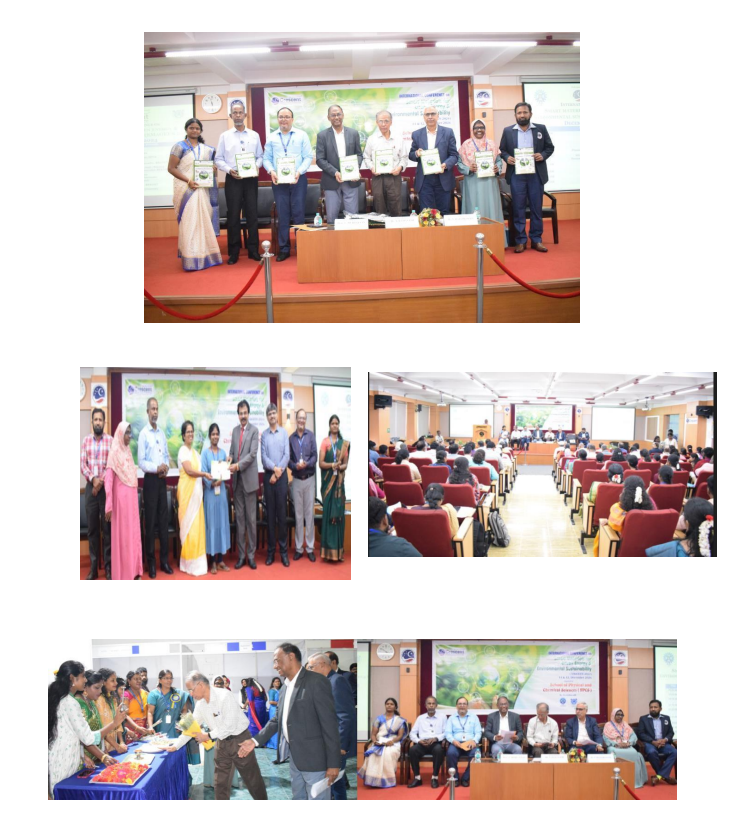
Leadership and governance: Organized by the School of Physical and Chemical Sciences with a leadership team including senior academic leaders (Dean, HoD) and associate professors. External voices included distinguished figures (e.g., Padma Bhushan Dr. T. Ramasami), lending credibility and enhancing outreach potential.
Outreach mechanisms: Hybrid dissemination through technical sessions, poster exhibitions, industry partnerships, and publicly accessible demonstrations designed to connect research outcomes with community needs. The sponsorship ecosystem (CSIR, state science bodies, corporate partners) signals a sustainable model for future outreach initiatives.
Thematic emphasis: Smart materials for green energy and environmental sustainability, with practical implications for energy efficiency, renewable energy deployment, storage solutions, and carbon reduction strategies.
Link to communities: Although primarily a research-forum, the conference provided pathways for knowledge transfer to local schools, NGOs, and industry partners. The presence of industry sponsors and regional bodies offers a platform for co-developed outreach programs, pilot implementations, and capacity-building activities within the surrounding communities.
Knowledge-to-action gap: While the event showcased cutting-edge science, explicit mechanisms to translate sessions into on-the-ground community actions require strengthening (e.g., follow-up programs, pilot projects, and scaled demonstrations).
Knowledge advancement: Accelerated diffusion of insights on energy materials, storage technologies, and sustainability practices among attendees, researchers, and practitioners.
Capacity building and networks: Expanded networks between universities, industry, NGOs, and local government entities, enabling potential collaborative outreach projects and technology deployments in communities.
A. Proclaiming a 100% Renewable Vision: BSACIST as a Regional Leader in Sustainable Energy Transition and Civic Stewardship
BS Abdur Rahman Crescent Institute of Science and Technology (BSACIST) undertook a strategic effort to publicly commit to a 100% renewable energy pledge beyond the university campus. Building on campus energy initiatives and community-facing outreach, the initiative positions BSACIST as a forward-looking leader in sustainable energy transition. The pledge frames renewable energy adoption as both an internal operational mandate and a civic duty to influence local partners, industry stakeholders, and neighbouring communities.
Crescent Energy Club Initiative for 100% Renewable Energy Adoption in the Community
The Crescent Energy Club of B.S. Abdur Rahman Crescent Institute of Science and Technology, is dedicated to promoting sustainable energy practices and fostering a community passionate about energy literacy and environmental stewardship. The club’s vision is to create a vibrant community that recognizes the critical role of sustainable energy in shaping the future. Its mission focuses on providing a platform for knowledge sharing, networking, and collaboration among individuals interested in energy-related fields. The club empowers its members to become leaders in the transition towards a clean and sustainable energy system through various initiatives and activities.
The extensive energy-club led activities and broader sustainability outreach associated with BSACIST’s Crescent Energy Club and The Institution of Green Engineers, IGEN. It includes public-facing campaigns.
100% Clean Energy, 100% Community: A Local Commitment to Renewable Power
BS Abdur Rahman Crescent Institute of Science and Technology (BSACIST) reinforces its commitment to a 100% clean energy future that extends beyond campus. This local pledge invites students, faculty, businesses, and residents to join in deploying scalable renewable solutions primarily solar and related technologies—that boost energy resilience, reduce emissions, and create local economic opportunities. By framing renewable energy adoption as both an institutional obligation and a community-wide responsibility, the initiative aims to mobilize collaboration, knowledge sharing, and practical action that collectively transform the energy landscape of the surrounding region.
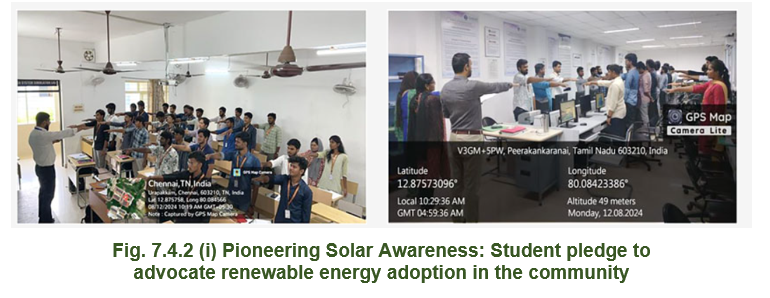
Pledge by the Students for Promoting Renewable Energy in the Community
- I pledge to prioritize renewable energy sources, with a focus on solar power, in my home, school, workplace, and community projects.
- I pledge to raise awareness about the benefits of renewable energy, including environmental protection, energy security, and long-term cost savings.
- I pledge to share practical steps for adopting solar energy, such as evaluating solar feasibility, selecting reputable installers, and understanding incentives and subsidies.
- I pledge to advocate for access to reliable solar energy for underserved communities and local villages, and to support equitable energy solutions.
- I pledge to encourage energy efficiency measures (insulation, efficient lighting, smart thermostats) to maximize the benefits of renewable energy.
- I pledge to promote transparent information on energy options, costs, and environmental impacts so communities can make informed choices.
- I pledge to engage with local policymakers, schools, and organizations to create pilot projects, solar demonstrations, and demonstration gardens.
- I pledge to monitor and report progress toward increased renewable energy use, including metrics like solar installations, energy savings, and emissions reductions.
- I pledge to foster collaboration among students, residents, businesses, and engineers to share knowledge and resources for renewable energy adoption.
- I pledge to model responsible usage, reduce waste, recycle solar equipment where possible, and encourage sustainable practices beyond energy use.
- I pledge to protect the community’s natural resources by promoting clean energy that minimizes pollution and preserves ecosystems for future generations.
- I pledge to commit to lifelong learning in renewable energy technologies and to mentor others who want to contribute to a cleaner energy future.
Powering Together: Building a Cleaner, Brighter Community with Renewable Energy
The Crescent Energy Club at BS Abdur Rahman Crescent Institute of Science and Technology organized an event highlighting the vital importance of renewable energy for a sustainable future. The program brought together students, faculty, and local stakeholders to discuss practical pathways for increasing community adoption of solar, wind, and other clean energy sources. Through expert talks, interactive demonstrations, and collaborative workshops, attendees explored how renewable energy can reduce emissions, create local jobs, and enhance energy resilience. The event reinforced BSACIST’s commitment to a 100% renewable energy future beyond campus and underscored the role of student-led initiatives in driving collective action toward a cleaner, brighter community.
Report on IGEN Green Day 2024
Organized by Crescent Energy Club
- S. Abdur Rahman Crescent Institute of Science & Technology
As part of Crescent’s ongoing commitment towards sustainability and the United Nations Sustainable Development Goals (SDGs), the Crescent Energy Club, in collaboration with The Institution of Green Engineers (IGEN), successfully organized IGEN Green Day 2024 on 22nd October 2024. The initiative aimed at motivating students to adopt responsible and climate-positive lifestyle changes within the campus and beyond.
The event encouraged students to take up Pledge4Green actions aligned with different SDGs including:
- SDG 7: Affordable & Clean Energy
- SDG 12: Responsible Consumption & Production
- SDG 13: Climate Action
- SDG 3: Good Health & Well-Being
- SDG 6: Clean Water & Sanitation
- SDG 15: Life on Land
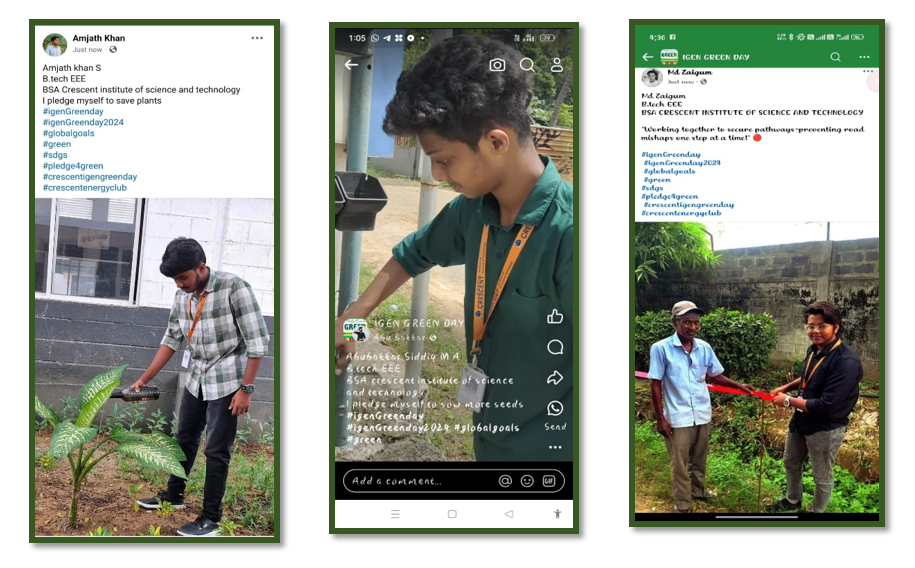
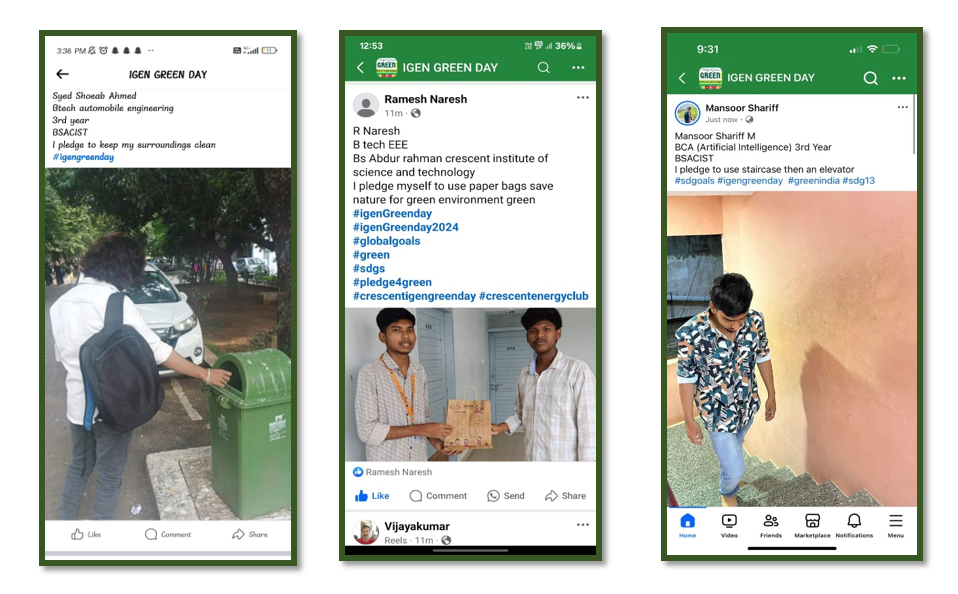
More than 120 students from B.S.Abdur Rahman Crescent Institute of Science and Technology (BSACIST) actively took pledges on the official IGEN platform and shared their commitments publicly. These included actions such as:
✔ Avoiding lift usage and using stairs to save energy
✔ Reducing single-use plastics
✔ Conserving water in daily usage
✔ Promoting clean mobility & cycling
✔ Supporting green campus initiatives
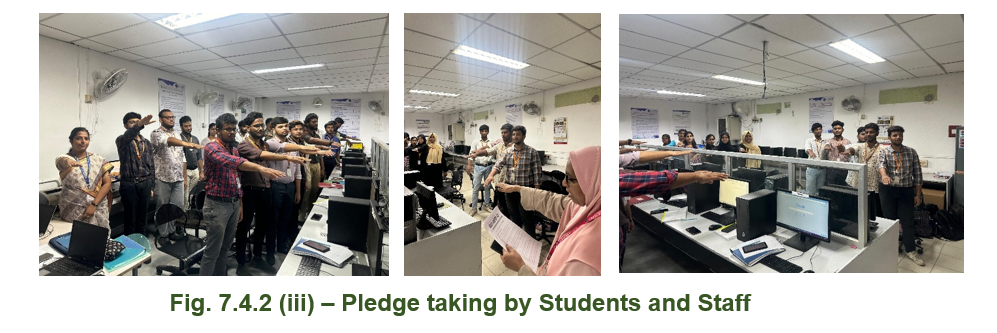
A briefing session was conducted to educate students on the importance of SDGs and their direct influence on climate mitigation efforts. Students then pledged their chosen eco-friendly habits and posted evidence through the IGEN Green Day portal and social channels.
This awareness program fostered a sense of responsibility among young engineers, making them active contributors toward achieving a sustainable, smart & carbon-neutral campus. The campaign will be continued in future semesters to strengthen Crescent’s visibility in SDG action platforms and community engagement.
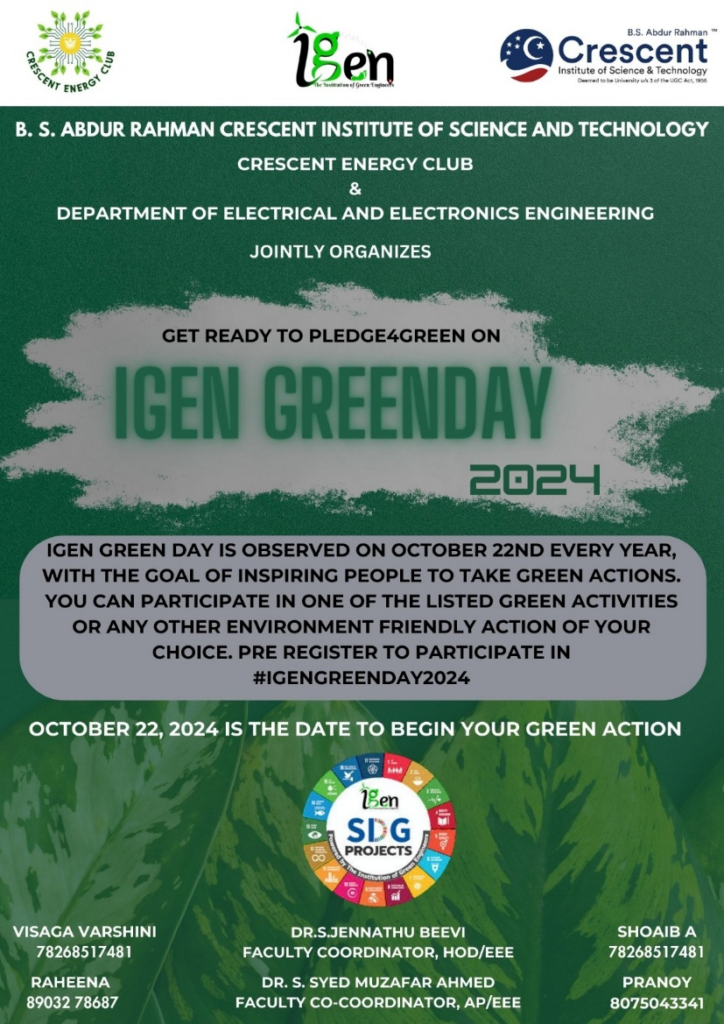
Fig. 7.4.2 (ii) – Poster : IGen Green Day 2024
From Roof to Grid: Commuxxnity Action for Renewable Energy Adoption
The Crescent Energy Club at BS Abdur Rahman Crescent Institute of Science and Technology (BSACIST) is driving a renewable energy future that reaches beyond campus boundaries. This initiative invites students, faculty, local businesses, and residents to join forces on scalable solar and other clean-energy solutions that boost resilience, reduce emissions, and spur local economic growth. By framing renewable energy adoption as both an institutional duty and a shared community responsibility, the program aims to foster broad participation, knowledge exchange, and practical actions that collectively transform the regional energy landscape.
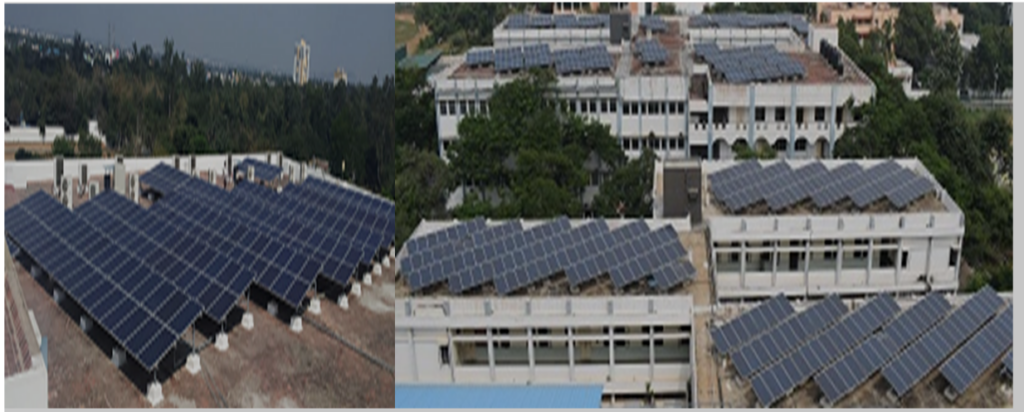
Fig. 7.4.2 (ii) Solar Power in Action: Crescent as a Beacon of Renewable Energy for the Community
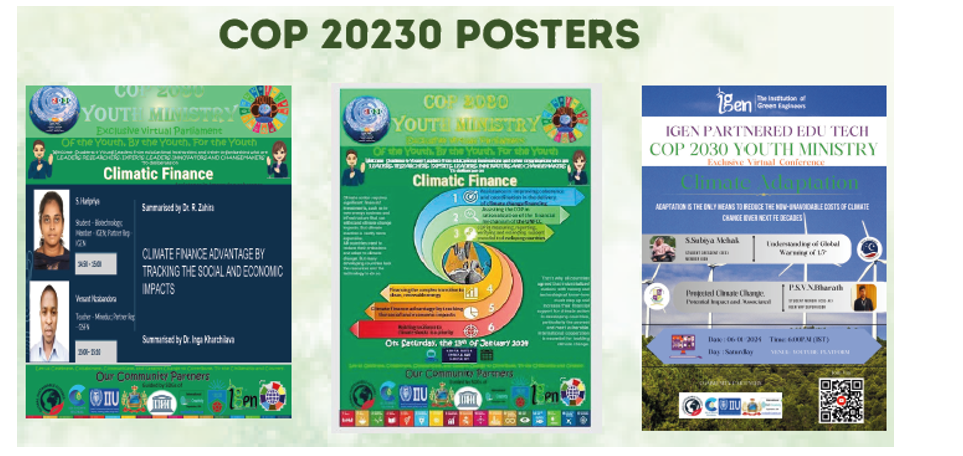
COP 2030 youth initiatives, G20 youth cabinet engagement, and energy-awareness programs.
A talk was presented by the Crescent Energy Club Speakers under the Weekly COP 2030 initiative, focusing on the importance of climate action and sustainable development. The session highlighted key objectives such as enhanced national climate action plans, phasing out coal, adopting nature-based solutions, and limiting global warming.
The discussion emphasized the significance of climate finance in supporting developing nations, promoting renewable energy transitions, improving transparency in climate initiatives, and strengthening resilience against climate challenges. The talk effectively raised awareness among students and encouraged them to contribute actively to global sustainability efforts.
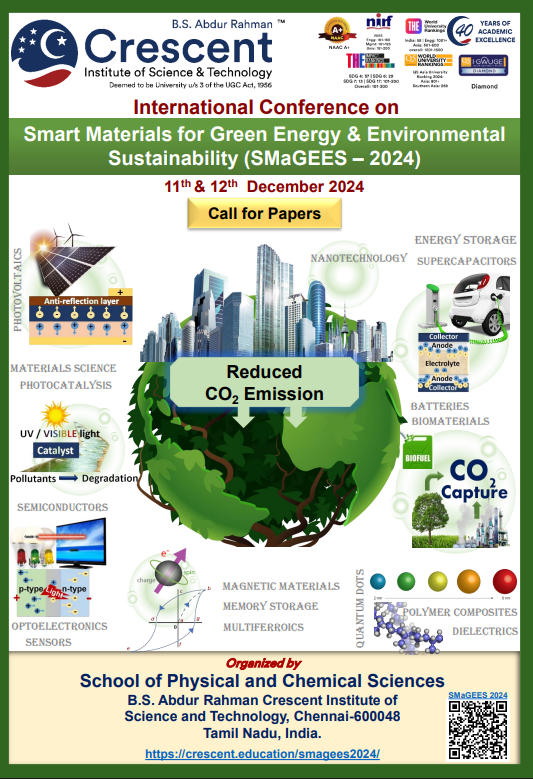
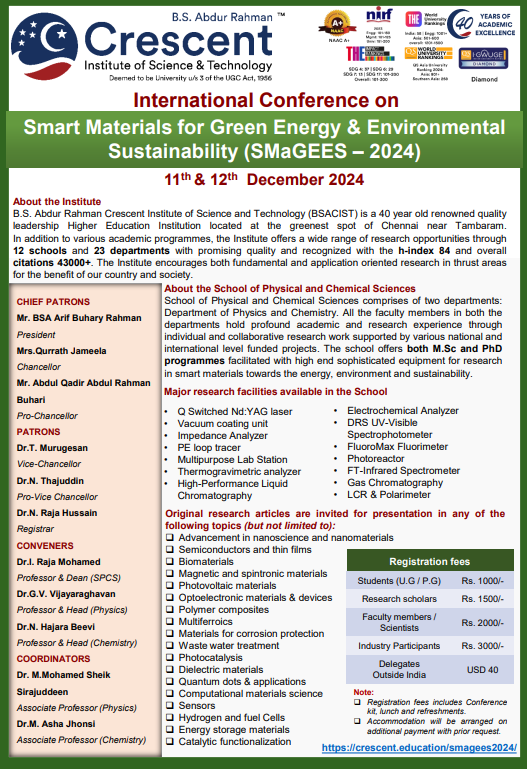
B.Community Outreach for Renewable Energy Adoption and Environmental Impact Reduction (SMaGEES 2024)
The SMaGEES 2024 an International conference, hosted by the B.S. Abdur Rahman Crescent Institute’s School of Physical and Chemical Sciences, demonstrates the pivotal role universities can play in bridging research and community action to accelerate renewable energy adoption and reduce environmental impacts. With ~300 participants from education community and industry community over two days, the event showcased advances in smart materials, energy storage, and sustainable technologies, emphasizing direct university outreach to local and regional communities. While the conference effectively disseminated knowledge and fostered networking, it also highlighted opportunities to strengthen the measurement of community impact, formalize partnerships, and document scalable demonstrations that translate campus-level innovations into neighborhood- and municipal-scale energy improvements.
BSACIST’s Commitment to Energy Efficiency Services for Industry: Seminars, Workshops, and Guest Lectures
BS Abdur Rahman Crescent Institute of Science and Technology (BSACIST) engages with industry partners and stakeholders to promote energy efficiency and sustainable practices through activities viz., seminars, workshops, and guest lectures across students and industry person reflecting a multidisciplinary approach to energy efficiency and related sustainability topics. The activities aim to disseminate knowledge, share best practices, and foster collaboration between academia and industry.

Energy Efficiency Education:
Provide seminars and workshops aimed at industry professionals and students to disseminate best practices in energy efficiency, waste management, and sustainable design.

Industry-Relevant Training:
Deliver hands-on and theory-based training aligned with industry needs, including corrosion techniques, solar power design, solid waste management, and green design principles.

Guest Lectures by Experts:
Host industry and academic leaders to share insights on current trends, technologies, and policy implications affecting energy efficiency and sustainability.

Cross-Disciplinary Outreach:
Engage multiple schools and departments of the institute to broaden impact and foster collaboration with industry.
ACTIVITIES
A. Technical Seminar on Durable Construction – Need for Corrosion Protection and Water Proofing
BSACIST’s Professor Dr. Haji Shaik Mohammed delivered a lecture focusing on the durability of recent buildings in Chennai. As the Dean of the School of Infrastructure at B.S. Abdur Rahman Crescent Institute of Science and Technology, Chennai, he addressed how coastal exposure and the marine environment heighten corrosion risks to reinforcement in concrete, with particular attention to water quality, moisture issues, and their impact on concrete and mortar performance, including reinforcement corrosion and efflorescence. He highlighted challenges with M-sand mortar adherence and higher water requirements, and proposed preventive strategies such as regular material testing (at source and on-site) for M-sand, cement, and rebars, anti-corrosive coatings on rebars (cement-polymer anticorrosive coating, CPAC) as a first line of defense, the addition of corrosion inhibitors to concrete, and the use of polymer-modified mortar/concrete for waterproofing terrace slabs and sunken areas. The lecture also covered practical procedures for applying CPAC and preparing polymer-modified concrete, emphasizing durability, proper storage of reinforcement, and ensuring a strong bond between steel and concrete.


Fig. 7.4.3 (i) Invitation for the Technical Seminar and Lecture Photo
B. Seminar on Solid waste management and its potential job opportunities
A seminar on “Solid waste management and its potential job opportunities” was organized by the Student Chapter of the Indian Plumbing Association (IPE), Department of Civil Engineering on 09.11.2023, 9.30 am at Seminar Hall for the benefit of III Year B.Tech Civil Engineering students.
Ms. Krishnapriya A. an environmental engineer and co-founder of Spreco Recycling Pvt. Ltd. She is a Certified Zero Waste Advisor, specializing in implementing sustainable practices and guiding organizations towards waste reduction goals. She briefed about ‘SPRECO’ which is a social enterprise being built by a group of young and vibrant professionals working towards creating an inclusive and formal waste management ecosystem.

C. Two-day workshop on Electrochemical Corrosion Techniques: Theory and Hands-on Training
A two-day workshop on “Electrochemical Corrosion Techniques: Theory and Hands-on Training” was organized by the Department of Civil Engineering, and Department of Chemistry, B.S. Abdur Rahman Crescent Institute of Science & Technology in association with AMPP India section (SZ) & NIIS (SZ) on 08.03.2024 and 09.03.2024.

D. Guest Lecture on Importance of Solid Waste Management in India
A Guest Lecture on “Importance of Solid Waste Management in India” was organized by ASCE Student Chapter, Department of Civil Engineering on 02.09.2024, at Seminar Hall for the benefit of III Year B.Tech Civil Engineering students, the future industrialists.

E. Guest Lecture on Green Design and Sustainability
A guest lecture on “Green Design and Sustainability” was organized by Department of Civil Engineering, School of Infrastructure on 19.08.2024 at Convention centre, B.S. Abdur Rahman Crescent Institute of Science and Technology for the benefit of final Year B.Tech students of School of Mechanical Sciences, School of Computer Information and Mathematical Sciences, School of Life Science, and School of Electrical and Communication Sciences. Dr. Kurian Joseph, Professor, Department of Environmental Engineering and the Director, the Centre for Climate Change and Disaster Management, College of Engineering, Guindy campus, Anna University, Chennai, delivered a keynote address.

Fig. 7.4.3 (v) Lecture by Dr.Kurian Joseph, Director, Centre for Climate Change and Disaster Management
F. Green Energy Awareness Workshop for Industry Employees
Organized by Crescent Energy Club
As part of its mission to foster sustainability and promote green energy practices beyond the academic community, the Crescent Energy Club, B.S.A. Crescent Institute of Science & Technology, successfully organized a Green Energy Awareness Workshop for the employees of Jayam Engineering Services, Karapakkam, Chennai, & Mega Solar Solutions, Chennai on 19th November 2024.
Objective
- To create awareness on the importance of green energy solutions in industrial operations
- To equip employees with practical knowledge on energy efficiency and clean energy adoption
- To encourage organizations to contribute towards the UN Sustainable Development Goals
Workshop Highlights
✔ Introduction to renewable energy sources and their growing role in industries
✔ Best practices for reducing power consumption in workplaces
✔ Insights into cost-effective implementation of solar energy and energy-efficient technologies
✔ Case examples demonstrating measurable environmental and economic benefits
✔ Interactive discussions to address workplace-specific sustainability challenges
The session was handled by faculty experts and student members of the Crescent Energy Club, who emphasized the relevance of energy conservation in combating climate change and reducing carbon footprints. Participants were motivated to implement small yet impactful energy-saving actions within their organization.
Impact & Outcome
- Enhanced awareness on clean energy adoption among industry workforce
- Strengthened academia–industry collaboration in sustainability initiatives
- Promoted SDG-aligned actions contributing to:
- SDG 7 – Affordable & Clean Energy
- SDG 12 – Responsible Consumption & Production
- SDG 13 – Climate Action
A Certificate of Appreciation was presented to Jayam Engineering Services & Mega Solar Solutions, Chennai acknowledging their positive response and active participation in the initiative.


Figure VII (4.3) – 1 : Certificate for the Employers of M/s. Mega Solar Solutions, Chennai
The event marked a significant step in extending Crescent’s sustainability mission to industries. Going forward, more such outreach programs will be conducted to support organizations in transitioning towards a greener, energy-efficient future.
B.S. Abdur Rahman Crescent Institute of Science and Technology actively informs and supports government efforts related to Clean Energy and Energy-Efficient Technology policy. The institute engages in research, policy analysis, stakeholder engagement, and capacity-building to influence policy development at local, regional, and national levels.
Research and Analysis
- Conducting interdisciplinary research on renewable energy integration, energy storage, grid modernization, and energy efficiency technologies.
- Producing policy briefs, white papers, and impact assessments to inform government decision-makers.
- Analyzing economic, environmental, and social implications of proposed energy policies.
Policy Engagement and Advocacy
- Participating in government committees, task forces, and public consultations on energy policy.
- Providing evidence-based recommendations to policymakers to advance clean energy adoption and energy efficiency standards.
- Organizing seminars, roundtables, and stakeholder dialogues with industry, academia, and government representatives.
Collaboration and Partnerships
- Establishing research partnerships with national laboratories, energy agencies, and industry players.
- Collaborating with universities and research institutes to share best practices in policy design and implementation.
- Supporting pilot projects and demonstration programs that showcase viable clean energy solutions.
Education and Capacity Building
- Developing curricula and training programs focused on renewable energy, energy systems, and sustainability.
- Offering continuing education and professional development for government officials, engineers, and policymakers.
- Building public awareness campaigns to educate citizens about energy conservation and clean energy options.
Data, Standards, and Evaluation
- Building data repositories and dashboards for energy consumption, generation, and policy impact metrics.
- Contributing to the development and harmonization of energy efficiency standards and measurement methodologies.
- Conducting impact evaluations to assess the effectiveness of implemented policies and programs.
Expected Impacts
- Informed policy decisions that accelerate the deployment of clean energy and improve energy efficiency.
- Strengthened collaboration between academia, government, and industry.
- Enhanced capacity of public institutions to design, implement, and monitor energy policies.
- Progress toward national and regional sustainable development goals related to energy access, affordability, and environmental protection.
Crescent Global Outreach Mission: R&D
I. Government Advisory Panel Members/Policy development (how the institution informs a supports government in policy development such as clean energy)
1.Member committee for TANSA from TamilNadu State Council for Science and Technology ( of TamilNadu), Chennai for the year 2024 & 2025 for Biological Sciences
2.Project Reviewer for Bioenergy related proposal submitted to Department of Biotechnology (DBT, Govt. of India)
3. Mentor for Idea Lab supported by All India Council for Technical Education (AICTE, Govt. of India)
II . A detail report CGOM consultancy and research projects relevant to the SDG
S.No | Title of the Project / Consultancy | Supporting Agency | Amount (Rs.) | SDGs |
1 | Development and Improving the Energy Storage of Li-based Devices using Reduced Graphene | NanoFold Inc., Bangalore, India | 97,00,000 | 7,9,11, 12,13 |
2 | Superbattery-Revolutionizing Next-Generation Energy Storage | TNSCST, Chennai | 90,000 | 7,9,11, 12 |
3 | Development and Fabrication of a High-Efficiency Solid-State Rechargeable Zinc-Sulfur Battery for Wearable Technology. | DST Nidhi Prayas | 6,00,000 | 3,7,9, 12,13 |
4 | Innovative Super capacitor for Energy Storage Solutions- from Modelling to Device Fabrication | CSM, BSACIST | 1,00,000 | 7, 9, 11, 12, 13 |
A. Continuous Ambient Air Quality Monitoring Station (CAAQMS) A Step Towards Sustainable Clean Energy Policy in Tamil Nadu
The Tamil Nadu Pollution Control Board, in collaboration with B.S. Abdur Rahman Crescent Institute of Science and Technology, inaugurated the Continuous Ambient Air Quality Monitoring Station (CAAQMS) on the institute’s campus. This initiative marks a significant advancement in the region’s efforts to monitor air quality and develop policies related to clean energy technology. The establishment of the CAAQMS is a crucial step towards understanding and managing air pollution, thereby supporting the broader goals of environmental sustainability.
This process underscores the collaborative commitment of governmental and educational institutions to enhance air quality monitoring, which is essential for informing effective clean energy and energy-efficient technology policies.
The CAAQMS will play a vital role in providing real-time data on air quality, which is instrumental in assessing the impact of various energy sources. This data will inform strategies aimed at transitioning from fossil fuels to cleaner alternatives, thereby supporting regulatory frameworks and engaging stakeholders in the importance of air quality management. Overall, the establishment of the CAAQMS represents a proactive approach to environmental governance and clean energy policy development.
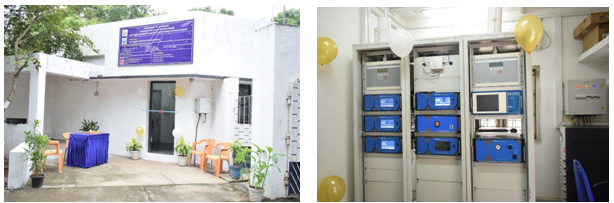
Figure 7.4.4 (i) : Continuous Ambient Air Quality Monitoring Station (CAAQMS)
B. Strategic Solar Infrastructure: BSACIST’s Comprehensive Energy Efficiency Approach
B.S. Abdur Rahman Crescent Institute of Science and Technology (BSACIST) has implemented a comprehensive strategy to upgrade existing buildings to higher energy efficiency through innovative renewable energy solutions. As part of its ‘Green Campus’ initiative, the institute has installed multiple rooftop solar photovoltaic power plants with a total capacity of 650 kWp, strategically positioned across various campus buildings. A new 125 kWp rooftop plant is currently being installed on the New Hostel Block, to operate alongside the existing 650 kWp system. Together, these installations bring the campus’s total solar capacity to 775 kWp, enhancing clean and green energy generation.
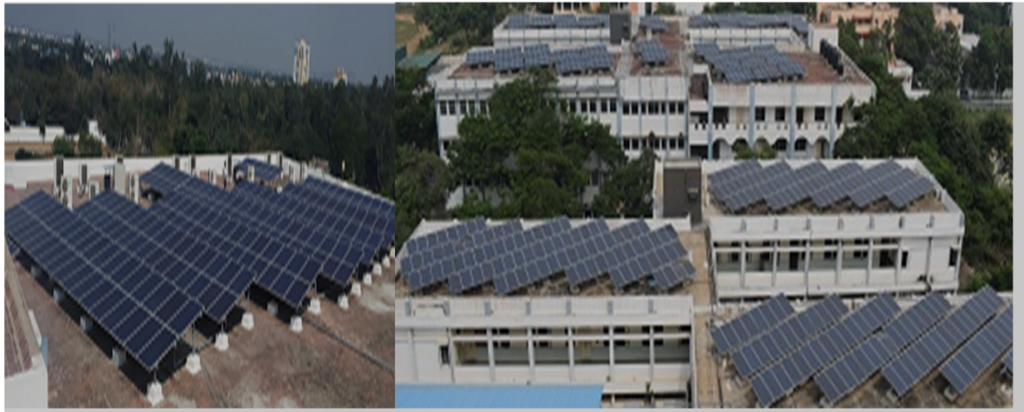
Figure 7.4.4 (ii) : Solar Panel Installed at Roof Top in Various Buildings
Quantifying Success: Solar Power Generation and Financial Savings
The solar power implementation has yielded significant energy efficiency improvements.
Plant | Units | Amount Saved |
150Kwp | 16,49,008 | 1,51,57,896 |
100kWp | 12,95,898 | 1,21,75,627 |
300kWp | 20,38,673 | 2,02,81,665 |
100kWp | 4,33,469 | 44,55,983 |
Total | 54,17,048 | 5,20,71,171 |
Total Solar Power Generation – 650kWp from 2014 to 31st December 2024
These solar installations now constitute 20% of the total electricity consumption since June 2014, representing a substantial upgrade in the campus’s energy efficiency infrastructure.
Innovative Energy Solutions: Beyond Solar Power Generation
Beyond solar power, BSACIST has implemented complementary energy-efficient technologies to upgrade existing buildings. A notable example is the installation of solar water heating systems with a total capacity of 39,500 litres, equivalent to 365 electric geysers of 2kW capacity. These systems are strategically placed in Men’s Hostel blocks, Ladies Hostel, and New Staff Quarters, estimated to save approximately 24 lakhs in power consumption annually. The institute has also introduced innovative solutions like zero-export devices to manage surplus solar power generation and prevent potential damage to diesel generator sets.
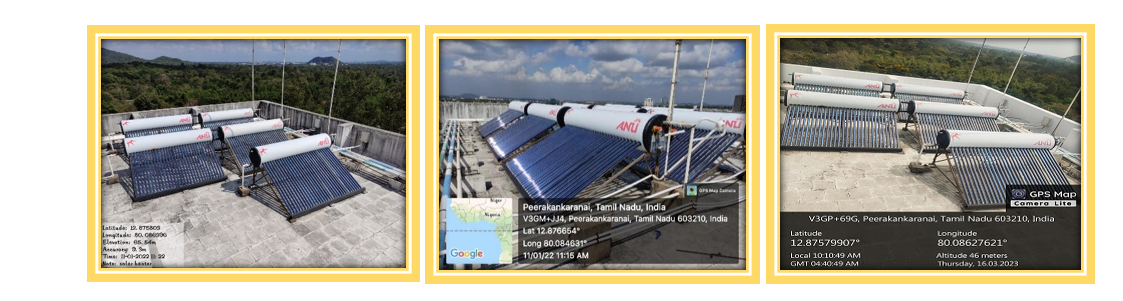
Figure 7.4.4 (iii) : Solar Panel Installed at Roof Top Hostels and Staff Quarters
Block | No. of tanks | Capacity in litres |
Men’s Hostel | ||
A Block | 20 | 5000 |
B Block | 6 | 3000 |
C Block | 6 | 3000 |
D Block | 8 | 4000 |
Main block | 20 | 5000 |
PG block | 12 | 3000 |
Ladies Hostel | ||
Main block | 10 | 5000 |
Annexure Block | ||
New Block Phase 1 | 17 | 5750 |
Staff Quarters | ||
New Staff Quarters | 23 | 5750 |
Total Capacity | 122 | 39,500Litres |
Total capacity of water through Solar Heater
C. Smart Infrastructure: Collaborative Energy Management Strategies
To further enhance energy efficiency, the institute has developed additional infrastructure improvements. Solar street lighting projects have been implemented along the road connecting staff quarters to the men’s hostel and the architecture block – a collaborative effort between third-year electrical engineering students and the estate electrical department. The zero-export device ensures that excess power generated by the solar power plant does not damage the diesel generator sets, while allowing the solar power to be shared across the campus grid during load shedding.
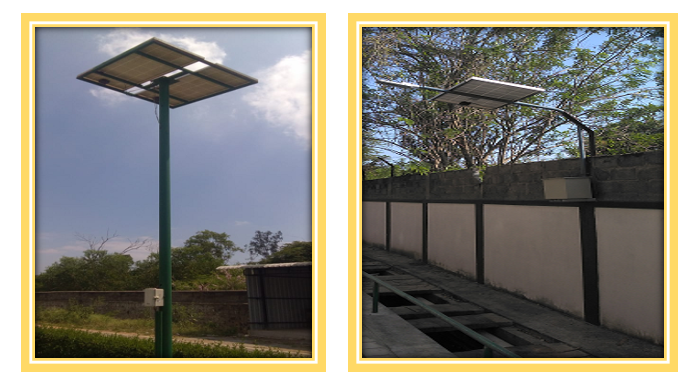
Figure 7.4.4 (iv) : Solar Street Lights @ Crescent Campus
B.S. Abdur Rahman Crescent Institute of Science and Technology (BSACIST) actively promotes low-carbon initiatives through its dedicated wing, the Crescent Innovation and Incubation Council (CIIC). Recognizing the urgent need for sustainable practices, CIIC provides robust support to start-ups focused on developing technologies and solutions that contribute to a low-carbon economy. By offering resources, mentorship, and funding opportunities, CIIC empowers innovative entrepreneurs to create impactful products and services that reduce carbon emissions and foster environmental sustainability. This commitment not only enhances the entrepreneurial ecosystem but also plays a crucial role in advancing the Institute’s mission towards a greener future.
Several innovative start-ups are making significant strides in sustainability and environmental responsibility in the pursuit of a low-carbon economy. Companies like Visaiyon, Aloe Ecell, RAPTEEHV, Carbyne Energy Tech, and E-Daddy exemplify technology’s transformative potential in fostering a greener future. These organisations develop ground breaking products and contribute to a broader ecosystem that supports low-carbon innovation.

Fig 7.4.5 (i) : Front page of the website of M/s. VISAIYON Company
Low-Carbon Economy Through Start-up Support
In 2024, a primary goal is to actively assist start-ups that champion and advance a low-carbon economy and related technologies. This strategic initiative is designed to propel innovation and ensure sustainability within the automotive industry and related sectors.
Visaiyon: Revolutionizing Electric Motorcycle Performance
Visaiyon is at the forefront of revolutionizing electric mobility by delivering efficient extreme power. Their electric motorcycle is engineered for both speed and rapid charging, showcasing advancements in EV technology. They can be contacted via info@visaiyon.com.
Performance Metrics and Innovation by Visaiyon
Visaiyon’s electric motorcycle boasts a top speed of 150 km/hr and accelerates from 0-60 kmph in just 3 seconds. With a 300 km range on a single charge, the motorcycle exemplifies performance and efficiency.
Visaiyon’s Patented Charging Technology
The electric motorcycle achieves a 100 km range with only 30 minutes of charging, thanks to patented liquid-cooled battery technology. This technology prioritizes safety and reliability without compromising the battery’s lifecycle.
Visaiyon’s Dynamic Motor Technology
Visaiyon has developed a 30 kW dynamic torque vectoring motor in-house (patent pending), resulting in high performance without sacrificing energy efficiency.
Recognition and Awards for Visaiyon
Visaiyon was recognized at the EMobilityPlus “TAMILNADU EV STATE SUMMIT” awards for its novel technology. They also received the TANSEED 4.0 award from Chief Minister Thiru.M.K.Stalin.
Fostering Innovation in the EV Sector
Visaiyon’s achievements demonstrate the potential for innovation within the electric vehicle sector, particularly in the realm of high-performance motorcycles and rapid charging technology.
A Sustainable Future Through EV Innovation
Supporting start-ups like Visaiyon, which are developing cutting-edge EV technologies, is crucial for building a sustainable future and revolutionizing electric mobility. For more information, you can visit their official website:

Aloe Ecell stands out with its pioneering development of the world’s first 100% eco-friendly battery made from aloe vera. This innovative approach emphasises sustainability and aims to revolutionize battery technology, marking a significant advancement in energy solutions. The company has garnered global recognition for its contributions, including Schneider Electric accolades, highlighting its commitment to environmental stewardship. Furthermore, Aloe Ecell actively engages the next generation of innovators by offering internship programs for students at various academic levels, encouraging research in fields such as electrophysics and electrochemistry.
For more information, you can visit their official website

Fig 7.4.5 (ii) : Front page of the website of M/s. Aloe Ecell Company
The Memorandum of Understanding (MoU) between Crescent Innovation and Incubation Council (CIIC) and Aloe Ecell Private Limited emphasizes collaboration to support start-ups focused on low-carbon innovations. This partnership aims to provide essential assistance and resources to foster the development of technologies that contribute to a sustainable, low-carbon economy, thereby promoting environmental sustainability and innovation in the region.

RAPTEEHV specializes in high-voltage electrical solutions, providing essential services and products for industrial applications. Their focus on delivering high-voltage electrical systems, such as substations and transformers, is crucial for modern energy demands. By offering engineering consulting services and project management for electrical infrastructure development, RAPTEEHV ensures that its solutions are efficient and sustainable. The company’s commitment to minimizing environmental impact while meeting energy needs aligns perfectly with the goals of a low-carbon economy.
For more detailed information, you can visit their official website:

Fig 7.4.5 (iii) : Front page of the website of M/s. RAPTEEHV Company
The Memorandum of Understanding (MoU) is an Incubation Agreement between Crescent Innovation and Incubation Council (CIIC) and Raptee Energy Private Limited, aimed at fostering innovation and entrepreneurship. Signed on February 11, 2022, in Chennai, the agreement outlines the collaboration between the two parties, emphasizing their commitment to support the development of innovative projects and resolve any disputes through Indian arbitration.

D. Carbyne Energy Tech: Advancing Sustainable Energy Solutions
Carbyne Energy Tech is another key player in the low-carbon innovation landscape, harnessing cutting-edge technologies to develop sustainable energy sources. Their focus on energy storage technologies enhances the reliability and efficiency of energy distribution, which is vital for integrating renewable energy into the grid. Carbyne’s investment in research and development underscores its dedication to creating new solutions that optimise energy usage and facilitate the transition to greener alternatives. Carbyne ensures a broad impact on energy efficiency by catering to various sectors, including renewable energy and electric vehicles.
For more detailed information, you can visit their official website:

Fig 7.4.5 (iv) : Front page of the website of M/s. CARBYNE ENERGY
The Memorandum of Understanding (MoU) between Crescent Innovation and Incubation Council (CIIC) with M/s. Carbyne Energy underscores a commitment to assist start-ups that promote low-carbon innovation. CIIC is dedicated to providing essential resources, mentorship, and support to these start-ups, enabling them to develop technologies and solutions that contribute to a sustainable, low-carbon economy. This initiative aims to foster entrepreneurship while addressing critical environmental challenges.

E. E-Daddy: Revolutionizing Electric Vehicles
E-Daddy’s Electric Vehicle Intelligence System exemplifies the integration of advanced technology in the automotive sector. E-Daddy enhances vehicle performance while ensuring durability and intelligence using industry-grade powertrains and a modular power management strategy. This innovative approach improves driving experiences and supports the transition to electric vehicles, which are essential for reducing carbon emissions in transportation. For more detailed information, you can visit their official website:

Fig 7.4.5 (v) : Front page of the Website of M/s. E-Daddy
The Memorandum of Understanding (MoU) between Crescent Innovation and Incubation Council (CIIC) with M/s. E-Daddy underscores a commitment to assist start-ups that promote low-carbon innovation. CIIC is dedicated to providing essential resources, mentorship, and support to these start-ups, enabling them to develop technologies and solutions that contribute to a sustainable, low-carbon economy. This initiative aims to foster entrepreneurship while addressing critical environmental challenges.

The MOU copy is enclosed herewith